
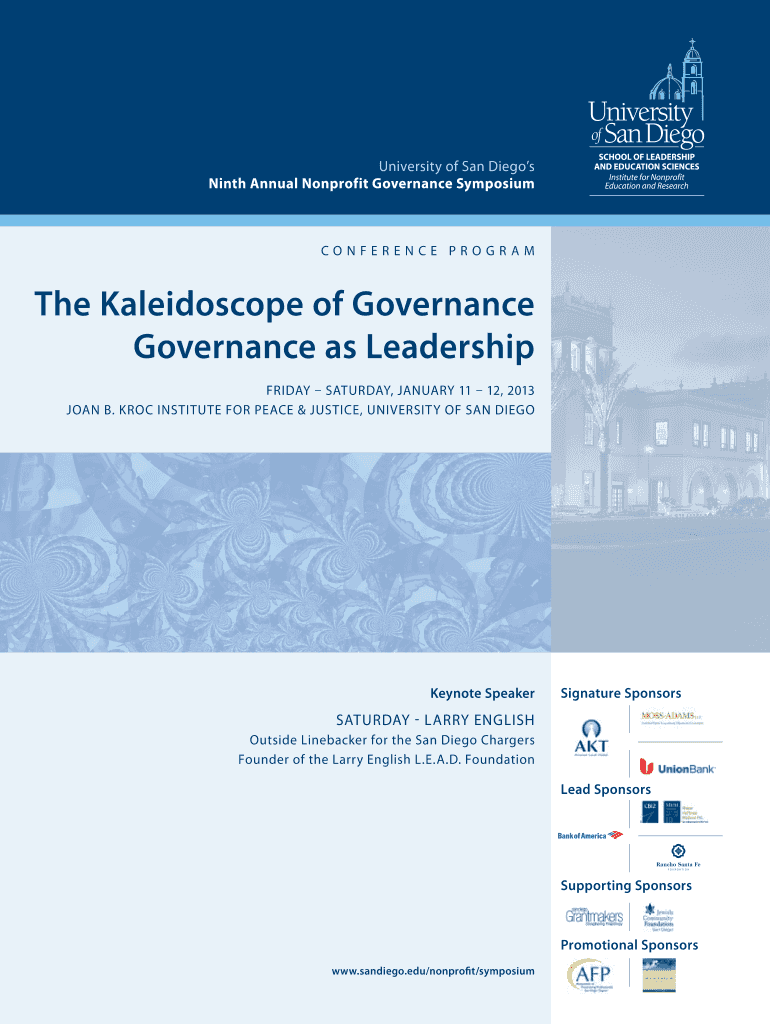







Definition & Meaning
The Ninth Annual Nonprofit Governance Symposium is a premier event focused on enhancing nonprofit leadership and governance. It is part of a series of symposiums organized by the University of San Diego aimed at providing insights and innovative practices to address the challenges faced by nonprofit organizations. Each year, the symposium dives into different themes, and for the Ninth Annual event, the focus was "The Kaleidoscope of Governance," highlighting the multifaceted nature of nonprofit governance.
Historical Context and Purpose
The symposium, held annually, plays a crucial role in educating and empowering nonprofit leaders. It serves as a platform for sharing best practices and discussing contemporary issues in nonprofit governance. By bringing together experts and practitioners, it fosters a collaborative environment where participants can learn and implement new strategies to improve governance within their organizations.
Key Elements of the Ninth Annual Nonprofit Governance Symposium
The symposium includes a range of components designed to provide a comprehensive learning experience. Key elements include:
- Keynote Speakers: Influential leaders and experts in nonprofit governance share insights and experiences.
- Interactive Seminars: Sessions focusing on participatory governance methods, allowing attendees to engage actively with the content.
- Panel Discussions: Provide diverse perspectives on governance challenges and solutions.
- Workshops: Hands-on sessions where participants can apply what they've learned in practical scenarios.
Educational Value
Each session is structured to enhance understanding and practical application of governance principles. Participants leave equipped with tools and strategies applicable to their organizations.
How to Use the Ninth Annual Nonprofit Governance Symposium
Engaging with the symposium involves several steps to maximize its offerings and benefit from the knowledge shared. Attendees should:
- Pre-register and Review Agenda: Secure a spot and review the symposium's schedule to prioritize sessions aligned with personal or organizational needs.
- Participate Actively: Engage in sessions through Q&A segments, workshops, and discussions to gain deeper insights.
- Network and Collaborate: Use breaks and social sessions to connect with other leaders and experts.
Post-Symposium Implementation
Following the event, participants should implement the strategies discussed at the symposium, adapting them to fit their organization's unique context and challenges.
Steps to Complete the Ninth Annual Nonprofit Governance Symposium
Completing the symposium involves a systematic approach to ensure maximum participation and knowledge acquisition.
- Registration Process:
- Visit the official symposium website to register.
- Choose sessions of interest and download materials in advance.
- Engagement During Symposium:
- Attend selected sessions promptly; take notes and ask questions for clarity.
- Participate in interactive segments for hands-on learning.
- Post-Symposium Actions:
- Review notes and materials collected.
- Schedule meetings with team members to discuss key takeaways and possible implementations.
Follow-Up
It's crucial to follow up on the ideas generated during the symposium, keeping momentum and ensuring strategies are put into practice effectively.
Who Typically Uses the Ninth Annual Nonprofit Governance Symposium
The symposium is tailored for individuals involved in governance within nonprofit organizations. This includes:
- Board Members: Looking to enhance their governance skills.
- Executive Directors: Seeking innovative strategies to lead their organizations more effectively.
- Nonprofit Managers: Interested in improving operational efficiency and governance practices.
- Consultants and Academics: Engaging in nonprofit research and offering strategic insights.


Broader Audience
The event is also suitable for individuals looking to transition into the nonprofit sector, offering foundational knowledge and networking opportunities.
Important Terms Related to Ninth Annual Nonprofit Governance Symposium
Understanding key terms related to governance can enhance the symposium experience. Some important terms include:
- Governance: The framework of rules and practices by which a board ensures accountability and transparency.
- Stakeholders: Individuals or groups affected by or having an interest in nonprofit operations and decisions.
- Board Effectiveness: The capacity of a board to perform its governance roles proficiently.
Legal Use of the Ninth Annual Nonprofit Governance Symposium
Participation in the symposium not only aids personal and organizational development but also promotes compliance with legal governance standards.
- Legal Frameworks: Discussed at the symposium provide guidance on adhering to regulations governing nonprofit entities.
- Compliant Practices: Implementation of learned strategies aids in maintaining legal and ethical standards within organizations.
Monitoring and Evaluation
Regular review of governance practices against legal standards ensures ongoing compliance with federal and state regulations.
State-Specific Rules for the Ninth Annual Nonprofit Governance Symposium
While the symposium presents nationwide governance strategies, it is essential for organizations to consider state-specific regulations affecting nonprofit governance.
- Registration Requirements: Vary by state and may influence nonprofit operation.
- State Codes: Some states have unique codes of conduct for nonprofit boards.
Customizing Content
Attendees from various states should consider how local laws may impact the governance strategies they plan to implement.
Examples of Using the Ninth Annual Nonprofit Governance Symposium
The symposium has had a positive impact on numerous organizations with varied examples of change implementation:
- Case Study of Implementation: One nonprofit used the symposium to overhaul its board's decision-making processes, leading to greater agility and effectiveness.
- Personal Development: Attendees have advanced to higher leadership roles by applying insights gained from keynote sessions and workshops during the symposium.
Effective Changes
Implementing innovative governance strategies learned during the symposium can lead to increased organizational efficiency and stakeholder satisfaction.




