






Definition and Purpose of the Summer Study Abroad Student Handbook
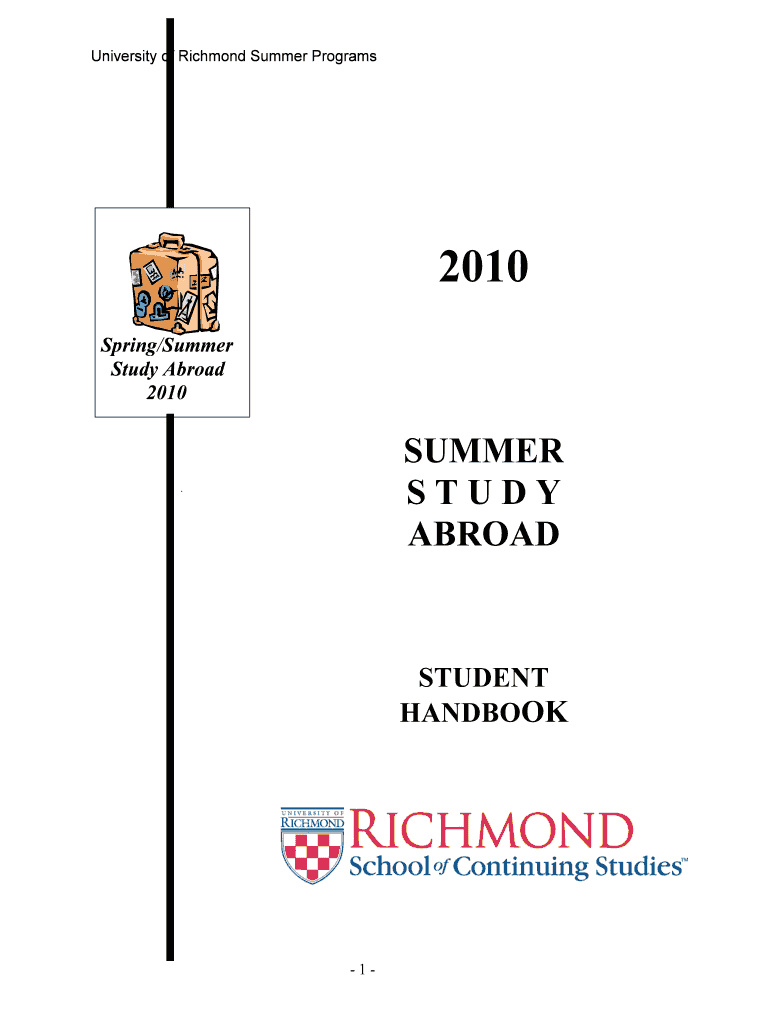
The "Summer Study Abroad Student Handbook Summer abroad student handbook - summer 2010 - spcs richmond" is an essential resource provided by the University of Richmond for students participating in summer study abroad programs. This handbook contains critical information regarding student responsibilities, travel arrangements, cultural sensitivity, health and safety guidelines, and university policies. The content is crafted to prepare students for the unique challenges and enriching experiences of studying abroad, ensuring they are informed and compliant with university and host country expectations.
How to Use the Handbook Effectively
To maximize the benefits of the Summer Study Abroad Student Handbook, students should systematically review each section, focusing on relevant areas for their program. The handbook is designed to be a comprehensive guide, so students should:
- Orientation Preparation: Familiarize themselves with orientation schedules and requirements.
- Health and Safety Protocols: Follow the health guidelines and emergency procedures outlined.
- Cultural Sensitivity and Etiquette: Understand cultural differences and practice respectful behavior.
- Travel Coordination: Adhere to travel policies and maintain required documentation.
- Policy Compliance: Stay informed about university policies on alcohol, drugs, and conduct.
Steps to Obtain the Handbook
Students can access the Summer Study Abroad Student Handbook through several methods:
- University Portal Access: Log into the University of Richmond's student portal to download the handbook.
- Email Communication: Check university emails, as the handbook may be distributed directly to the student's university email account.
- Program Coordinators: Contact the program coordinators or the Summer Programs office to request a physical copy or additional information on accessing the digital version.
- Pre-Departure Meetings: Obtain the handbook during pre-departure meetings organized by the university.
Key Sections and Elements of the Handbook
The handbook is structured to cover all aspects of the study abroad experience. Key elements include:
Orientation and Preparation
- Orientation sessions for introduction to program specifics.
- Checklist of necessary travel documents and items to pack.
Health and Safety
- Vaccination and medical requirements for travel.
- Emergency protocols and contact information.
Cultural Understanding
- Guidelines on cultural sensitivity and respecting local customs.
- Strategies for adapting to new cultural environments.
Policy Guidelines
- Alcohol and drug use policies specific to the host country.
- Behavioral expectations to maintain good standing with the university.
Legal and Policy Use of the Handbook
The legal use of the handbook involves adhering to its guidelines to ensure compliance with University and host country laws. It emphasizes the importance of being aware of legal rights and responsibilities while abroad:
- Understanding Visa Regulations: Students should ensure their travel is compliant with host country visa requirements.
- Financial and Insurance Obligations: Maintaining appropriate travel insurance and addressing financial responsibilities.
Who Typically Uses the Handbook
The primary users of the Summer Study Abroad Student Handbook are University of Richmond students enrolled in summer abroad programs. Additionally, faculty advisors and program coordinators utilize the handbook to support students and manage program logistics.


Important Terms and Conditions
Understanding key terms related to the handbook helps clarify expectations:
- "Good Standing": Refers to adhering to academic, financial, and behavioral standards set by the university.
- "Health Insurance": Coverage required for all students, addressing international health needs.
- "Emergency Contact": Designated university or family members available to assist during emergencies.
Examples and Scenarios of Handbook Application
Examples within the handbook illustrate practical scenarios students might encounter:
- Dealing with Cultural Misunderstandings: Strategies for resolving issues respectfully.
- Navigating Health Emergencies: Steps to take if a student falls ill or faces a medical crisis abroad.
- Meeting Local Students: Tips for engaging with local communities in a culturally appropriate manner.
By comprehensively reviewing and understanding these key sections and applying the guidelines, students can enhance their educational and cultural experiences during their summer study abroad programs.