
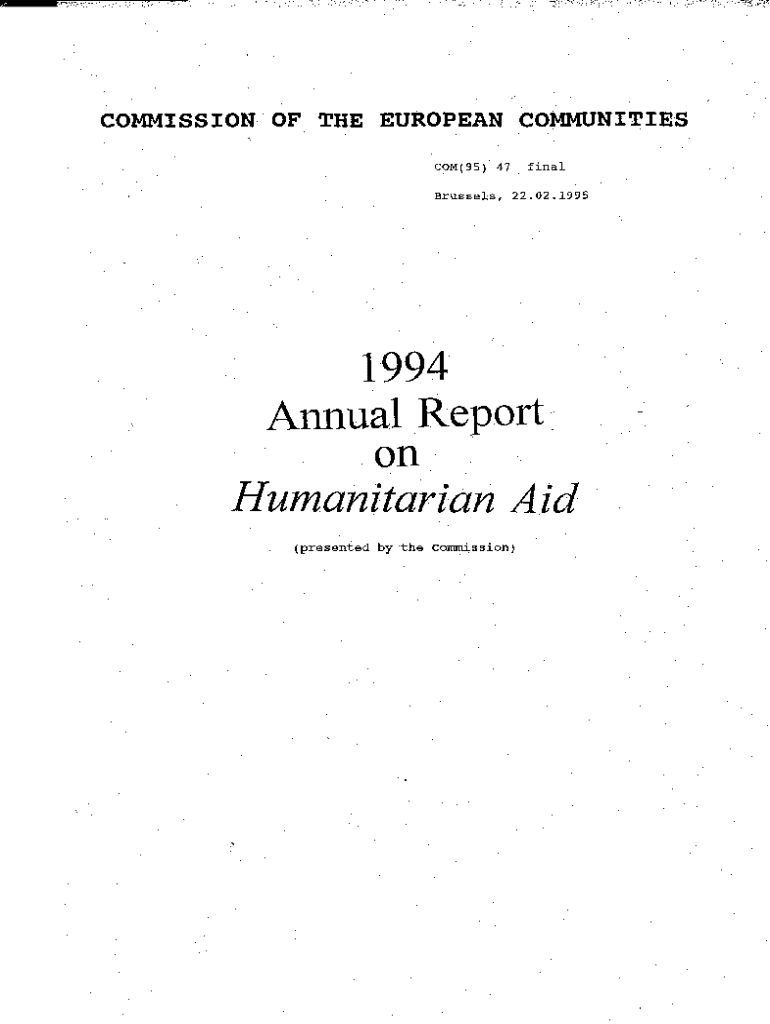







Definition & Meaning
The COM(95) 47 is an annual report on Humanitarian Aid presented by the Commission of the European Communities. The document outlines the operations and expenditures related to the humanitarian aid efforts undertaken during 1994. A significant aspect of the report is its focus on humanitarian crises in various regions, such as the former Yugoslavia and African Caribbean Pacific (ACP) countries. The report emphasizes strategic planning and preparedness for future disasters.
How to Use the COM(95) 47
To effectively use the COM(95) 47 report, it is essential to understand its purpose and content structure. The report provides insights into the financial allocation of humanitarian aid, detailing the funding increase from 605 Million ECU in 1993 to over 760 Million ECU in 1994. By analyzing the report, stakeholders can assess the aid distribution effectiveness and identify areas for improvement in future operations, especially in collaboration with NGOs and UN agencies.
Key Elements of the COM(95) 47
The COM(95) 47 report includes several crucial components that provide a comprehensive overview of humanitarian efforts. These elements cover the aid distribution process, financial allocations, beneficiary regions, and collaborations with international partners. Additionally, the report highlights challenges faced during operations and discusses future strategic considerations for enhancing the efficacy of humanitarian aid.
Steps to Complete the COM(95) 47
The COM(95) 47 is primarily a report rather than a form that individuals can fill out. However, understanding its composition can help those involved in drafting similar reports. The steps include gathering data on financial allocations, consulting with international partners, and analyzing the impact of aid distribution. Following this, authors need to organize the data concisely and highlight key findings and recommendations for future actions.
Who Typically Uses the COM(95) 47
The report is primarily used by policymakers, humanitarian organizations, and funding bodies invested in international aid programs. It serves as a critical resource for analyzing past humanitarian activities and planning strategic approaches for future interventions. NGOs and governmental agencies often rely on the report to align their efforts with the documented findings and recommendations.


Legal Use of the COM(95) 47
The legal use of the COM(95) 47 pertains to its function as an official record of humanitarian aid efforts by the European Communities. It serves as a legal document that outlines the accountability and transparency in fund allocation and distribution. Authorities and partners use this document to ensure compliance with international aid standards and obligations.
Examples of Using the COM(95) 47
The COM(95) 47 report includes real-world examples, such as addressing the crises in the former Yugoslavia, by detailing how funds were allocated and used to aid affected populations. Another example involves partnerships with NGOs to implement aid programs effectively. Such instances provide a practical understanding of how humanitarian aid is structured and executed, supporting future strategies.
Required Documents
For those involved in compiling or evaluating reports similar to COM(95) 47, several critical documents may be required. These could include financial records of fund allocations, agreements with partner organizations, progress reports from field operations, and feedback from humanitarian mission participants. Having accurate and comprehensive documentation ensures that the report accurately reflects the humanitarian activities undertaken and facilitates future audits and evaluations.
Filing Deadlines / Important Dates
Though COM(95) 47 does not have a typical filing deadline associated with forms, the timing of the report issuance is crucial for its relevance and effectiveness. It is typically expected that such reports be published annually to reflect the previous calendar year's activities. Timely publication allows stakeholders to review and adjust strategies for upcoming humanitarian actions.
Software Compatibility
While COM(95) 47 itself is not a form that requires completion via software, those compiling similar reports may use various digital tools to organize data and draft comprehensive documents. Software programs like Microsoft Excel for data analysis and Microsoft Word or Google Docs for report drafting are commonly used for this purpose. These tools facilitate efficient data management and presentation, enhancing the report's clarity and accessibility.
Business Types That Benefit Most from COM(95) 47
Humanitarian organizations, research institutions, and policy-making bodies benefit the most from the insights provided in the COM(95) 47. These entities can leverage the data and analysis contained in the report to improve their humanitarian strategies, enhance collaboration with international partners, and secure funding by demonstrating the effective use of past resources.




