
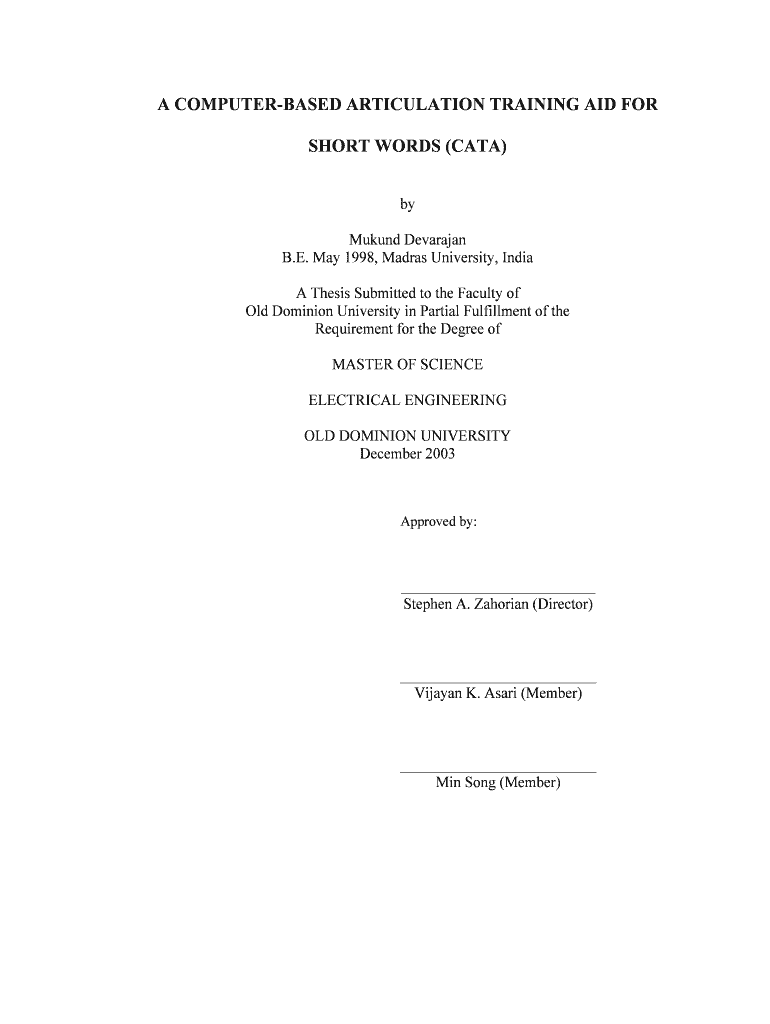







Definition & Meaning
The computer-based articulation training aid for short words (CATA) is an advanced educational system designed to assist individuals, particularly those with hearing impairments, in enhancing their speech articulation skills. This tool utilizes technology such as neural networks and Hidden Markov Models to provide visual feedback and detailed analysis of speech patterns. The primary focus is on short-word articulation, employing methods for recognizing and segmenting speech sounds to address issues like spectral stability and database quality. By improving users' articulation of consonant-vowel-consonant (CVC) structures, CATA contributes significantly to better communication outcomes.
Key Elements of CATA
CATA integrates several critical components to deliver effective speech training:
- Neural Networks: Utilizes machine learning models for accurate speech recognition and analysis.
- Hidden Markov Models: Essential for segmenting speech to identify specific articulation issues.
- Visual Feedback System: Offers users immediate insights into speech patterns for more effective learning.
- CVC Structure Focus: Targets short words, making it a focused training tool for improving basic speech units.
This blend of technologies ensures a comprehensive approach to speech training, leveraging cutting-edge computational techniques to foster better articulation outcomes.
How to Use CATA
Utilization of CATA involves a straightforward process, enhancing accessibility for users regardless of technical expertise:
- Initial Assessment: Begin by using the system to evaluate baseline speech articulation and identify target areas for improvement.
- Training Sessions: Engage in regular exercises where the system provides real-time feedback on speech attempts.
- Performance Review: After each session, review graphical representations and summary reports to track progress.
- Adjustments and Improvements: Modify training focuses based on progress reports and feedback to ensure continuous development.
By following these steps, users can systematically improve their articulation skills, aided by consistent feedback and adaptive learning strategies.
Steps to Complete CATA Training
Completing CATA training requires dedicated time and methodical progression through its modules:
- Set Goals: Define clear articulation improvement objectives.
- Schedule Sessions: Establish a consistent practice schedule to integrate regular training into daily routines.
- Utilize Feedback: Actively use system feedback to make informed adjustments to speech practices.
- Benchmark Progress: Regularly compare current performance to initial assessments to gauge improvements.
- Iterate and Adapt: Continuously refine strategies based on ongoing feedback and measurable progress.
Following these steps ensures a structured path toward improving speech articulation, aligning training actions with defined goals.
Who Typically Uses CATA
CATA is beneficial for a range of users with specific articulation needs:
- Hearing-Impaired Individuals: Primary users who gain substantial improvements in speech clarity and articulation.
- Speech Therapists: Professionals utilize CATA to supplement traditional therapy methods, offering a tech-based enhancement to treatment plans.
- Educators in Special Needs Institutions: Use CATA to support students requiring additional help with speech articulation.
By catering to these groups, CATA provides targeted aid aligned with their specific communication needs.
Important Terms Related to CATA
Understanding certain terms is crucial for effectively navigating the CATA system:
- Consonant-Vowel-Consonant (CVC): Refers to the basic structure of short words used for training.
- Spectral Stability: Relates to the consistency of speech sound frequencies—a key focus area in articulation training.
- Visual Feedback: Visual cues and analyses provided by the system to aid learning.
- Assessment Metrics: Quantitative measures used to track progress over the course of training.
These terms form the foundation of effective interaction with the CATA system, helping users grasp the methodology and mechanics underlying the training.
Legal Use of CATA
Legal use of the CATA involves understanding its application within educational and therapeutic contexts:
- Compliance with Educational Standards: CATA meets the necessary standards for implementation in speech therapy programs.
- Data Privacy: Ensures user data is handled according to 256-bit SSL encryption protocols, safeguarding information during training sessions.
- Usage Rights: The system is designed for both individual and institutional use, though terms may vary based on deployment scale.
Understanding legal stipulations and data privacy assurances is crucial for users, especially within institutional settings.
Examples of Using CATA
Real-world applications of CATA demonstrate its versatility and impact:
- Case Study: Hearing-Impaired Student: A university student with hearing impairment used CATA alongside traditional therapy to achieve significant improvements in articulation over a semester.
- Speech Therapy Clinic Application: A clinic integrated CATA into their protocol, doubling speech improvement rates among patients of various age groups.
- Home-Based Improvement: Individuals using CATA at home reported enhanced self-confidence in communication within three months of regular use.
These examples illustrate CATA's effectiveness and adaptability across various contexts, highlighting its role in improving speech articulation.
Versions or Alternatives to CATA
While CATA is a specialized tool, exploring its alternatives ensures informed choices:
- Traditional Speech Therapy: Used in tandem with CATA to bolster therapeutic outcomes.
- Alternative Computer-Based Aids: Systems like Speech Buddies offer complementary training for different aspects of speech development.
- Advanced Software Suites: Tools such as Priceless Learning for enhanced articulation focus on broader speech-language skills.
These alternatives can complement or supplement CATA, tailored to individual needs and comprehensive training endeavors.




