
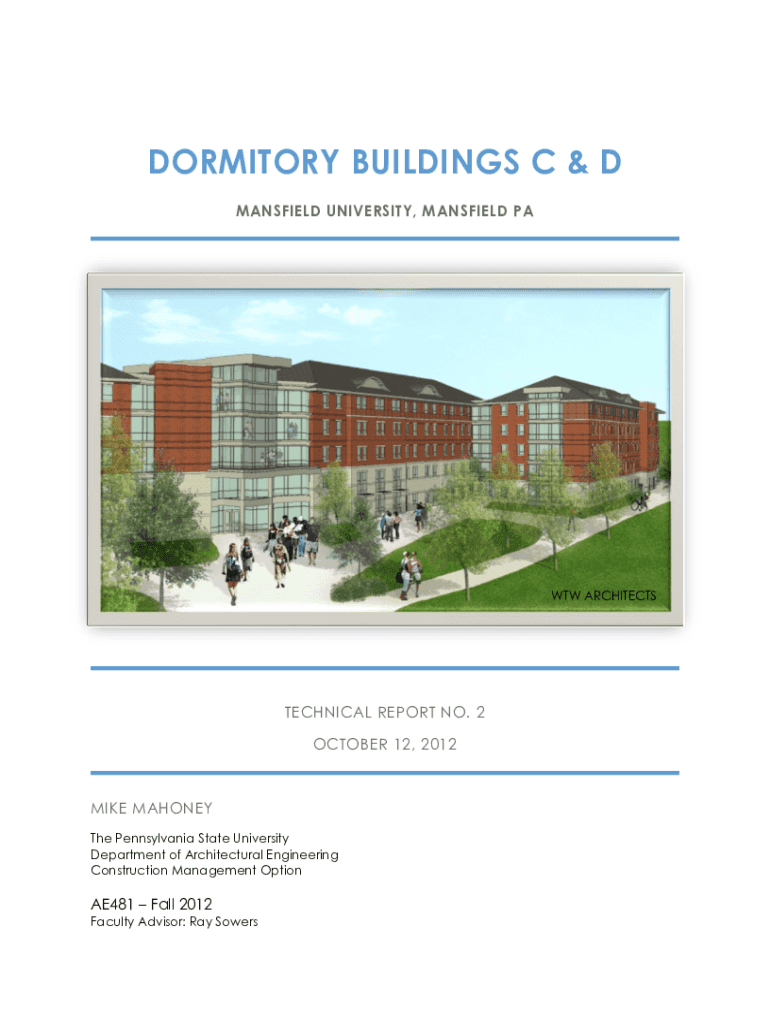







Understanding the DORMITORY BUILDINGS C and D - Penn State College of Engineering
The "DORMITORY BUILDINGS C and D - Penn State College of Engineering" form is crucial for stakeholders involved in the construction and management of these facilities. Comprehending this form's purpose and structured information assists in adhering to compliance and optimizing planning.
How to Use the DORMITORY BUILDINGS C and D Form
To effectively use the form, begin by reviewing each section to understand the specific data requirements. Identify the stakeholders responsible for providing accurate information and ensure that all data is corroborated with reliable sources. Utilize this form to streamline communication among architects, engineers, and project managers, leveraging the data for building evaluations and progress tracking.
Steps to Complete the DORMITORY BUILDINGS C and D Form
- Gather Necessary Information: Collect all project-related details, including timelines, budget estimates, and material specifications.
- Fill in Architectural Details: Input comprehensive architectural plans, including modular construction phases and structural components.
- Include Financial Estimates: Provide accurate cost estimates for each project phase, ensuring clarity and precision.
- Submit for Review: Once completed, submit the form to the relevant Penn State College of Engineering department for review.
Key Elements of the Form
- Project Schedule: A detailed timeline of the construction phases, highlighting key milestones and deadlines.
- Structural Estimates: Detailed cost assessments for various building components, essential for budget management.
- BIM Utilization: Sections dedicated to describing Building Information Modeling processes for effective conflict resolution and coordination.
Legal and Compliance Considerations
Understanding the legal implications of this form is vital. It involves adherence to construction codes, zoning laws, and safety standards. Compliance ensures that the project reflects state and university regulations, which can impact project funding and approval.
Required Documents for Submission
- Architectural Blueprints: Detailed designs and structural plans.
- Financial Reports: Documentation of cost breakdowns and funding sources.
- Inspection Certificates: Proof of compliance with safety and construction standards.
Software Compatibility and Integration
The form's integration with Building Information Modeling (BIM) software such as AutoCAD or Revit is critical. This enables seamless updating of project details, ensuring that all participants have access to the most current project data. Compatibility with these platforms aids in real-time information sharing and revision tracking.
Important Dates and Deadlines
Adhering to project timelines and submission deadlines is essential. Missing critical dates can lead to project delays and potential penalties. Establish a timeline that outlines these key deadlines, ensuring that all stakeholders are informed and prepared.
Who Typically Uses the Form
The form is primarily used by Penn State College of Engineering faculty, project managers, construction teams, and regulatory bodies. Each user group leverages the information to fulfill specific responsibilities, from oversight and compliance to project execution and reporting.


Examples of Using the Form in Real Scenarios
A project manager may use this form to coordinate subcontractors and manage resources effectively. For instance, during the modular construction phase, referencing the form can help in scheduling and aligning team efforts, ensuring timely completion of each module.
This structure and content leverage detailed explanations, explicit examples, and a comprehensive understanding of the Dormitory Buildings C and D project at Penn State, offering maximum utility and accuracy in compliance with industry standards.




