







Definition & Meaning
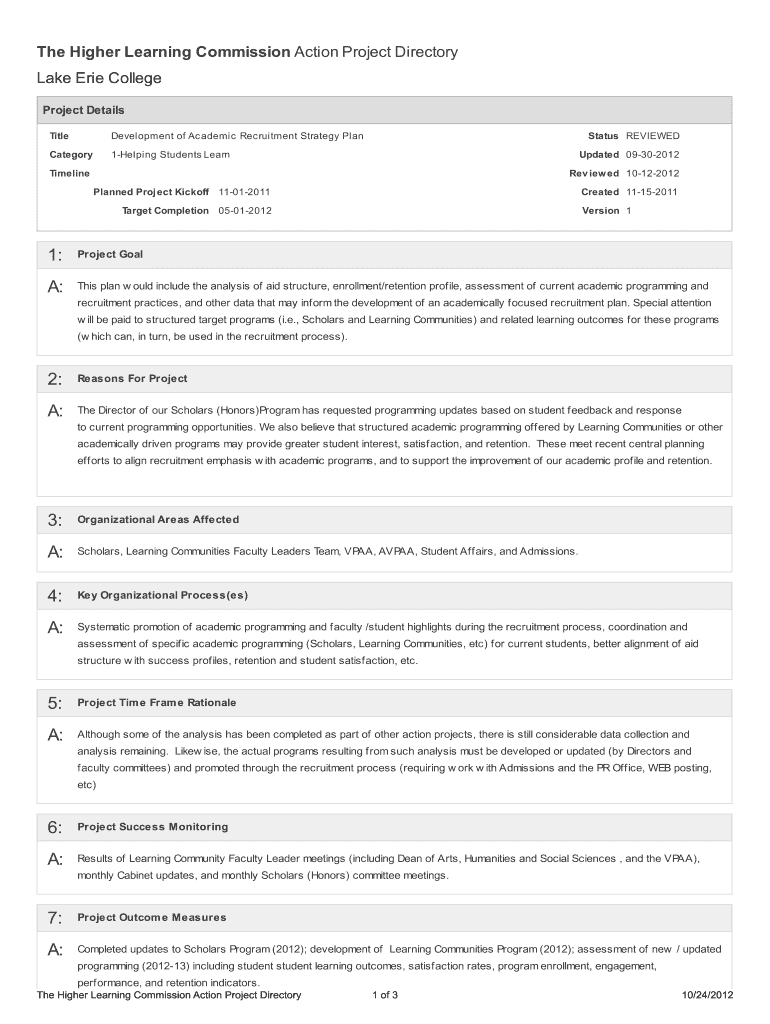
The "Development of Academic Recruitment Strategy - Lake Erie College - lec" refers to a structured plan aimed at enhancing the recruitment and retention of students at Lake Erie College. This strategy is crafted to align student recruitment efforts with academic programming, focusing on programs such as Scholars and Learning Communities. Its core purpose is to increase student satisfaction and retention rates by providing a comprehensive academic environment.
- Academic Programs: The strategy emphasizes the development of specific academic programs to attract students. This includes offering diverse courses and extra-curricular opportunities that appeal to prospective students and meet their educational needs.
- Stakeholder Involvement: The initiative involves collaboration among faculty, administrative staff, and potential students to ensure that recruiting efforts are effective and align with the college's goals.
How to Use the Development of Academic Recruitment Strategy - Lake Erie College
To utilize the strategy effectively, Lake Erie College must integrate it into their existing recruitment processes. Key steps include:
- Assessment of Current Strategies: Begin by evaluating existing recruitment and retention strategies to identify strengths and weaknesses.
- Alignment with Academic Goals: Ensure that the recruitment efforts are in synergy with the college's academic goals, fostering a cohesive approach.
- Leveraging Academic Programs: Use tailored academic programs as a unique selling proposition to attract targeted student demographics.
- Monitoring and Feedback: Implement mechanisms for continuous monitoring of recruitment campaigns and gather feedback for ongoing refinement.
Steps to Complete the Development of Academic Recruitment Strategy
Developing this recruitment strategy involves several crucial steps:
- Goal Setting: Define the specific objectives of the recruitment strategy, focusing on increasing enrollment and retention rates.
- Data Collection and Analysis: Gather and analyze data on student demographics, preferences, and feedback to inform strategy development.
- Program Development: Design and implement academic programs that meet the needs of prospective students and align with college offerings.
- Implementation: Roll out the strategy through targeted marketing campaigns, outreach efforts, and collaboration with high schools and community colleges.
- Evaluation: Regularly evaluate the effectiveness of the strategy and make adjustments as necessary based on performance metrics.
Who Typically Uses the Development of Academic Recruitment Strategy
Typically, the primary users of this strategy are:
- College Admissions Officers: They lead the execution of the strategy, focusing on outreach and communications with potential students.
- Faculty and Staff: Instructors and administrative staff contribute by aligning curriculum and programming with recruitment goals.
- Marketing Teams: Develop promotional materials and campaigns that highlight the college's offerings and attract prospective students.


Key Elements of the Development of Academic Recruitment Strategy
Several key elements are critical to this strategy's success:
- Target Audience Identification: Clearly identifying and understanding the target demographic segments is crucial to tailoring recruitment messages effectively.
- Unique Value Proposition: Highlighting unique programs and learning opportunities that Lake Erie College offers can set the institution apart from competitors.
- Engagement Strategies: Interactive events such as open houses, campus tours, and virtual information sessions engage prospective students and their families.
- Continuous Improvement: Regularly revising and updating the strategy based on performance metrics and feedback ensures its ongoing relevance and effectiveness.
Examples of Using the Development of Academic Recruitment Strategy
Several real-world scenarios illustrate the successful application of this strategy:
- Increasing Enrollment: One college increased its enrollment by 15% after aligning its recruitment efforts with new academic scholarship programs that appealed to high-achieving students.
- Improved Student Retention: By focusing on learning communities, another institution saw improved retention rates, as these communities provided students with a supportive environment.
Legal Use of the Development of Academic Recruitment Strategy
Using this strategy involves legal considerations, particularly in:
- Compliance with Educational Guidelines: Ensuring that recruitment practices comply with educational standards and legal requirements.
- Data Protection: Safeguarding student data collected during the recruitment process, in compliance with privacy laws such as FERPA (Family Educational Rights and Privacy Act).
State-Specific Rules for the Development of Academic Recruitment Strategy
While the strategy generally applies nationwide, certain elements may need to be adapted to comply with state-specific education regulations:
- State Education Standards: Ensuring that academic programs meet specific state accreditation standards.
- Financial Aid Regulations: Adhering to state regulations regarding scholarships and financial aid offerings.
These detailed sections ensure comprehensive understanding, enabling effective implementation and optimization of Lake Erie College's academic recruitment strategy.




