






Definition & Purpose of the IBR S99 Text
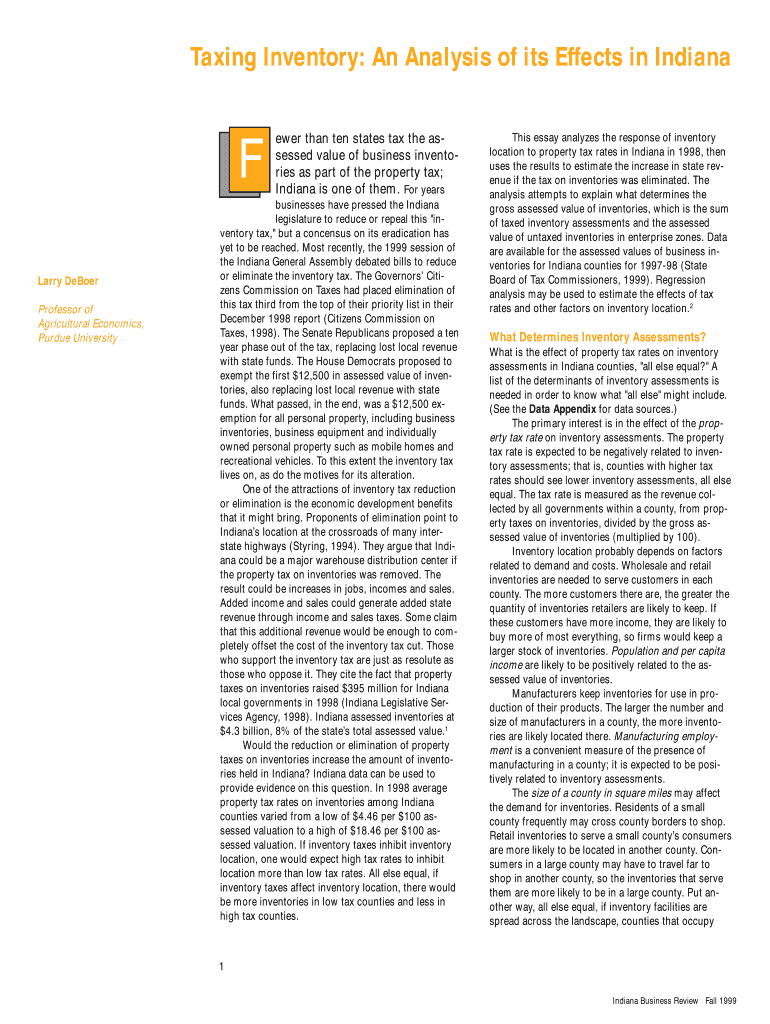
The "IBR S99 Text" is a form produced by the Indiana Business Research Center (IBRC) at Indiana University, specifically designed for various applications involving business research and analysis. This document serves as a vital tool for businesses, financial analysts, and policymakers seeking comprehensive insights into economic trends, demographic changes, and business climate factors within Indiana. It encapsulates a wealth of data generated through rigorous research methodologies, aimed at supporting informed decision-making processes.
How to Use the IBR S99 Text
Utilizing the IBR S99 Text effectively requires a clear understanding of its structure and contents. Users should begin by identifying the specific sections pertinent to their needs, whether it be economic data, demographic statistics, or business trend analyses. The document is designed to be navigable, with clearly delineated sections that cater to various research and business development needs. Using the text in conjunction with other analytical tools enhances its practical utility, allowing users to cross-reference and verify data across different sources.
Steps to Complete the IBR S99 Text
-
Gather Required Information: Assemble all necessary data and documentation related to your business or research inquiry.
-
Analyze Sections: Review each relevant section of the IBR S99 Text, noting down insights that apply directly to your area of interest.
-
Synthesize Data: Combine the information from the text with your internal data or findings to create an integrated analysis.
-
Draft Findings: Prepare a preliminary report or analysis based on the gathered data, ensuring all points are backed by evidence.
-
Review and Revise: Examine the preliminary draft for accuracy and completeness, revising any sections that require clearer articulation or additional data support.
-
Finalize Report: Compile the completed analysis into a coherent report, ready for presentation or submission to stakeholders.
Key Elements of the IBR S99 Text
The IBR S99 Text includes multiple core elements that contribute to its in-depth analysis:
-
Economic Indicators: Tracks state-level economic performance metrics such as GDP growth, employment rates, and sectoral contributions.
-
Demographic Trends: Provides insights into population changes, migration patterns, and demographic shifts impacting local economies.
-
Business Climate Analysis: Evaluates factors such as regulatory environment, tax policies, and business friendliness in Indiana.
-
Regional Comparisons: Offers comparative analysis between different counties or regions within the state, highlighting distinct economic dynamics.
Important Terms Related to the IBR S99 Text
Understanding key terminologies used within the IBR S99 Text is crucial for accurate interpretation:
-
Economic Forecasting: Predictive analysis regarding future economic conditions based on current data.
-
Demographic Analysis: Study of population statistics to determine patterns of growth, age distribution, and socio-economic characteristics.
-
Data Regression Models: Statistical methods used to identify relationships between variables and forecast trends.
-
Policy Impact Assessment: Evaluation of how government policies affect economic performance and business activities.
Examples of Using the IBR S99 Text
Real-world applications of the IBR S99 Text showcase its versatility:
-
Policy Development: Government agencies use the document's statistical data to draft policies supporting economic growth.
-
Investment Analysis: Businesses analyze market trends and economic projections to identify investment opportunities.
-
Academic Research: Researchers utilize comprehensive data sets to study socio-economic issues and publish findings.
Who Typically Uses the IBR S99 Text
The primary users of the IBR S99 Text include:
-
Business Leaders: For strategic planning and market analysis.
-
Policymakers: To inform legislative decisions and economic policies.
-
Academic Researchers: For in-depth analysis and publication of socio-economic studies.
-
Economic Development Agencies: To promote economic growth and identify areas for investment.


Business Types That Benefit from the IBR S99 Text
Various business entities leverage the insights from the IBR S99 Text:
-
Corporations: To align business strategies with state economic trends.
-
Startups: To understand market dynamics and customer demographics.
-
Investment Firms: To guide investment decisions with robust data support.
-
Nonprofits: To tailor programs according to demographic insights and socio-economic needs.
State-specific Rules for the IBR S99 Text
While the IBR S99 Text primarily focuses on Indiana, understanding local regulations and economic policies is crucial:
-
State Tax Regulations: Consider how changes in taxation can influence data interpretation and business strategy within the state.
-
Regional Economic Policies: Analyze how federal and state policies affect economic variables and business conditions in Indiana.
State-by-State Differences
The IBR S99 Text exclusively focuses on Indiana, but users should consider variations in economic conditions:
-
Economic Diversification: Recognize how Indiana's industry distribution compares with neighboring states.
-
Demographic Variations: Understand population differences in age and ethnicity which might affect economic policies.
By comprehensively understanding these sections and their applications, users can fully leverage the IBR S99 Text to gain meaningful insights into Indiana's economic landscape.