







Definition & Meaning
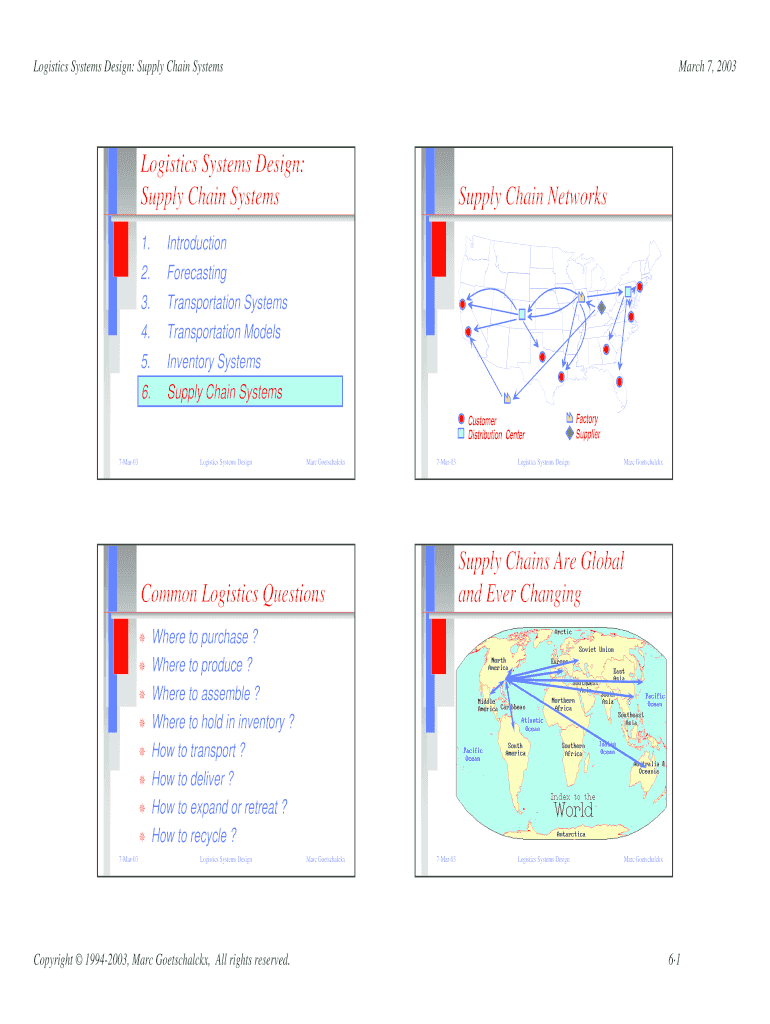
"Logistics Systems Design: Supply Chain Systems - www2 isye gatech" examines the strategic planning involved in developing efficient logistics and supply chain systems. Focusing on the integration of components like forecasting, inventory management, and transportation, it aims to enhance overall supply chain performance in a competitive market. By addressing both the theoretical and practical aspects, this guide provides actionable insights into cost minimization and service level maximization.
How to Use the Logistics Systems Design Guide
Understanding the logistics systems design guide involves applying the principles and methodologies outlined to real-world scenarios. Users should identify areas within their supply chain that require optimization and apply the frameworks provided. Each section delves into different aspects, such as network design and inventory strategies, offering a step-by-step approach to enhancing supply chain efficiency.
How to Obtain the Logistics Systems Design Guide
To access the "Logistics Systems Design: Supply Chain Systems - www2 isye gatech" guide, you can visit Georgia Tech's official website or the specific academic portal where this document is hosted. Often used in educational programs, it might also be available through academic libraries or professional courses focusing on supply chain management.
Steps to Complete the Logistics Systems Design Process
- Define Objectives: Establish clear goals for what you want to achieve in your supply chain.
- Analyze Current Systems: Evaluate existing logistics components to identify inefficiencies.
- Design Framework: Develop a logistics framework that incorporates best practices for network design and inventory management.
- Implement Changes: Apply the designed frameworks in your operations.
- Monitor and Optimize: Continuously assess performance and make adjustments to optimize results.
Why Use the Logistics Systems Design Guide
Utilizing this guide helps organizations streamline their logistics processes. With detailed strategies for improving efficiency and reducing costs, it supports businesses in navigating complex supply chain challenges while maintaining a competitive edge. It also fosters better decision-making through data-driven insights.
Key Elements of the Logistics Systems Design Guide
- Forecasting Techniques: Approaches to accurately predict demand and supply requirements.
- Transportation Systems: Strategies to enhance the efficiency of moving goods.
- Inventory Management: Best practices for maintaining optimal inventory levels.
- Supply Chain Networks: Design and optimization of interconnected supply chain components.
Important Terms Related to Logistics Systems Design
- Optimization: The process of making supply chain operations as effective as possible.
- Integration: Merging various supply chain components to function seamlessly.
- Global Supply Chain: Managing and coordinating supply chain activities on an international scale.
Examples of Using the Logistics Systems Design Guide
A multinational corporation needing to refine its distribution network could use the guide's principles to redesign its warehouse locations and transportation routes. An example might include revisiting supplier agreements to ensure reliability and cost-effectiveness, thereby enhancing the overall service level.
Business Types That Benefit Most from the Guide
- Manufacturing Firms: To optimize production and distribution logistics.
- Retailers: For efficient inventory and supply chain management.
- Transport and Logistics Companies: To refine their service delivery and cost structures.
- E-commerce Businesses: To handle dynamic demand and distribution needs effectively.
Digital vs. Paper Version
Using a digital version of the "Logistics Systems Design: Supply Chain Systems - www2 isye gatech" guide offers the advantage of easily accessing updated information, interactive tools, and online resources. On the other hand, a paper version might be preferred for those who benefit from physical reading materials in traditional study settings.


