
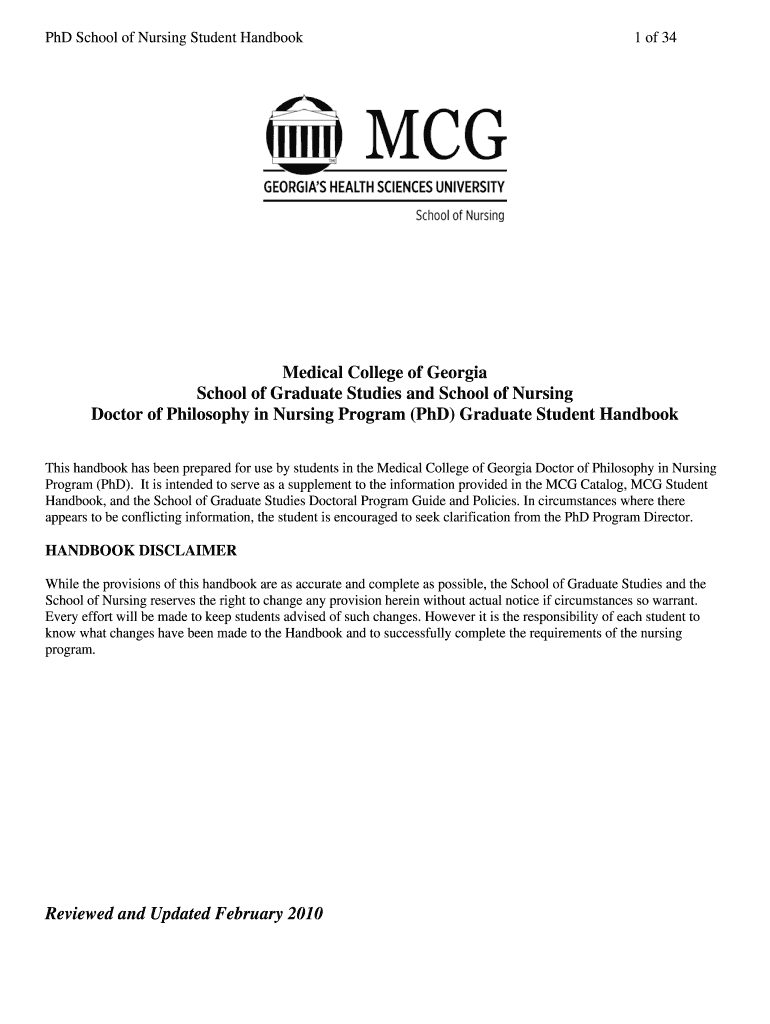







Definition and Meaning
The PhD School of Nursing Student Handbook provides comprehensive guidelines for students enrolled in the Doctor of Philosophy in Nursing program at the Medical College of Georgia. It is a crucial resource for understanding academic requirements, program structure, and student responsibilities.
Academic Requirements and Structure
- Admission Criteria: Details on the prerequisites and qualifications necessary for admission into the program.
- Curriculum Details: Information about course offerings, sequencing, and core areas of learning.
- Graduation Requirements: Steps necessary to complete the program and achieve a successful graduation.
Policies and Procedures
- Academic Integrity: Standards and expectations for maintaining honesty and ethical conduct in academic work.
- Grading Policies: How assessments and evaluations are conducted, including criteria for different grade levels.
- Examination Procedures: Regulations surrounding the administration and scheduling of exams.
Key Elements of the PhD School of Nursing Student Handbook
The handbook is designed to ensure students understand their responsibilities and the resources available to them. Key elements include:
- Faculty Resources: Information on accessing faculty support and mentorship.
- Student Responsibilities: Expectations related to attendance, participation, and conduct.
- Institutional Policies: Guidelines that govern the university and program operations.
How to Use the PhD School of Nursing Student Handbook
To maximize the utility of the handbook, students should:
- Familiarize themselves with the layout: Identify sections most relevant to their academic journey.
- Regularly Review Updates: Stay informed about policy changes or program adjustments.
- Consult for Problem-Solving: Use the handbook as a first-line reference for answering questions or resolving issues related to the program.
Practical Scenarios
- Course Selection: Using the handbook to plan and select the appropriate courses for each semester.
- Exam Preparation: Following outlined procedures and requirements to ensure compliance with examination rules.
Who Typically Uses the PhD School of Nursing Student Handbook
While the primary users are PhD nursing students, the handbook is also a valuable resource for:
- Faculty Members: For guidance on program structure and expectations.
- Academic Advisors: To assist in counselling and supporting student progress.
- Administrative Staff: Involved in the enforcement of policies and academic compliance.


Steps to Complete the PhD Program
Completing the PhD program as described in the handbook typically involves the following steps:
- Meet Admission Requirements: As outlined in the specific section on qualifying criteria.
- Course Completion: Successfully navigate and complete required and elective courses.
- Clinical Experiences: Fulfill any hands-on practice elements detailed within the curriculum requirements.
- Final Dissertation: Conduct and present original research that contributes to the nursing field.
Important Terms Related to the Handbook
Understanding key terminology is essential for effectively navigating the handbook:
- Confidentiality: Maintaining privacy and security of student and patient information.
- Professional Behavior: Adhering to conduct standards applicable to both the academic and clinical environments.
Digital vs. Paper Version
There are distinct differences in accessing the handbook digitally versus a paper copy:
- Digital Version: Offers easy search capabilities and regular updates.
- Paper Version: Useful for those who prefer a tangible reference or are in locations without reliable internet access.
Accessibility
Both formats are designed to be user-friendly, ensuring that all students can fully access and utilize the information provided.
Legal Use of the PhD School of Nursing Student Handbook
The handbook serves as a binding document between the student and the institution, aligning expectations and responsibilities on both sides. It also provides:
- Procedures for Resolving Disputes: How to navigate conflicts or discrepancies with program requirements.
- Institutional Support Services: Access to services that assist with academic success and personal well-being.
Compliance
Students are required to adhere to the policies and guidelines to maintain good standing within the program. Any deviations may result in disciplinary actions as outlined in the relevant sections of the handbook.




