
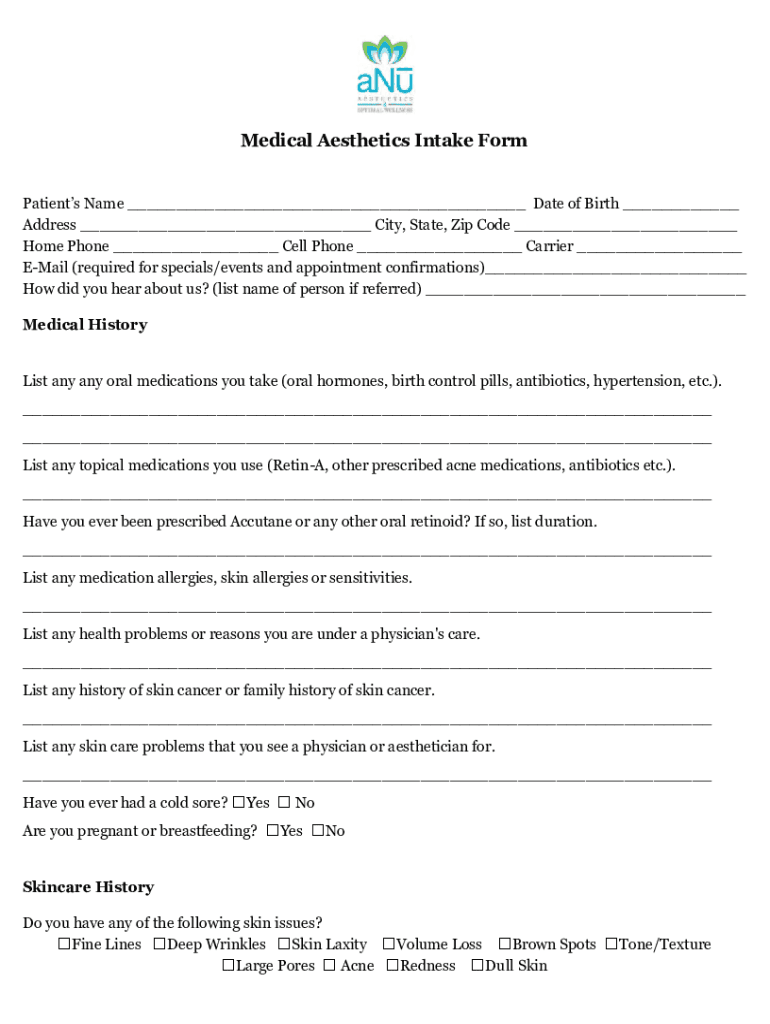







Definition and Purpose of the Medical Aesthetics Intake Form
The Medical Aesthetics Intake Form serves as a comprehensive document designed to collect essential personal and medical information from patients seeking aesthetic treatments. This form acts as a critical communication tool between patients and practitioners, ensuring that all parties have the necessary information for safe and effective treatments. The document commonly includes sections on patient demographics, medical history, and areas of interest for future treatments. By compiling this data, medical aesthetics professionals can customize treatment plans to meet the unique needs and goals of each patient.
Key Components of the Form
-
Patient Demographics: This section gathers basic information such as name, contact details, and age. Understanding demographic data helps practitioners assess eligibility and tailor services appropriately.
-
Medical History: Detailed medical history is crucial for identifying any underlying health conditions that might affect treatment. This may include allergies, current medications, and previous surgical procedures.
-
Skincare History: Including previous skincare treatments assists in evaluating the patient’s skin condition and determining suitable aesthetic treatments.
-
Treatment Interest Areas: Patients can indicate specific areas they wish to improve, facilitating targeted consultation.
-
Cancellation Policy: Clearly stated policies help manage expectations and reduce last-minute cancellations, which can affect scheduling.
Completing the Medical Aesthetics Intake Form: Steps and Tips
Completing the form is a vital step for both patients and the medical aesthetics facility. A thorough and accurate intake form ensures the safety and effectiveness of treatments.
-
Personal Information: Start by accurately providing personal data. Double-check contact details to ensure the facility can reach you for appointment-related communications.
-
Detailed Medical History: Fully disclose your medical history. Inform the practitioner about any allergies, ongoing treatments, and health conditions.
-
Consent to Treatment: Read and understand the consent section thoroughly. This part often outlines risks and acknowledges that you understand the information provided.
-
Treatment Goals: Clearly articulate your aesthetic goals. Being precise helps practitioners suggest the best treatment plans.
-
Skincare Regimen: Include details on current skincare products and past treatments to avoid adverse reactions.
Common Mistakes to Avoid
-
Incomplete Information: Omitting details can lead to ineffective or unsafe treatments.
-
Miscommunication of Goals: Be as specific as possible about your expectations and desired outcomes.
-
Neglecting Allergy Information: Always note any allergies to prevent potential complications.
Accessing and Utilizing the Medical Aesthetics Intake Form
Getting the right version of the Medical Aesthetics Intake Form is crucial for streamlining the patient intake process.
-
Online Availability: Many facilities offer the form online for convenience. Check the website of the medical aesthetics practitioner or call their office for direct links.
-
Paper Formats: Some establishments still prefer traditional paper forms. Visit the clinic in person to pick up the necessary documents.
-
Software and Compatibility: Platforms like DocHub provide tools to edit and sign documents online, supporting various file formats including PDFs, DOCs, and more.
Digital Versus Paper Forms
-
Digital Advantage: Digital forms are easily editable and can be submitted online, saving time and paper.
-
Paper Preference: Some patients feel more comfortable with physical forms. Facilities might still require these for document control.
Who Should Use the Medical Aesthetics Intake Form?
The form is mainly used by:
-
Patients Seeking Aesthetic Procedures: Individuals interested in aesthetic treatments are the primary users, as it facilitates personalized and safe service delivery.
-
Medical Practitioners: Medical aesthetics practitioners use the form to gather essential patient information, ensuring compliance and safety.
Legal Considerations and Compliance
Compliance with legal standards is essential when handling patient information via the Medical Aesthetics Intake Form.
Essential Legal Aspects
-
Confidentiality: Patient confidentiality must be maintained in line with HIPAA guidelines.
-
Informed Consent: The form must include a section where patients consent to treatments, acknowledging an understanding of risks and procedures.
-
Data Protection: Facilities must ensure data protection practices to safeguard sensitive personal information.
Enhancing Security with DocHub
Utilizing platforms like DocHub enhances both accessibility and security for managing intake forms.
Security Features
-
256-bit SSL Encryption: Ensures that data is protected during transfer and storage.
-
Password Protection: Adds an additional layer of security to safeguard sensitive documents.
Collaboration and Real-Time Editing
DocHub facilitates multiple users working on a single document, which is ideal for ensuring that all necessary staff can access and update patient information when needed. Real-time synchronization ensures everyone is viewing the most current version.
Variants and Alternatives
Understanding the variants or alternative forms can be key for specific treatments or clinic preferences.
Exploring Different Versions
-
Specialized Forms: Clinics might have specialized forms for specific procedures like Botox, chemical peels, or laser treatments.
-
Updates and Revisions: Forms are periodically updated to reflect new medical guidelines or treatments. Always use the latest version for accuracy.
By comprehending the nuances and ensuring thorough and accurate use of the Medical Aesthetics Intake Form, both patients and practitioners can achieve optimal outcomes while adhering to necessary legal and healthcare standards.


