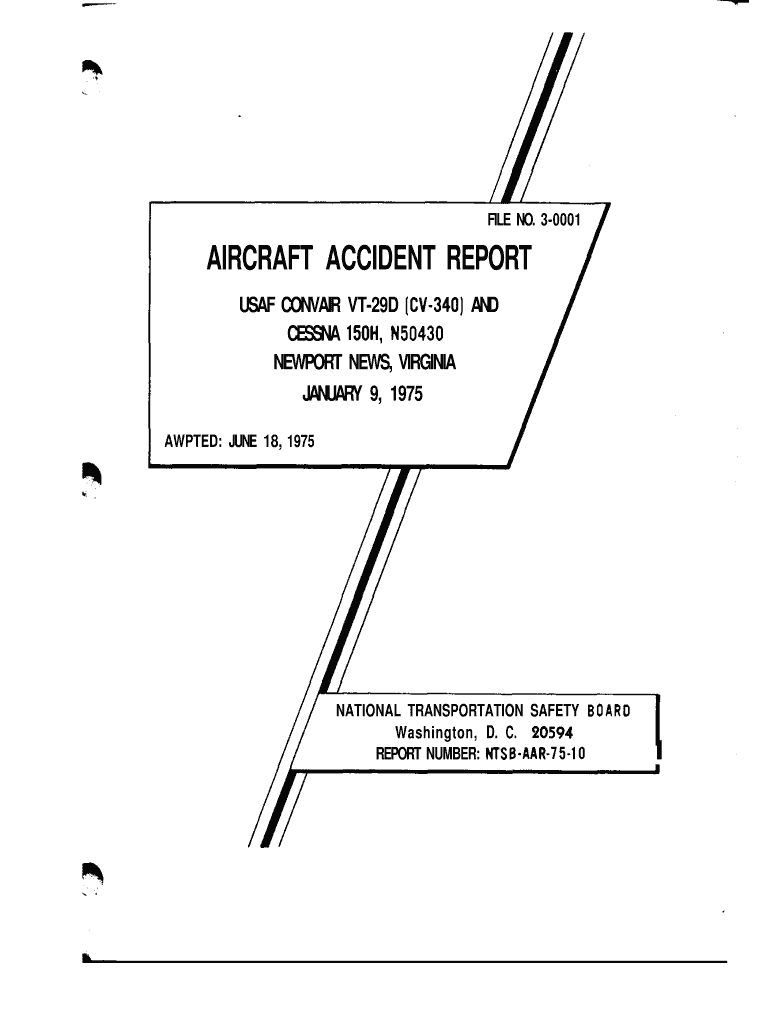







Definition & Meaning
The USAF Convair VT-29D (CV-340) was a modified version of the Convair CV-240 series, initially developed as a military transport aircraft by the United States Air Force. The VT-29D, often used for training and transportation purposes, is part of the expansive category of military aircraft developed during the mid-20th century. Known for its reliability, this aircraft played a crucial role in operations requiring short to medium-haul flights. Exploring the specific attributes of the VT-29D helps in understanding its usage within military contexts, particularly during its operational period from the 1950s onwards.
How to Use the USAF Convair VT-29D (CV-340)
Using the USAF Convair VT-29D involved various operational steps designed to ensure safety and efficiency in military applications. Typically, its usage was governed by standardized military operation procedures that included:
- Flight Preparation: Ground checks and pre-flight inspections were mandatory to ascertain the aircraft's readiness. These checks involved thorough examinations by qualified personnel.
- In-flight Operations: Pilots adhered to a strict protocol that incorporated navigation, communication, and control checks, ensuring alignment with military regulations.
- Post-flight Procedures: After landing, crews conducted debriefings and maintenance reports, crucial for ongoing airworthiness and operational efficiency.
Steps to Operate the USAF Convair VT-29D (CV-340)
Operating this aircraft required a systematic approach:
- Pilot Briefing: Before takeoff, pilots and crew underwent a detailed briefing covering the mission parameters, weather conditions, and emergency procedures.
- Pre-Flight Inspection: Teams examined the fuselage, wings, engines, and avionic systems, documenting all findings in a pre-flight report.
- Takeoff and Landing: Specific techniques and speeds tailored to the aircraft's design were crucial for safe takeoff and landing, demanding precision from the flight crew.
- Mission Execution: Whether transporting personnel or cargo, the VT-29D was tasked with adhering to mission directives, maintaining altitude, and speed profiles as outlined in operational orders.
Key Elements of the USAF Convair VT-29D (CV-340)
Several critical components define the VT-29D's operational capabilities:
- Airframe: The robust construction allowed it to withstand various military operational environments.
- Engines: Twin radial engines provided the necessary power for reliable performance over long distances.
- Cockpit: Equipped with essential aviation instruments, the design enabled pilots to focus on key navigational and control aspects during flights.
- Cargo Space: Configurable interiors allowed for varied cargo and passenger arrangements, enhancing the aircraft's utility in diverse military applications.
Important Terms Related to USAF Convair VT-29D (CV-340)
Understanding the terminologies associated with the VT-29D is crucial:
- Midair Collision: Refers to any in-flight collision between two or more aircraft, as noted in historical accident reports involving the VT-29D.
- See-and-Avoid Concept: A principle in aviation where pilots must maintain vigilance to avoid collisions, highlighted in safety recommendations.
- Air Traffic Control Improvements: Efforts to enhance the management of aircraft movements to prevent incidents like the midair collisions of historic relevance.
Examples of Using the USAF Convair VT-29D (CV-340)
Historical operations provide insight into the practical uses of the VT-29D:
- Training Missions: The aircraft frequently served as a platform for training flight crews in navigation, operational commands, and emergency procedures.
- Transportation: It played a vital role in transporting military personnel and equipment across various bases, supporting logistics operations.
- Reconnaissance: On occasion, its structural resilience and flight endurance enabled it to participate in reconnaissance missions, offering crucial intelligence-gathering capabilities.
Penalties for Non-Compliance with Operational Guidelines
Failure to comply with operational protocols could result in severe repercussions:
- Safety Violations: Deviations from established safety standards could lead to accidents, including potential loss of life, as recorded in historical reports.
- Operational Downtime: Non-compliance often results in grounding of aircraft until inspections and necessary rectifications are made, impacting military readiness.
- Disciplinary Actions: Military personnel found in violation of operational guidelines faced disciplinary actions, which could include demotion or discharge.
State-Specific Rules for the USAF Convair VT-29D (CV-340)
Certain operations had to comply with state-specific guidelines:
- Airspace Regulations: Different states imposed unique airspace rules, particularly near metropolitan areas, affecting operational paths and altitudes.
- Environmental Considerations: States with specific environmental protections required adherence to noise and emissions regulations during flight operations.
Who Typically Uses the USAF Convair VT-29D (CV-340)
Usage was predominantly among:
- Military Pilots: Trained to handle specific operational requirements exclusive to military aircraft.
- Air Materiel Command: Responsible for logistics, maintenance, and management of the aircraft within the military framework.
- Ground Support Personnel: Essential for maintenance, providing the necessary technical support to ensure operational readiness.