







Definition and Meaning
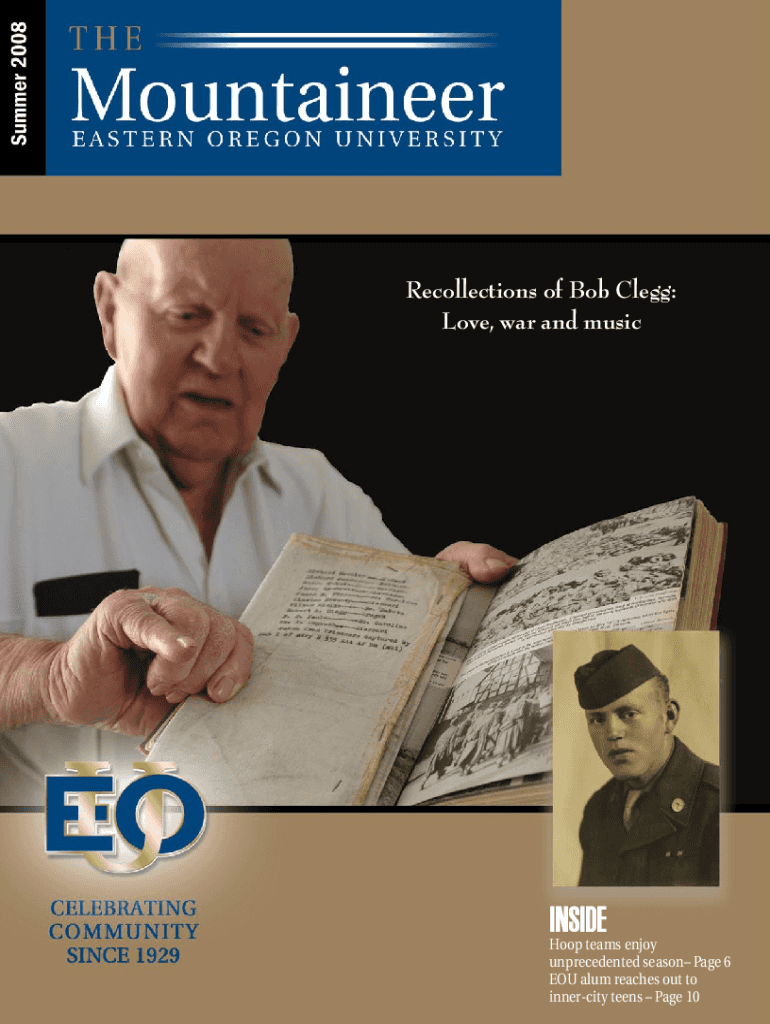
"Recollections of Bob Clegg: Love, War, and Music - Eastern Oregon University" is a segment featured in the Summer 2008 issue of the Mountaineer Alumni Magazine. This particular piece delves into the life and experiences of Bob Clegg, a WWII veteran, emphasizing his journey through love, war, and music. It serves as a narrative that ties personal history with larger historical events, providing insight into how individual experiences contribute to broader societal narratives. The recollections cover Clegg's time during WWII, his passions, and his affiliation with Eastern Oregon University (EOU), illuminating how these elements shaped his life and legacy.
How to Use the Recollections of Bob Clegg
Readers can use the "Recollections of Bob Clegg" as a source of inspiration and historical reference. It offers lessons in resilience, the impact of war on personal life, and the role of music as a form of expression and healing. Educators and students at EOU may incorporate these recollections into discussions about historical events, character studies, or cultural impacts. Alumni and community members might find personal connections or draw parallels to their own lives or family histories.
- Educators can use it as a teaching tool in history and music courses.
- Students may reference it in research projects or essays.
- Alumni may use it as a conversation starter at reunions or events.
Steps to Complete the Recollections of Bob Clegg
As the Recollections of Bob Clegg is not a form but a narrative piece, "completing" it involves comprehensive reading and analysis. Here’s a suggested approach:
- Read Thoroughly: Engage with the narrative from start to finish, paying close attention to key events and details.
- Identify Themes: Note recurring themes such as love, challenges during war, and the influence of music.
- Analyze Context: Consider the historical and cultural backdrop of each stage in Clegg’s life.
- Reflect: Think about how Clegg's experiences resonate with current personal or societal situations.
Key Elements of the Recollections
The key elements of Bob Clegg's recollections include:
- Love: Relationships and emotional connections that played a significant role in his life.
- War: His experiences and challenges faced during WWII, reflecting the broader human experience of conflict.
- Music: Its role in offering solace, identity, and expression, highlighting how creative pursuits can shape and support individuals in difficult times.
Examples of Using the Recollections
The recollections can be used in various contexts to illustrate core lessons:
- Classroom Discussions: Analyzing how personal narratives add depth to the understanding of historical events.
- Cultural Programs: Using Clegg's story to discuss the intersection of music and history during public events or seminars at EOU.
- Alumni Engagement: Encouraging alumni to share their own stories, creating a rich tapestry of personal experiences connected to EOU.
Who Typically Uses the Recollections
The primary audience for these recollections includes:
- EOU Students and Educators: Those studying history, music, or cultural studies.
- Alumni and Community Members: Individuals interested in preserving and understanding personal and institutional history.
- Historians and Researchers: Experts looking to explore personal narratives as lenses for larger historical events.


Important Terms Related to Recollections
Understanding certain terms can enhance comprehension:
- Servant Leadership: A concept emphasized by EOU President Dixie Lund, which refers to leading by serving others, underscoring community service.
- WWII Veteran: Refers to Clegg’s service, providing a contextual basis for his experiences and their impact.
- Mountaineer Alumni Magazine: The publication featuring Clegg's recollections, serving as a platform for sharing EOU's community stories.
State-Specific Rules for the Recollections
While the recollections themselves are narrative-based, the insights drawn from them are applicable within the cultural and educational framework of Oregon and specifically EOU. Understanding the state's emphasis on community engagement and historical documentation can enhance the utilization of these recollections.
Legal Use of the Recollections
These recollections, as part of a published magazine issue, are intended for educational and personal use. They may be cited in academic work or referred to in public discussions, provided proper credit is given to the original publication. As a part of an academic institution's archive, they serve as a culturally significant artifact that contributes to the understanding of personal and regional history.




