







Definition and Purpose of Evaluation and Treatment
The term "Evaluation and Treatment" refers to comprehensive procedures aimed at diagnosing and addressing specific conditions or issues. In the context of documents, this process involves scrutinizing various elements to ensure their accuracy, completeness, and relevance. The goal is often to identify errors or areas needing improvement and to implement necessary changes to enhance the functionality or effectiveness of the document. This can apply to medical, legal, and other professional contexts where precise documentation is crucial.
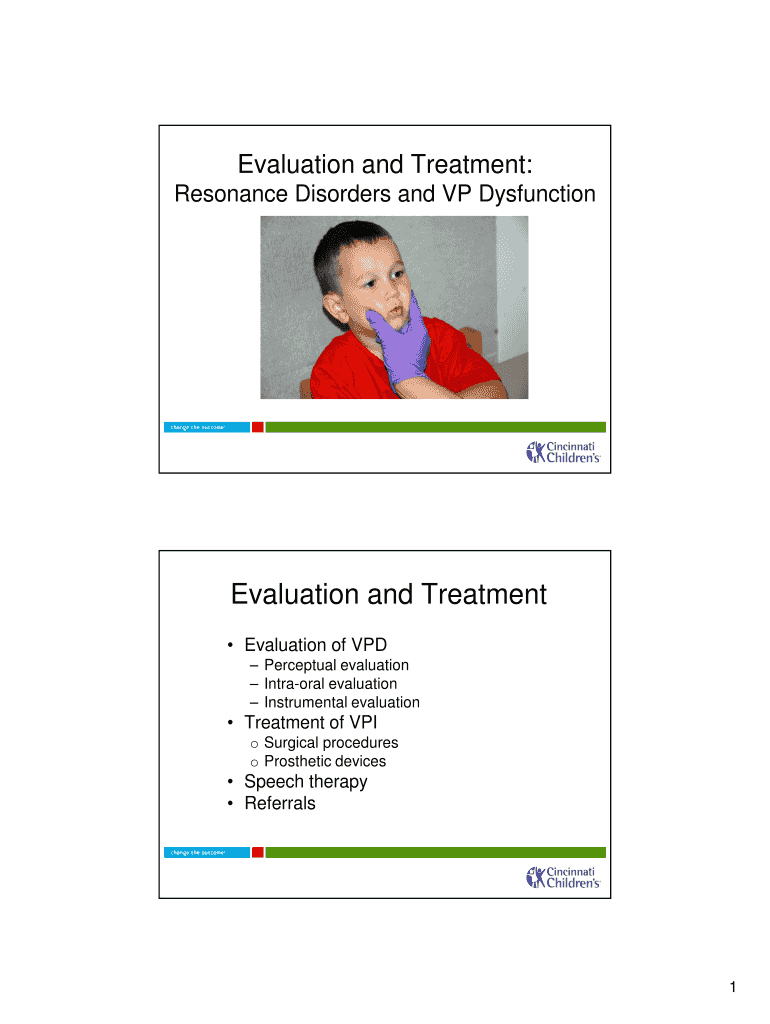
In medical scenarios, for instance, Evaluation and Treatment processes are vital for diagnosing conditions such as velopharyngeal dysfunction (VPD) and implementing the correct therapeutic interventions. These strategies can be surgical, therapeutic, or involve prosthetic devices to correct specific issues. Digital environments, like those on DocHub, offer tools to efficiently evaluate and amend document workflows, ensuring every piece of information is accurate and user-friendly.
Steps to Effectively Utilize Evaluation and Treatment
-
Identify the Need for Evaluation: Determine the specific reasons why Evaluation and Treatment are necessary. This might be due to observable errors in a document or discrepancies within the content.
-
Gather Required Information: Compile all related documents and data necessary for a thorough assessment. This may include current and historical versions of the document, stakeholder inputs, or guidelines related to the document's purpose.
-
Conduct a Detailed Examination: Use appropriate tools and methodologies to analyze the document. This could involve checking for compliance with relevant standards, ensuring content accuracy, and validating the information against reliable sources.
-
Implement Necessary Changes: Use the insights from the evaluation to edit and improve the document. This can involve correcting errors, updating outdated information, or enhancing clarity and readability.
-
Reassess to Confirm Improvements: After making changes, perform a follow-up evaluation to verify that all issues have been resolved and that the document meets the desired standards.
-
Documentation of Findings and Actions: Keep a detailed record of the evaluation process, including observed issues, actions taken, and results. This information is invaluable for future reference or audits.
Who Typically Uses Evaluation and Treatment
Evaluation and Treatment are utilized by a wide range of professionals across various fields. In the medical domain, healthcare providers such as surgeons, speech therapists, and prosthodontists use these processes to diagnose and treat conditions like VPD. In document management contexts, professionals and teams responsible for maintaining the integrity and quality of documentation frequently engage in these activities. Legal professionals, editors, and compliance officers also rely on evaluation and treatment to ensure their work adheres to legal standards and industry regulations.
Key Elements Involved in Evaluation and Treatment
-
Assessment Tools and Techniques: Utilizing specific methods for analysis, such as perceptual evaluations in medical contexts or digital editing tools in document management.
-
Collaboration and Input: Involving various stakeholders who can provide insights during the evaluation process. This might include team members or specialists in specific areas.
-
Documentation and Tracking: Keeping an accurate record of all insights and changes made during the process, often aided by tools like DocHub for seamless digital management.
-
Feedback and Iteration: Incorporating stakeholder feedback into the process and revisiting the document post-changes to ensure all improvements achieve the intended outcome.
Legal Use Considerations for Evaluation and Treatment
When engaging in Evaluation and Treatment, it's important to consider the legal implications, especially concerning document management. Legal compliance involves ensuring that documents are evaluated according to the relevant laws and standards, such as HIPAA in medical records or the ESIGN Act for electronic signatures. In medical contexts, legal use also includes obtaining necessary consent before treatments and ensuring all interventions are well-documented.
Digital vs. Paper Version of Evaluation and Treatment
Digital processes offer substantial benefits over traditional paper-based methods of Evaluation and Treatment. Digital platforms like DocHub allow for easy integration, real-time collaboration, and robust security features. The digital environment facilitates a more efficient evaluation process, as changes can be implemented and shared instantly, without the need for cumbersome physical exchanges. Additionally, electronic documentation supports better tracking and version control, reducing the chances of errors that can occur in manual handling.
State-Specific Rules for Evaluation and Treatment
Understanding state-specific regulations is crucial in both medical and legal Evaluation and Treatment contexts, as state laws can significantly impact procedures and outcomes. For instance, the requirements for documenting medical evaluations and treatments may vary significantly from one state to another in the United States. Similarly, compliance with state regulations for legal documents ensures that they are recognized and enforceable within that jurisdiction.
Practical Examples and Scenarios for Effective Evaluation and Treatment
Consider a case in the medical field where a team needs to diagnose VPD. A thorough evaluation using perceptual and intra-oral assessments helps the team determine the right combination of surgical and therapeutic interventions. In a digital context, a company could conduct an Evaluation and Treatment of its document workflow to streamline processes and reduce inefficiencies. This might involve integrating DocHub for better document management and procedural compliance.
By addressing these key areas, the Evaluation and Treatment process can be effectively leveraged to enhance document workflows or diagnose and treat conditions efficiently across various domains.




