







Definition & Meaning
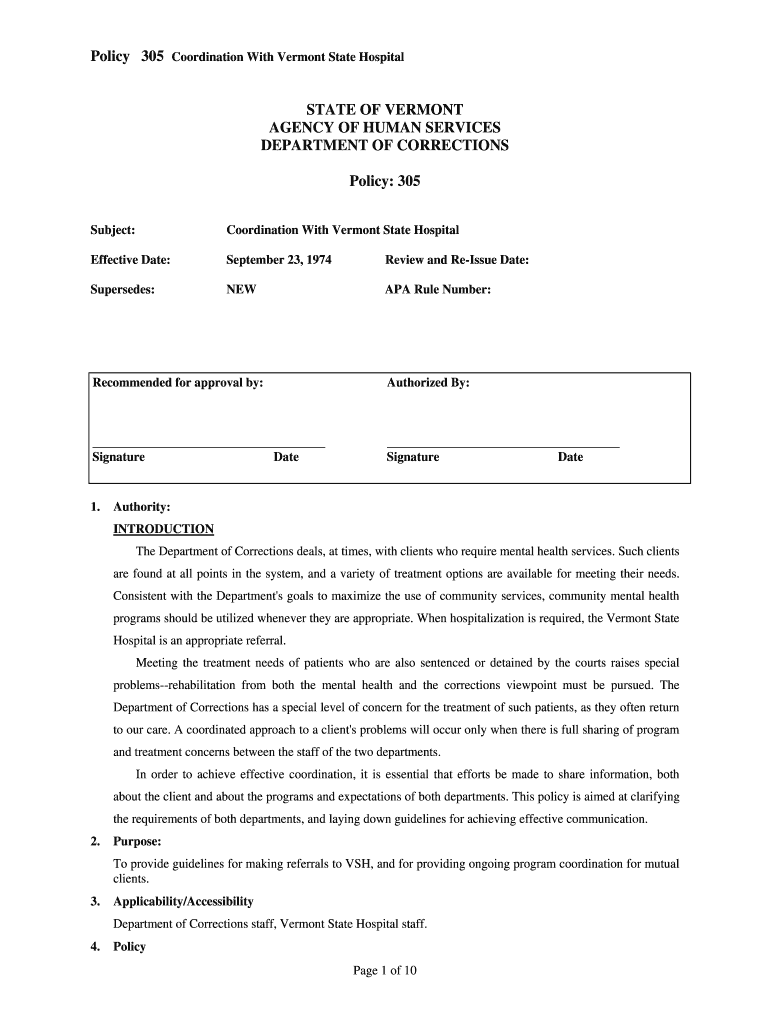
Coordination with the Vermont State Hospital through the Vermont Department of Corrections facilitates effective treatment for clients requiring mental health services. It is a structured process aimed at managing referrals, maintaining communication, and overseeing case management to ensure incarcerated individuals receive necessary psychiatric care.
Importance of Coordination
- Improves outcomes for individuals with dual needs of incarceration and mental health treatment.
- Ensures that all involved parties work collaboratively to provide comprehensive care.
- Establishes a systematic approach that healthcare providers and correctional staff can rely on.
Components of Coordination
- Includes guidelines for information sharing.
- Mechanisms for establishing roles, such as a dedicated probation officer and the Mutual Case Conference Committee.
- Designed to foster interdepartmental teamwork.
How to Use the Coordination with Vermont State Hospital - Vermont Department of
Understanding the use of coordination is critical for professionals involved in mental health and corrections. Here's a practical guide:
- Referral Process: Begin by identifying individuals in need of mental health services and ensure proper referrals are made using established protocols.
- Communication Framework: Utilize structured communication paths to share relevant patient information securely and efficiently with authorized hospital staff.
- Case Management: Engage in ongoing case management practices to track treatment progress and adjust care plans as necessary.
- Collaboration in Practice: Participate in regular meetings and case conferences to align on patient care strategies.
Steps to Complete the Coordination with Vermont State Hospital - Vermont Department of
Completing the coordination process involves several steps that must be followed to ensure efficiency and compliance.
- Identify the Client: Determine which incarcerated individuals require mental health assessments.
- Referral Submission: Submit a referral form through official channels, providing all necessary details about the patient's condition.
- Schedule Assessments: Coordinate with Vermont State Hospital to schedule assessments at a suitable time for both parties.
- Case Conferencing: Engage with the Mutual Case Conference Committee to discuss care plans and decide on appropriate interventions.
- Follow-Up: Ensure continuous follow-up to assess the effectiveness of the treatment plans and make adjustments where needed.
Execution of Roles
- Probation Officer's Role: Act as a liaison to ensure consistent communication between corrections and the hospital.
- Healthcare Provider's Role: Offer expertise in treatment modalities and support cases with clinical insight and recommendation.
Why You Should Utilize Coordination with Vermont State Hospital - Vermont Department of
The utilization of coordination offers several advantages that enhance both healthcare and correctional outcomes.
- Enhanced Treatment Outcomes: Provides a comprehensive approach to treatment, increasing the chances of successful rehabilitation.
- Streamlined Processes: Reduces the complexities associated with managing dual roles of patient care and corrections.
- Compliance and Regulation: Ensures adherence to state regulations, reducing the risks of legal issues associated with inadequate patient care.
Key Elements of Coordination with Vermont State Hospital - Vermont Department of
The key elements ensure that the coordination process is effective and reliable.
- Defined Guidelines: Clearly outlined protocols for referrals, case management, and treatment planning ensure consistency and clarity.
- Dedicated Personnel: Assigns specific roles such as a probation officer within the hospital to manage cases effectively.
- Information Sharing: Structures such as the Mutual Case Conference Committee help facilitate crucial information flow between entities.
State-Specific Rules for the Coordination with Vermont State Hospital - Vermont Department of
Understanding state-specific legislation and policies is crucial for ensuring compliance.
- Vermont Legislation: Adheres to local laws governing mental health treatment within the correctional system.
- Regulatory Requirements: Institutions must follow specific guidelines established by Vermont authorities to maintain accreditation and receive funding.
Examples of Using Coordination with Vermont State Hospital - Vermont Department of
Real-world scenarios highlight the application and impact of coordination.
- Case Example 1: An incarcerated individual diagnosed with bipolar disorder receives structured support through strategic meetings, resulting in effective management of their condition.
- Case Example 2: Successful interdepartmental communication prevents the escalation of behavioral issues and supports timely medical intervention.
Legal Use of Coordination with Vermont State Hospital - Vermont Department of
The coordination process is influenced by legal frameworks that ensure ethical and legal compliance.
- Privacy Compliance: HIPAA and local privacy laws govern how patient information is shared between corrections and healthcare providers.
- Consent and Authorization: Patients or their legal representatives may need to provide informed consent for specific treatments or interventions.
These organized insights create a comprehensive view of the coordination process, aiding professionals in managing and improving mental health outcomes within the correctional system.




