






Definition and Meaning
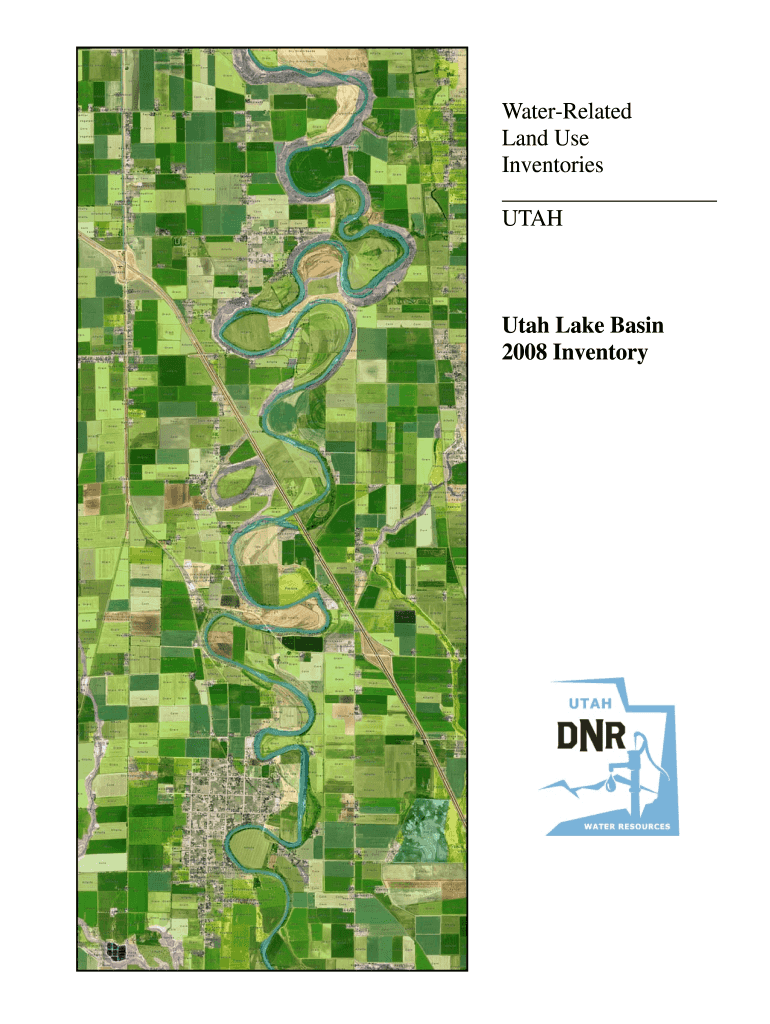
The 2008 Utah Lake Basin Summary Report (PDF) is a comprehensive document detailing the water-related land use in the Utah Lake Basin. Prepared by the Utah Department of Natural Resources, it represents an inventory of land use across nearly 492,000 acres, approximately 26% of the basin's total area. The report serves to categorize land into irrigated, non-irrigated, wet/open water, and residential/industrial areas. It functions as a vital reference for understanding the basin's resource allocation and planning needs, particularly in response to changes driven by population growth and urbanization.
How to Use the Report
To utilize the 2008 Utah Lake Basin Summary Report effectively, users should first familiarize themselves with its structure:
- Land Use Categories: Understand the classifications of land use to comprehend the regional resource management.
- Data Interpretation: Analyze the changes in agricultural and urban areas to gauge the impact of demographic shifts.
- Planning Applications: Use the data for planning water resource management and urban development projects.
This report is instrumental for government agencies, urban planners, environmental scientists, and researchers studying land use impacts and water resource planning.
Obtaining the Report
Accessing the 2008 Utah Lake Basin Summary Report is straightforward. It can typically be downloaded from the Utah Division of Water Resources website, often available in PDF format. Here's how you can obtain it:
- Visit the Official Website: Go to the Utah Division of Water Resources site.
- Navigate to Reports Section: Find the section dedicated to published reports or water resource summaries.
- Download: Locate the report and download the PDF file to your device.
A reliable internet connection is essential for a seamless downloading experience.
Steps to Complete the Report
While the report itself is not a form requiring completion, engaging with it requires critical steps for effective utilization:
- Review the Introduction: Grasp the purpose and scope of the report.
- Analyze Data Sections: Focus on data tables and graphics to derive insights relevant to your interest area.
- Synthesize Findings: Integrate the report's findings into your project's framework or policy development.
For individuals using this report for research or policy formation, maintaining organized notes can be highly beneficial.
Importance of the Report
The 2008 Utah Lake Basin Summary Report holds significant value for several reasons:
- Resource Management: Provides baseline data for effective water management in the region.
- Urban Planning: Informs city planners and policymakers on sustainable development practices.
- Historical Reference: Serves as a historical benchmark for examining changes over time, aiding in long-term environmental planning.
By offering precise data, the report supports informed decision-making regarding land and water use.
Typical Users
The report is typically utilized by a diverse group:
- Government Agencies: For regulatory and planning purposes.
- Environmental Scientists: To assess ecological impacts and water utilization.
- Urban and Regional Planners: For land development and resource allocation strategies.
- Research Institutions: Conducting studies on environmental and urbanization trends.
Understanding the diverse user base helps tailor the report's application effectively across sectors.
Key Elements to Focus On
Essential components of the report that demand attention include:
- Land Use Inventory: Details on irrigation, non-irrigation, and development land.
- Water Resources: Information on the availability and allocation of water.
- Demographic Changes: Insight into population growth and its impact on land use.
These elements are crucial for a holistic understanding of the area's planning needs.
Legal Use of the Report
The report primarily serves an informational and planning purpose, with no direct legal implications but crucial in policy and regulatory framework formulation. Planners must align its data with state and federal environmental regulations when devising projects. Proper citation when using the report's data in any public or official documentation is crucial to maintain accuracy and credibility.
State-Specific Rules
While the report contains information pertinent to Utah, understanding state-specific guidelines for resource management is vital:
- Utah Water Rights: Regulations govern the usage and allocation of water resources.
- Land Development Codes: Compliance with state and regional development guidelines is essential when planning based on report data.
Such specifics ensure that planning and resource utilization are carried out within legal frameworks, maintaining environmental and community welfare.
State-by-State Differences
The data and planning guidance provided in the Utah Lake Basin Summary Report are specialized for Utah; however, different states have varied regulations and environmental concerns. When utilizing insights from similar reports for other regions, consider:
- Regional Climatic Conditions: Affect water resource availability.
- Local Environmental Policies: Influence land use and sustainability considerations.
Understanding these differences is crucial for effectively applying the report’s insights to localized contexts.
Digital vs. Paper Version
While the report is generally available in a digital PDF format for ease of access and distribution, some contexts may require a printed version:
- Digital Benefits: Easy to search through text and perform data analysis with software.
- Paper Version: Useful for presentations, hard copy requirements, or in areas with limited digital access.
Choice of format often depends on user needs and resource availability, ensuring that the report's utility is maximized across different scenarios.