
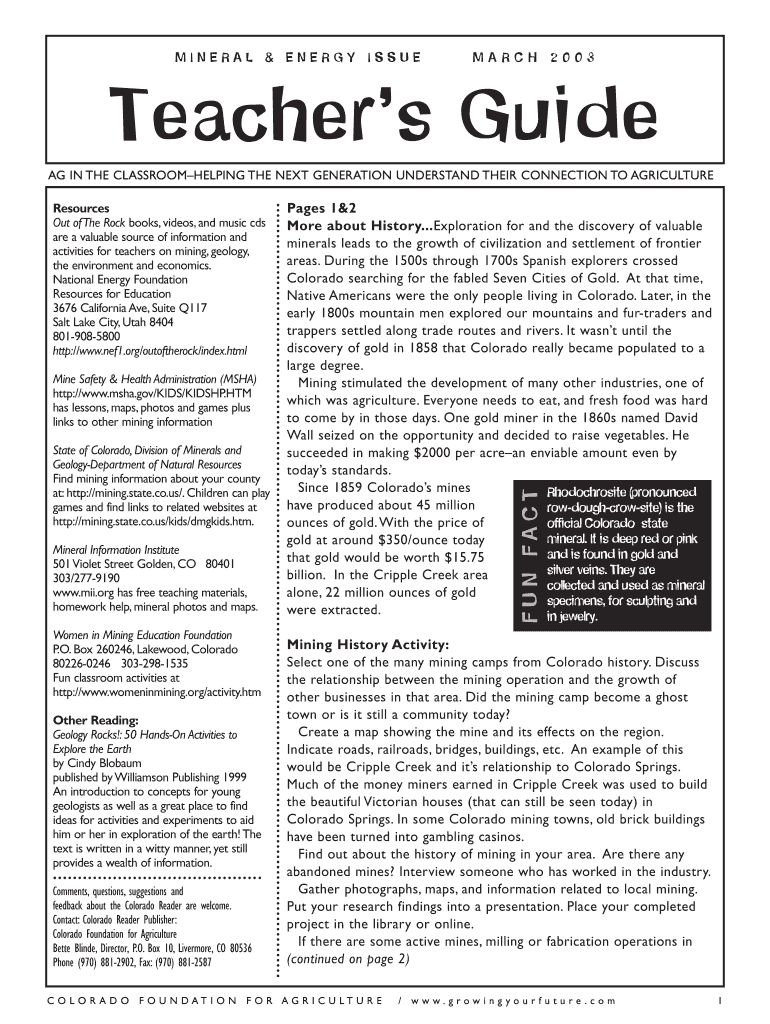







Definition and Meaning of the Teacher's Guide
The "Teacher'sguide mar - Utah Division of Oil, Gas and Mining OGM File - fs ogm utah" serves as an educational resource aimed at providing comprehensive information about the intersection of mining and agriculture in Utah. It explains the significance of mining within local economies and its impact on agriculture, offering insights into how natural resources are a fundamental part of daily life. The guide is designed to enrich students' understanding through historical contexts, hands-on activities, and resource integration. This not only enhances learning but also promotes awareness about sustainable practices and safety considerations in mining.
Using the Teacher's Guide Effectively
To utilize the guide effectively, educators should start by familiarizing themselves with the resource's layout, which typically includes a range of activities and lesson plans. Educators can tailor these activities based on the age and educational level of their students. For example:
- Lesson Planning: Use the provided historical contexts to plan interactive lessons that connect mining practices with local agriculture.
- Hands-On Activities: Incorporate activities like simulations of mining processes or site safety awareness, enhancing student engagement.
- Resource Exploration: Utilize the guide's resources for further research and exploration by students, encouraging independent learning.
By incorporating these strategies, teachers can enhance their geography and science curriculums, making complex subjects more relatable and impactful for students.
Obtaining the Teacher's Guide
The guide is primarily available through the Utah Division of Oil, Gas and Mining. Educators can request copies directly from the division to ensure they receive the most up-to-date version. Additionally, the guide may be available through educational workshops or local teaching resource centers throughout Utah. Checking online portals of state education bodies can also provide digital access or download options. Regular updates might be issued, so periodic checks for newer editions are recommended.
Steps to Complete Activities in the Guide
- Review the Guide: Understand the objectives and key outcomes of each activity.
- Select Relevant Activities: Pick activities that align with your curriculum goals and student needs.
- Gather Resources: Collect any additional materials or tools needed for the hands-on components.
- Explain Context: Provide students with relevant historical and practical context before starting an activity.
- Guide the Activity: Facilitate the activity step-by-step, ensuring student comprehension and engagement.
- Feedback and Reflection: Allow time for students to provide feedback and reflect on what they learned from the activity.
Importance of the Teacher's Guide
The guide plays a crucial role in bridging the gap between theoretical knowledge and practical application in educational settings. It underscores the importance of understanding how natural resources affect local agriculture and economies. Teaching through this guide promotes awareness about responsible resource management and safety, fostering informed future citizens. Moreover, it supports critical thinking by encouraging students to make connections between various sectors, such as mining and agriculture, and their own community.
Typical Users of the Teacher's Guide
The primary users of the Teacher's Guide are educators in K-12 institutions, particularly those teaching subjects related to geography, science, and social studies. Additionally, it can serve as a valuable resource for homeschooling parents and environmental educators aiming to impart knowledge about sustainable practices and the significance of natural resources. It's also applicable for educational organizations focused on ecology or conservation, providing a framework for structured learning activities.
State-Specific Rules for the Teacher's Guide
In Utah, the guide adheres to educational standards laid out by the state's Department of Education. It aligns with state-specific guidelines on teaching environmental science and geography, ensuring that educators deliver content relevant to Utah’s unique geographical and economic context. This includes:
- Safety Standards: Discussing proper safety methods at mining sites as per state safety regulations.
- Environmental Guidelines: Emphasizing regulations relevant to environmental conservation and responsible mining practices unique to Utah.
Understanding these state-specific regulations helps ensure that educators impart knowledge that is both compliant and contextually appropriate.
Examples of Using the Teacher's Guide
Here's how the guide can be used in real-world classroom settings:
- Field Trips: Organize visits to local museums or nature reserves to observe mining impacts first-hand, reinforcing lesson content.
- Guest Speakers: Invite professionals from the oil, gas, and mining sectors to provide students with industry insight.
- Simulation Games: Use role-play activities where students simulate different roles within the mining industry, fostering understanding of industry dynamics.
These examples illustrate practical applications of the guide's content, making learning dynamic and interactive.
Key Elements of the Teacher's Guide
The guide comprises several key elements designed to facilitate effective learning:
- Lesson Plans: Detailed plans align with curriculum standards and are adaptable to various educational levels.
- Activity Sheets: Engaging worksheets that involve critical thinking exercises related to mining and agriculture.
- Resource Lists: Comprehensive lists of additional reading materials, websites, and local resources for further exploration.
- Evaluation Criteria: Tools for assessing students’ understanding and engagement with the material.
These components ensure that teachers have a robust framework for presenting complex subjects in an accessible manner.




