01. Edit your form online
Type text, add images, blackout confidential details, add comments, highlights and more.

Type text, add images, blackout confidential details, add comments, highlights and more.

Draw your signature, type it, upload its image, or use your mobile device as a signature pad.

Send it via email, link, or fax. You can also download it, export it or print it out.
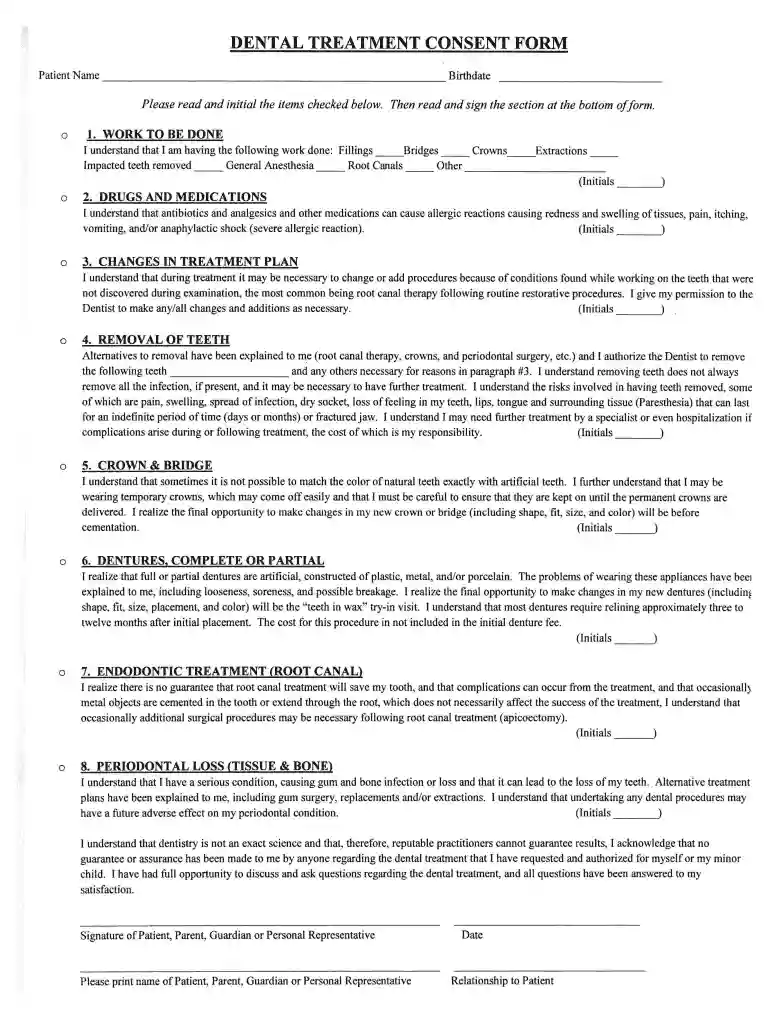
The Dental Treatment Consent Form from ashidadentalofficecom is a vital document in the dental care process. It serves as a legal acknowledgment from the patient that they understand and agree to the procedures recommended by their dentist. This consent form not only outlines the specifics of the treatment being administered but also informs the patient of potential risks, alternative options, and the anticipated outcome. By signing this form, patients confirm their awareness and acceptance of possible complications, enabling them to make informed decisions regarding their dental health.
The form includes a comprehensive description of the dental procedures that are to be conducted. This section ensures the patient understands the specific treatments, such as root canals, crowns, or extractions, that will be performed.
A crucial part of the form is the acknowledgment of potential risks. Patients are informed of possible side effects or complications, including allergic reactions to medications or changes in treatment plans, allowing them to weigh the benefits and risks.
Consent is typically given through initials next to each section of the form and a final signature at the end. This confirms that patients have read and understood each part of the document.
Typically, the form is provided directly by the dental office. Patients can request a copy during their consultation or dental appointment. It ensures that the information is up-to-date and specific to their treatment.
For convenience, many dental offices, including ashidadentalofficecom, offer downloadable versions of the consent form on their websites. This allows patients to review the form in advance and prepare any questions before their appointment.
This consent form is a legally binding document. When signed, it signifies the patient’s informed consent and agreement to the specified treatment, mitigating potential legal issues for dental practitioners. It is essential for both parties as it documents that the patient was informed and agreed to the treatment plan.
Different states may have specific legal requirements regarding medical consent forms. Patients and dental practitioners should be aware of any state-specific mandates related to the documentation of informed consent, ensuring compliance with local regulations. This adherence helps maintain the legal integrity of the consent form.
A patient scheduled for a dental implant would discuss with their dentist the procedure details, possible risks, and expected outcomes. After understanding the information, they would review the consent form, initial sections detailing risks such as infection or implant failure, and then sign the document to indicate their willingness to proceed. Similarly, a patient receiving a root canal would acknowledge risks like reinfection by initialing those sections, ensuring their informed participation in the process.
At DocHub, your data security is our priority. We follow HIPAA, SOC2, GDPR, and other standards, so you can work on your documents with confidence.