
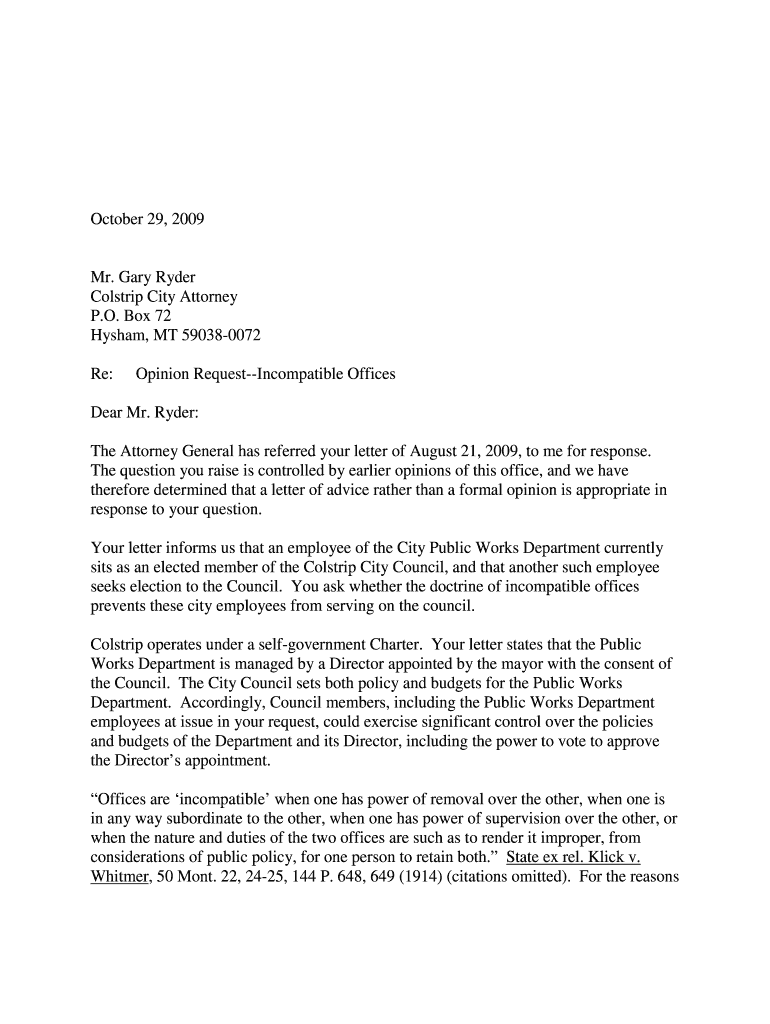







Definition and Purpose of the Letter of Advice
The "Letter of Advice regarding Colstrip's charter form of government - doj mt" is an official document providing guidance on legal and policy matters related to Colstrip's charter form of government. Typically, this type of letter is issued by a legal authority, such as the Department of Justice in Montana (DOJ MT), to address specific concerns or questions raised by local government officials or legal professionals. The primary purpose of the letter is to offer a legal opinion or interpretation of how certain regulations and policies impact government operations in Colstrip.
Key Elements of the Letter of Advice
The core components of the letter encompass a detailed legal analysis and recommendations based on existing laws and policies. These elements may include:
- Background Information: An overview of the legal and policy framework relevant to the inquiry.
- Legal Analysis: An examination of the applicable statutes, case law, or previous legal opinions that influence the matter in question.
- Recommendations: Suggested courses of action or clarification on legal standings.
- References: Citations of laws, legal precedents, or other opinions that support the conclusions drawn.
How to Use the Letter of Advice
The letter is intended for use by city officials, legal advisors, and policymakers involved in governance matters. Here’s how it can be utilized effectively:
- Review the Recommendations: Analyze the legal interpretations and suggestions offered.
- Inform Decision-Making: Use the advice to guide policy decisions, ensuring compliance with legal standards.
- Draft Policy Changes: Amend or draft new policies in alignment with the guidance provided.
- Consult with Legal Counsel: Engage additional legal advice if further clarification or action is needed.
Steps to Obtain the Letter of Advice
Interested parties can follow these steps to acquire such a letter:
- Submit a Request: Initiate a formal request to the DOJ MT, outlining the specific issues or questions requiring clarification.
- Provide Necessary Documentation: Offer any relevant documents or previous correspondence related to the issue.
- Engage in Follow-Up: Be prepared to answer additional questions or provide further context if requested by the issuing authority.
- Receive the Finalized Letter: Once the review is complete, the letter will be issued containing the legal opinions or advice.
Who Typically Uses the Letter of Advice
The primary users of this letter include:
- City Attorneys: To address legal ambiguities and ensure compliance with governmental regulations.
- City Council Members: For insights into potential conflicts of interest or governance issues.
- Public Administrators: To guide policy and administrative decision-making processes.
- Legal Consultants: Offering expert advice to municipal clients on specific governance queries.


State-Specific Rules for Legal Use
The application and relevance of the letter may vary based on state regulations. In Montana's context, the following points are crucial:
- Jurisdictional Authority: The DOJ MT holds specific jurisdiction over municipal governance matters, which makes its letters authoritative.
- State Laws: The relevance of the advice is particularly tailored to Montana's legal environment, ensuring local compliance.
- Precedential Weight: Opinions from the DOJ MT carry significant weight in any future legal deliberations or adjustments to city charters.
Examples of Using the Letter of Advice
The letter serves as a pivotal tool in various real-world scenarios:
- Policy Debates: Clarifying legal standings during council meetings or public debates.
- Conflict Resolution: Mediating disputes between city council members and public employees over policy control.
- Legislative Review: As a reference during the review or drafting of city charters and governance documents.
Important Terms Related to the Letter of Advice
Understanding the terminology used in these letters is crucial for effective application.
- Charter Form of Government: A system wherein a municipality's governance is defined by its own charter rather than general law.
- Dual Roles: Holding two positions within city governance, which may lead to conflicts of interest.
- Public Policy Concerns: Issues that arise when individual decisions impact broader government policies or operations.




