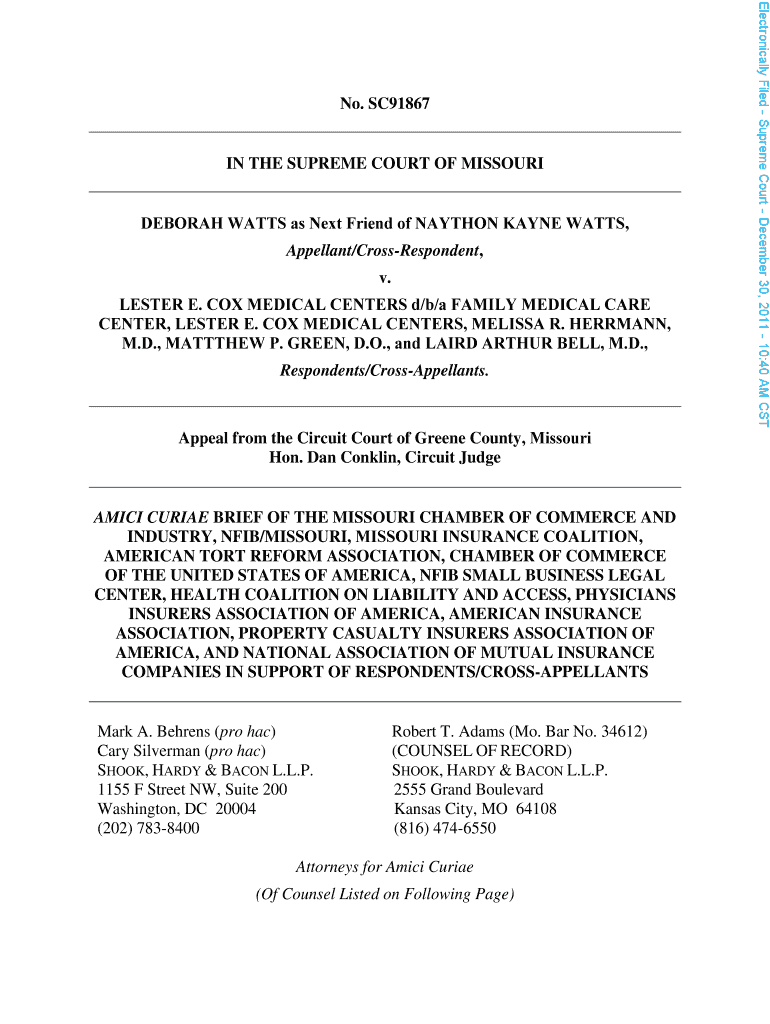







Definition and Purpose of the Form
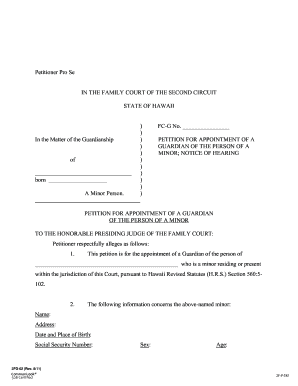
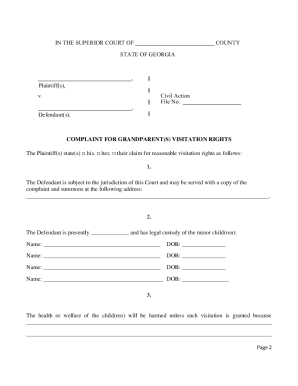
Understanding the role of forms "In the Supreme Court of Mississippi" and the "Missouri Judiciary - Courts MO" provide critical insights into their legal and administrative functions. This document, often considered crucial in judicial procedures, serves as a formal instrument in legal matters such as appeals, filings, and court submissions. The form helps standardize legal documentation, ensuring consistency in how cases are presented and addressed within the court system.
Different states may have variations of this form tailored to their legal requirements and procedures. Jurisdictions, like Mississippi and Missouri, use these forms to uphold legislative mandates specific to each state's judicial process.
How to Use the Form
Utilizing the Supreme Court form requires keen attention to detail and understanding its specific application. Users must accurately complete it, ensuring all fields align with the legal requirements. Typically, this involves entering case-specific information such as party names, case numbers, and the nature of the legal matter.
Adherence to detailed instructions is crucial as this ensures that the form meets submission standards. Missteps can lead to delays in legal proceedings or dismissed submissions, emphasizing the importance of precision and clarity when filling it out.
Steps to Complete the Form
-
Gather Required Documents: Ensure all supporting documents related to your case are compiled.
-
Fill in Basic Information:
- Enter personal and case details accurately.
- Cross-verify the case number and party names.
-
Attach Necessary Documentation:
- Include evidence or exhibits supporting the case.
- Double-check for completeness and accuracy.
-
Submit to the Appropriate Court:
- Follow specified submission methods for either physical or digital delivery.
- Confirm receipt and file reference number.
Key Elements of the Form
The form "In the Supreme Court of Mississippi" involves several critical components:
-
Case Number and Title: These identifiers are essential for court tracking and reference.
-
Petitioner Details: Accurate details about the petitioner ensure proper legal recognition.
-
Legal Grounds and Statements: Articulate the basis of the legal action or defense clearly.
-
List of Attached Exhibits: Document and number each attachment, detailing relevance to the case.
Legal Use and Compliance
Form submission adheres to strict legal guidelines, ensuring all information is correct and verifiable. Compliance also involves understanding state-specific requirements. Legal professionals often ensure forms align with procedural rules and are filed within set deadlines.
Mississippi and Missouri may have specific rules reflecting each state's judicial nuances, making legal counsel valuable for navigating and interpreting these requirements.
Filing Deadlines and Important Dates
Timeliness is pivotal. Courts maintain strict deadlines, impacting case progress. Missing submission deadlines can result in unfavorable judicial outcomes, emphasizing the importance of a well-planned schedule to adhere to court timelines.
Both Mississippi and Missouri courts provide calendars outlining critical submission dates, crucial for legal strategies and planning.
Who Typically Uses the Form
Predominantly, legal professionals such as attorneys and paralegals utilize these forms. They govern client interactions with the court system and are often the initial point of engagement when a case moves to a higher court. Litigants representing themselves also use these forms, although legal guidance maximizes accuracy and compliance.


State-Specific Rules for the Form
Mississippi and Missouri have distinct legal frameworks governing how forms are completed and submitted. This means each state may have specific stipulations, requiring forms to adhere to state legislations, which can vastly differ in areas such as language, procedural deadlines, and supporting documentation requirements.
Understanding these variances is crucial for successful submission and judicial consideration.
Submission Methods: Online, Mail, In-Person
-
Online: Digital submissions offer speed and convenience, provided the state’s court system supports electronic filing.
-
Mail: Traditional but reliable submission method; ensure all details and copies are sent well within any deadlines.
-
In-Person: Allows for immediate confirmation of receipt, beneficial for important submissions with tight deadlines.
Different methods cater to varied preferences and procedural necessities, with states adapting their preferred methods.