






Definition and Meaning
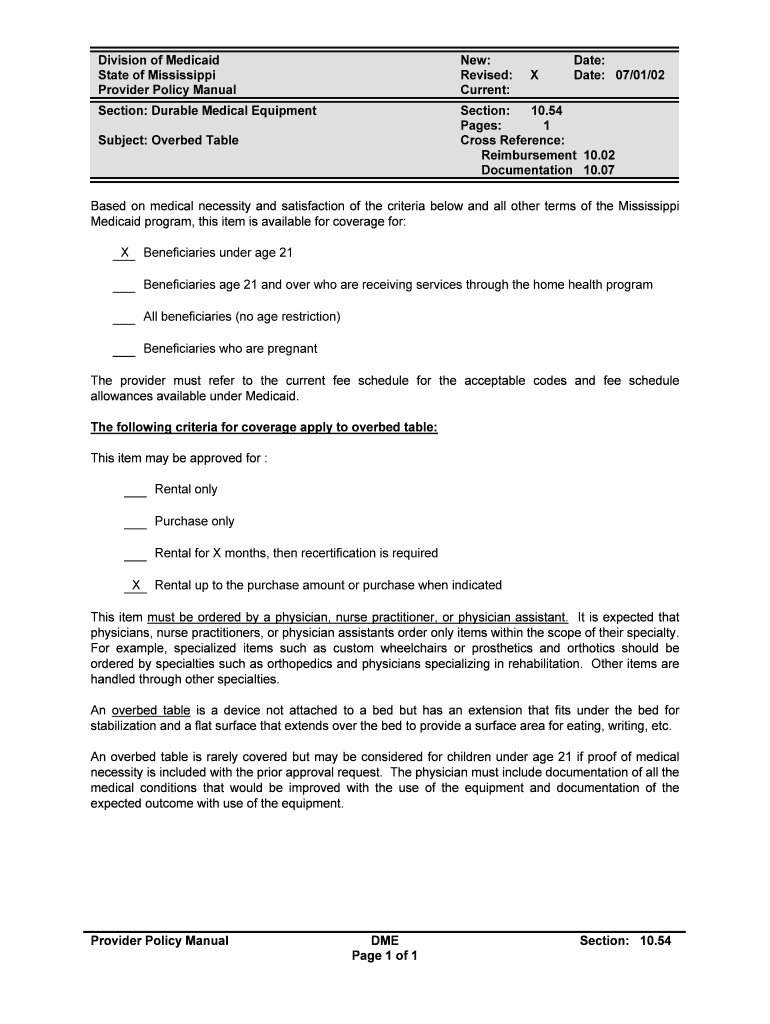
The "Durable Medical Equipment Policy Manual Section 10 54 - Overbed Table Durable Medical Equipment Poli" serves as a comprehensive guide outlining the policies and coverage criteria relating to overbed tables within the context of the Mississippi Medicaid program. This manual section delineates the requirements and limitations associated with obtaining coverage for overbed tables as durable medical equipment (DME). It provides detailed explanations on eligibility, medical necessity, and documentation required for beneficiaries across different age groups and medical conditions. Overbed tables are generally not covered except when justification is made for children under 21, reflecting the program's focused support on younger demographics.
How to Use the Manual
To effectively utilize the "Durable Medical Equipment Policy Manual Section 10 54," individuals and healthcare providers must familiarize themselves with the specific requirements detailed within. Users should:
- Identify the eligibility criteria for beneficiaries seeking overbed tables under Mississippi Medicaid.
- Understand the documentation requirements, including the need for a physician's order and specific clinical data.
- Review the conditions under which overbed tables might be covered, with particular emphasis on the exceptions for pediatric cases.
- Follow the guidelines to prepare and submit necessary documents for approval.
Healthcare providers can streamline the process through a proper understanding of these steps, ensuring compliance and facilitating a smoother approval process for necessary equipment.
Steps to Complete the Manual Section Requirements
-
Confirm Beneficiary Eligibility: Determine if the patient falls under the covered age and condition categories as specified.
-
Obtain Medical Documentation: Secure a physician's order along with necessary clinical information to demonstrate medical necessity.
-
Prepare Justification: Particularly for beneficiaries under 21, ensure a strong justification is documented to increase the chances of approval.
-
Submit Application: Compile all required documentation and submit it in accordance with the manual’s procedural guidelines.
-
Await Approval: Monitor the application process and respond swiftly to any requests for additional information.
These steps ensure compliance with policy guidelines, maximizing the likelihood of a successful approval.
Importance of the Policy Manual
This policy manual is vital because it lays out the rules and procedures for securing Medicaid coverage for overbed tables, an essential component for certain patients' daily medical needs. Ensuring clarity on these policies helps prevent coverage denials, reduces the administrative burden for healthcare providers, and facilitates the timely provision of necessary medical equipment to beneficiaries.
Key Elements of the Manual
The manual includes several critical elements, such as:
- Eligibility Criteria: The specifics for who can apply under Medicaid for overbed tables.
- Documentation Requirements: Necessary paperwork and clinical information needed for approval.
- Justification for Coverage: The conditions under which overbed tables may be required and approved.
- Exceptions for Coverage: Special considerations for different age groups, particularly minors.
Each element is crucial for navigating the often complex world of Medicaid policy.
Legally Compliant Use of the Manual
The manual aligns with Medicaid’s legal framework, ensuring that applications and coverage requests comply with state-level healthcare regulations. Using the manual as a guide helps mitigate legal risks associated with incorrect or incomplete applications, which could result in non-compliance penalties or denials. Legal compliance guarantees the protection of healthcare providers and beneficiaries alike, ensuring proper use of equipment and resources.
State-Specific Rules in the Manual
This manual reflects Mississippi-specific Medicaid policies. It highlights:
- State Guidelines: Unique rules applicable to residents of Mississippi.
- Implementation Details: How state policies correspond with federal regulations.
- Approval Processes: Particular procedural variations required within the state framework.
Understanding these state-specific nuances ensures accurate and timely processing of Medicaid-related requests.
Examples of Using the Manual
Healthcare providers might encounter scenarios such as:
- Pediatric Cases: A child under 21 requires an overbed table as part of at-home care. The manual will guide providers through building a strong case for necessity.
- Chronic Conditions: An adult with a chronic condition needing an overbed table can refer to specific sections to understand their coverage possibilities.
Through real-world examples listed in the manual, users grasp both common and complex applications for overbed tables within Medicaid coverage.
Eligibility Criteria
The eligibility criteria detailed in the manual include:
- Age Requirements: Special provisions and exceptions, especially for beneficiaries under 21.
- Medical Necessity Confirmation: Conditions and medical documentation needed to satisfy Medicaid requirements.
- Program Enrollment Status: Active status in Mississippi Medicaid is mandatory.
These criteria ensure the right patients receive necessary support, optimizing the resource allocation process.
By providing this in-depth coverage, the manual ensures that healthcare providers and beneficiaries can navigate the complexities surrounding the provision of overbed tables as durable medical equipment.