






Definition & Meaning
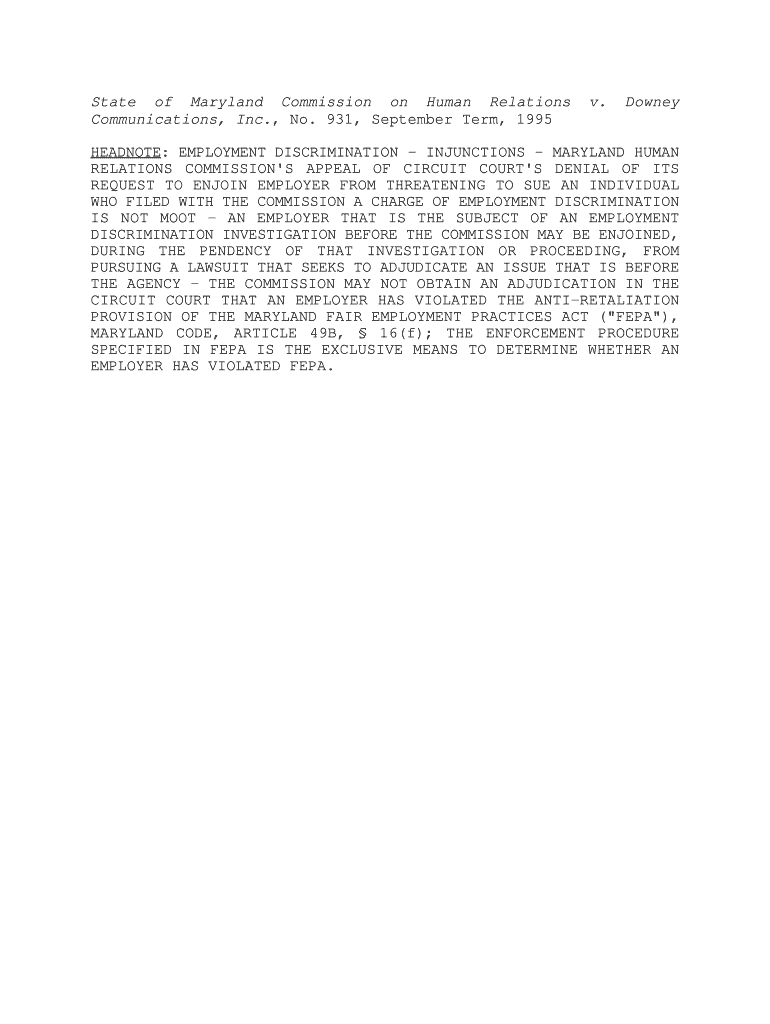
The "State of Maryland Commission on Human - Maryland Courts - courts state md" form primarily relates to the processes handled by the State of Maryland's judicial and human rights entities. These institutions aim to address human rights concerns, especially focusing on cases involving discrimination within employment sectors. This form plays a critical role in filing and managing complaints related to human rights violations, such as those detailed under the Maryland Fair Employment Practices Act.
Purpose
- Complaint Management: Facilitates the process for individuals to file complaints about discrimination.
- Judicial Oversight: Provides a framework for managing legal proceedings related to human rights cases.
- Documentation: Acts as an official record that supports the state's efforts in addressing and resolving discrimination cases.
How to Use the Form
When utilizing the "State of Maryland Commission on Human - Maryland Courts - courts state md" form, users must understand its primary functions. It's essential for documenting instances of discrimination to initiate legal actions or investigations.
Process Overview
- Identify the Issue: Clearly determine the nature of your complaint, ensuring it aligns with human rights or employment discrimination.
- Complete the Form: Provide detailed personal and case-related information.
- File with the Commission: Submit the form to the relevant Maryland Commission office for review.
Steps to Complete the Form
Filling out the form requires accuracy and thoroughness to ensure that all relevant information is captured.
Detailed Instructions
- Personal Information:
- Include your full name, contact details, and any representative details if applicable.
- Nature of Complaint:
- Describe the issue, citing specific instances and evidence.
- Ensure alignment with Maryland's human rights laws.
- Signature and Date:
- Sign and date the form, confirming the authenticity of your submission.
Who Typically Uses the Form
The form is primarily utilized by individuals within Maryland who believe they have been subjected to discrimination or unfair professional treatment. This might include:
- Employees: Workers alleging discrimination based on gender, race, pregnancy, etc.
- Legal Representatives: Lawyers assisting clients with their discrimination complaints.
- Human Rights Advocates: Professionals working to ensure compliance with state and federal employment laws.


Legal Use of the Form
The form's legal utility is centered around its role in human rights litigation within Maryland courts.
Legal Framework
- Complaint Filing: Provides a formal mechanism to initiate legal inquiries into discrimination claims.
- Evidence Collection: Serves as an official record, which can be used as evidence during court proceedings.
- Statutory Compliance: Ensures adherence to Maryland’s anti-discrimination statutes.
State-Specific Rules
Maryland has specific regulations governing the use and submission of this form, which are defined under state law.
Considerations
- Deadlines: Adhere to submission deadlines to ensure timely handling of your case.
- Documentation: Attach necessary supporting documents as required by Maryland statutes.
- Jurisdiction: Confirm that your issue falls under the legal jurisdiction of the Maryland Commission on Human Relations.
Key Elements of the Form
The form includes several critical segments that users must complete accurately to ensure their submissions are valid.
Critical Sections
- Complainant Information: Details personal data about who is filing the complaint.
- Complaint Description: Exact details about the nature of the discrimination.
- Date and Signing: Formal authentication, showing intent and validity of the complaint.
Examples of Using the Form
Real-world applications illustrate how individuals employ this form to address discrimination concerns effectively.
Hypothetical Scenarios
- Employment Dispute: A woman alleges gender discrimination after being denied a promotion.
- Workplace Retaliation: An employee claims they were demoted after filing a previous complaint.
- Racial Bias: A group of minority workers report unequal treatment in job assignments.
Required Documents
When submitting the form, additional documents may be required to support the allegations.
Supporting Materials
- Employment Contracts: To show terms and conditions initially agreed upon.
- Written Correspondence: Emails or letters that reflect the nature of the complaint.
- Witness Statements: Testimonies from coworkers or other relevant parties supporting your claim.
By comprehensively understanding the usage, legal framework, and submission process for the "State of Maryland Commission on Human - Maryland Courts - courts state md," users can navigate the complexities of filing discrimination complaints and ensure their rights are duly represented within the Maryland judicial system.