
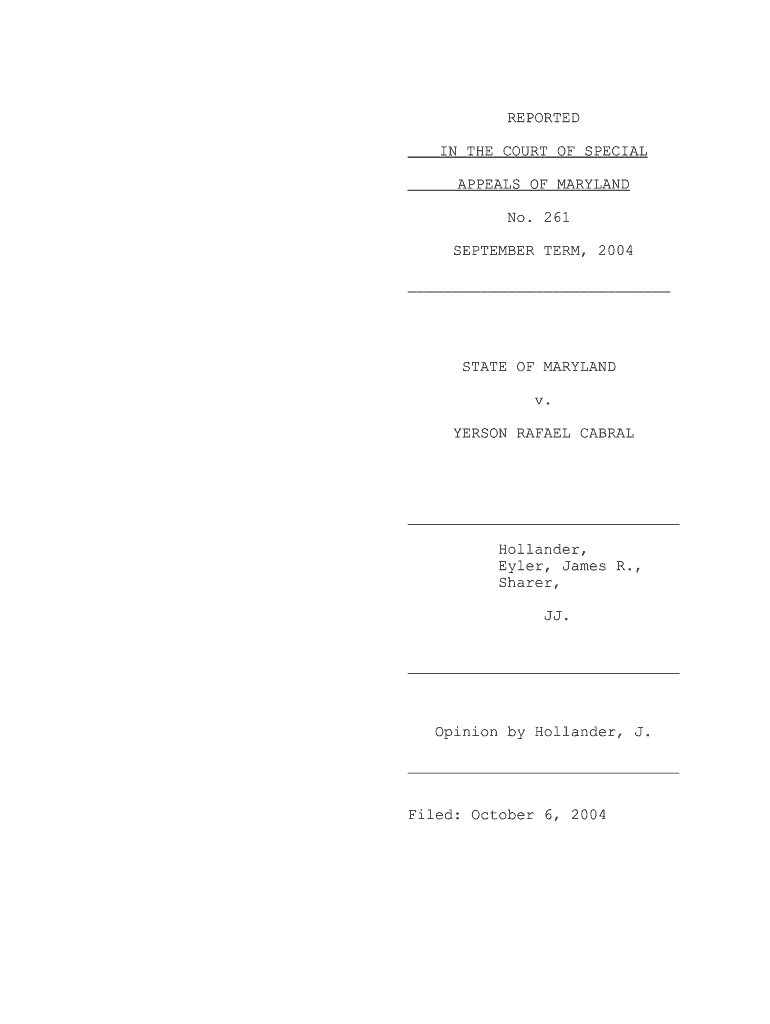







Definition and Meaning of 261 04 - Maryland Courts - courts state md
The designation "261 04 - Maryland Courts - courts state md" refers to a specific form or procedural element used within the Maryland judicial system. It involves legal documentation connected to court proceedings, primarily utilized in the context of Maryland state courts. The form serves as a standardized method of capturing specific information required by the court, contributing to the efficient administration of justice.
How to Use the 261 04 Form
Utilizing the "261 04 - Maryland Courts - courts state md" form involves understanding its purpose and the kind of information it requires. Generally, it includes:
- Providing detailed data requested, depending on the particular legal or administrative requirement it addresses.
- Ensuring the accuracy and completeness of the entered information to prevent delays or legal complications.
- Submitting the form through designated methods, such as online via secure portals or by mail, according to court specifications.
Steps to Complete the 261 04 Form
Filling out the "261 04 - Maryland Courts - courts state md" includes several critical steps:
- Review the Form: Understand all sections before filling out any details.
- Gather Required Information: Assemble personal, case-specific, or organizational data called for within the form.
- Fill Out the Form: Enter the information accurately, ensuring all mandatory fields are addressed.
- Review and Verify: Double-check for errors or omissions to ensure compliance with court requirements.
- Submit the Form: Follow court guidelines to submit the form digitally or physically as needed.
Key Elements of the Form
The "261 04 - Maryland Courts - courts state md" typically consists of several key elements:
- Identifying Information: Basic details about the involved parties or case number.
- Legal Basis: A section that may require outlining the legal purposes or statutes applicable.
- Signatures: Spaces for signatures, affirming the authenticity and intention of the submission.
Who Typically Uses the 261 04 Form
This form is predominantly utilized by:
- Legal Professionals: Lawyers and paralegals who handle documentation in court procedures.
- Court Staff: Individuals responsible for processing legal documents within Maryland's court system.
- Litigants: Defendants and plaintiffs involved in legal proceedings who need to submit information to the court.


Important Terms Related to the 261 04 Form
Understanding related legal terminology helps in correctly interpreting the form:
- Probable Cause: A legal standard relevant to cases involving searches and evidence submission.
- Best Evidence Rule: Concerns cases where original evidence is required but unavailable.
- Warrantless Search: Reference in contexts where searches occur without a judicially issued warrant.
Legal Use of the 261 04 Form
The form must be used legally within the confines of the Maryland judicial system. Legal compliance includes:
- Adhering to Submission Guidelines: Following proper procedures for filing.
- Providing Truthful Information: Factual representation to avoid perjury or fraud.
- Timeliness: Meeting deadlines to avoid delays in court proceedings.
State-Specific Rules for the Form
Maryland may have particular rules governing how the "261 04 - Maryland Courts - courts state md" is used. Examples include:
- Jurisdictional Requirements: Specific to Maryland state laws and procedures.
- Case-Specific Guidelines: Depending on the nature of the litigation or legal requirement.
- Documentation Standards: Meeting specific formatting or content rules set by Maryland courts.
Examples of Using the Form
Real-life scenarios where the form might come into play:
- Appeals Process: When appealing a decision made by a lower court.
- Evidence Submission: In cases where warrantless searches and probable cause are questioned.
- Legal Compliance Checks: To confirm that specific legal protocols have been followed correctly.
State-by-State Differences
While the "261 04 - Maryland Courts - courts state md" is specific to Maryland, comparing it to other states' forms highlights differences:
- Varied Legal Terminologies: States may have different names or codes for similar processes.
- Diverse Procedural Approaches: Filing and documentation requirements can differ significantly across state lines.
- Unique Jurisdictional Laws: Each state has its particular legal statutes impacting court form usage.




