







Definition & Meaning
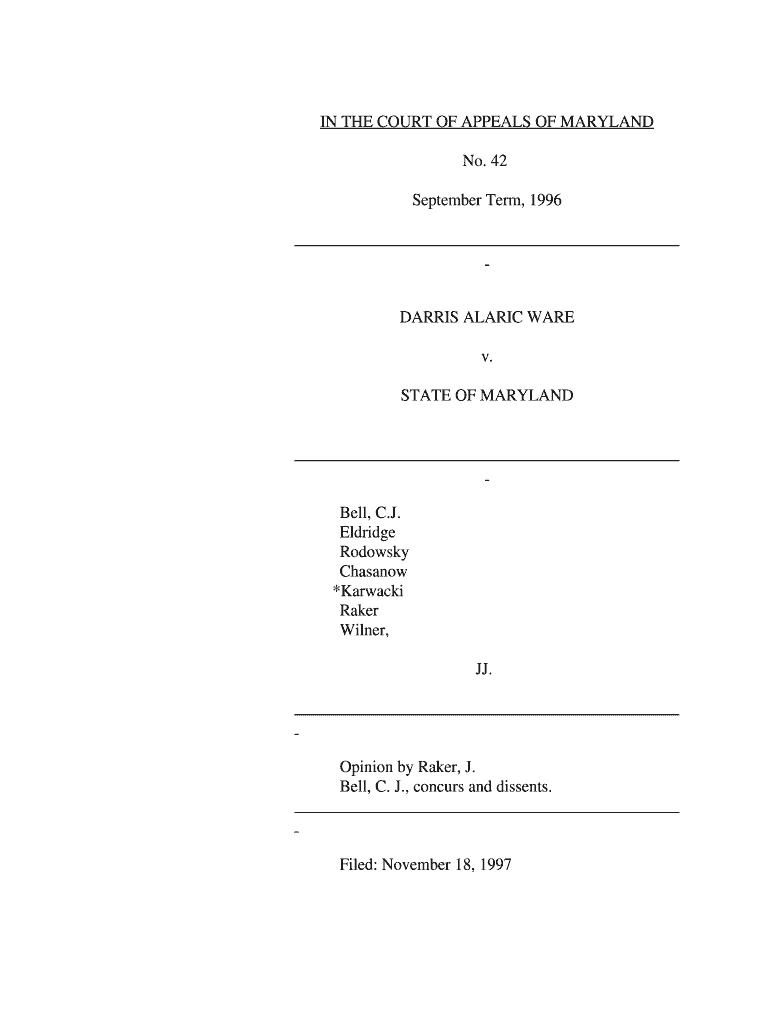
The "Opinion by Raker, J - courts state md" refers to a judicial opinion authored by Judge Raker in the Maryland Court of Appeals. This document discusses the resolution of legal disputes, particularly focusing on rulings related to constitutional rights and evidentiary matters. Judge Raker's opinion is crucial as it forms part of the judicial decisions that influence precedents within Maryland's legal framework. Such opinions provide detailed explanations of the legal reasoning behind court decisions and are essential for understanding how laws are interpreted and applied.
How to Use the Opinion by Raker, J - courts state md
To effectively utilize the opinion, legal professionals need to analyze the detailed reasoning provided by Judge Raker on various legal issues. This includes examining aspects like evidentiary rulings, jury instructions, and constitutional considerations. Specifically, one should focus on how the opinion addresses the nondisclosure of exculpatory evidence and its impact on the trial's outcome. By understanding these elements, attorneys can apply similar reasoning to argue or defend cases with comparable circumstances. This practice aids in crafting sound legal arguments and predicting court rulings.
Key Elements of the Opinion by Raker, J - courts state md
Several critical components are outlined in Judge Raker's opinion. These include:
- Constitutional Rights: The opinion examines alleged violations, ensuring interpretation aligns with established rights.
- Evidentiary Rulings: Specific attention is given to the handling of evidence and whether nondisclosure affected the trial's fairness.
- Jury Instructions: There's an analysis of the instructions given to jurors and how they may have influenced the verdict.
- Victim Impact Statements: The opinion evaluates the appropriateness and impact of such statements during sentencing.
These elements collectively determine the outcome of the appeal and signify the importance of fair trial rights and procedural justice.
Legal Use of the Opinion by Raker, J - courts state md
Legal practitioners use this opinion to:
- Interpret Legal Precedents: Attorneys examine the opinion for legal interpretations that can influence future cases within Maryland.
- Formulate Legal Strategies: By understanding the court's approach to similar legal issues, lawyers can devise strategies to support their cases.
- Educate and Inform: Law students and educators use opinions like these to teach the intricacies of appellate processes and judicial reasoning.
Who Typically Uses the Opinion by Raker, J - courts state md
The primary users of this opinion include:
- Attorneys: Both defense and prosecution lawyers use it to understand appellate court reasoning.
- Judges: Other judges may refer to it for guidance on similar cases.
- Law Students: It serves as an educational tool for understanding legal principles in real-world applications.
Each of these users relies on the opinion's detailed analysis and interpretations to support their legal activities or education.


Important Terms Related to the Opinion by Raker, J - courts state md
Understanding this opinion requires familiarity with several legal terms, such as:
- Exculpatory Evidence: Evidence favorable to the defendant that could exonerate or reduce culpability.
- Constitutional Rights: Fundamental rights protected by the constitution, often central to appeals.
- Remand: To send a case back to a lower court for further action or a new trial, as occurred here due to identified trial issues.
These terms are integral to grasping the legal nuances and impact of the Maryland Court of Appeals' decision.
How to Obtain the Opinion by Raker, J - courts state md
To access this opinion, individuals can:
- Online Databases: Use legal research platforms like Westlaw or LexisNexis, which house court opinions.
- Court Websites: Visit the Maryland Judiciary's official site for publicly available opinions.
- Law Libraries: Access printed or digital archives in academic or public law libraries.
These resources provide comprehensive access for in-depth legal research and analysis.
Examples of Using the Opinion by Raker, J - courts state md
Legal professionals might reference this opinion in cases such as:
- Criminal Defense: To argue for retrial based on nondisclosed exculpatory evidence, mirroring the Ware case.
- Appeals: When challenging procedural fairness in initial trials.
- Academic Research: Law scholars may analyze it for articles or papers on judicial decision-making and precedent setting.
Such use cases highlight the opinion's utility in reinforcing legal arguments and academic studies.
State-Specific Rules for the Opinion by Raker, J - courts state md
Maryland-specific legal principles play a significant role in Judge Raker's opinion. These include:
- State Constitution: Provisions that might extend or clarify federal constitutional protections.
- Appellate Procedure: Maryland's procedures dictate how appeals are processed and reviewed.
- Evidence Laws: State-specific rules regarding evidence disclosure requirements.
Understanding these rules allows for effective application and interpretation of the opinion within Maryland's legal context.




