







Definition & Meaning
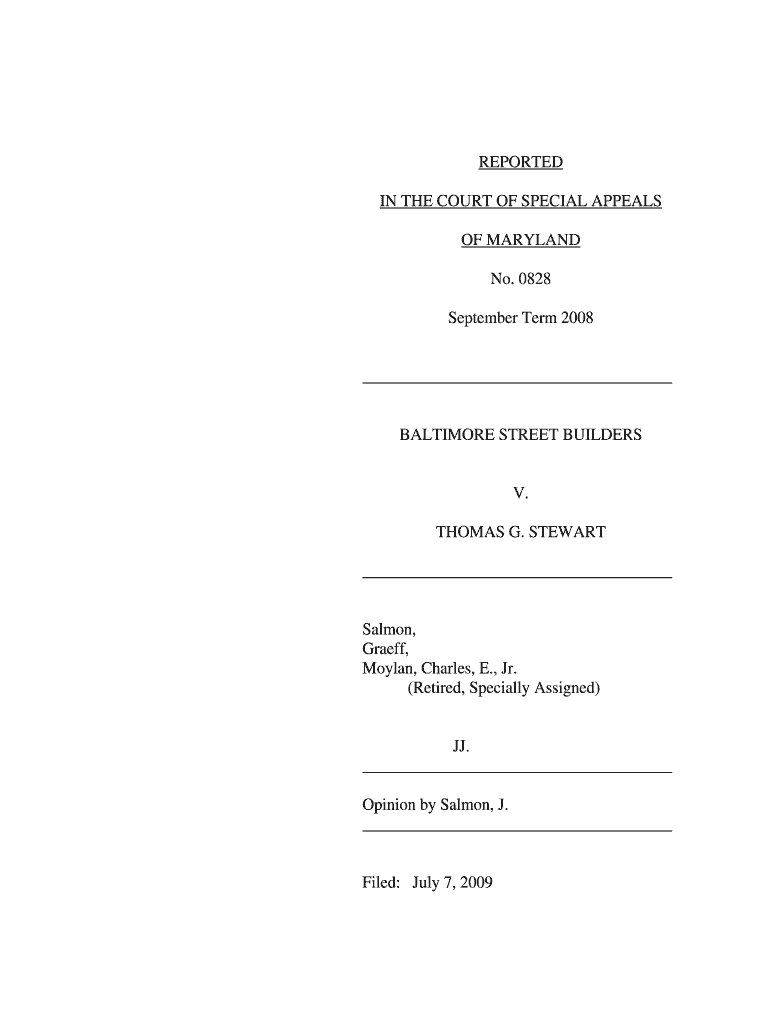
The "BALTIMORE STREET BUILDERS - courts state md" document refers to a legal court opinion issued by the Maryland Court of Special Appeals. It involves a dispute concerning a mechanic's lien filed by Baltimore Street Builders, LLC (BSB) against Thomas G. Stewart. The court examined the validity of enforcing a contract for home improvements without a requisite home improvement license. This document showcases the legal reasoning behind the decision, setting a precedent for similar disputes in Maryland. BSB's inability to enforce the contract due to regulatory non-compliance emphasizes the critical importance of adhering to state licensing laws.
How to Use the BALTIMORE STREET BUILDERS - courts state md
Using the "BALTIMORE STREET BUILDERS - courts state md" involves understanding its implications on construction and contracting practices in Maryland. Legal professionals, contractors, and homeowners can glean insights about the necessity of holding appropriate licenses before undertaking or enforcing construction agreements. This document serves as a reference to ensure legal compliance in contractual obligations related to construction work. For anyone engaged in similar disputes, aligning your arguments with the court's reasoning in this document may strengthen your legal stance.
Steps to Complete the BALTIMORE STREET BUILDERS - courts state md
The original document is a court ruling; therefore, its completion concerns legal adherence rather than physical filing. Parties involved in construction contracts can follow these steps:
- Review Applicable Licensing Laws: Verify state-specific licensing requirements for construction and improvements.
- Assess Contractual Compliance: Ensure existing contracts adhere to legal standards, including licensing.
- Gather Relevant Documentation: Collect evidence supporting compliance or reasons for non-compliance.
- Seek Legal Counsel: Consult with legal professionals if a dispute arises.
- Prepare Legal Arguments: Use the court opinion to support claims or defenses regarding mechanic's liens and unenforceable contracts.
Who Typically Uses the BALTIMORE STREET BUILDERS - courts state md
Several stakeholders might utilize the "BALTIMORE STREET BUILDERS - courts state md":
- Legal Professionals: Attorneys use this document to support or contest legal arguments in similar cases.
- Contractors & Builders: Business entities engaged in construction can learn the importance of compliance with licensing laws.
- Property Owners: Individuals who engage in home improvement contracts need to be aware of potential legal pitfalls.
- Industry Regulators: Oversight bodies use such legal precedents to enforce or modify existing regulations.


Legal Use of the BALTIMORE STREET BUILDERS - courts state md
The document plays a crucial role in defining legal boundaries and responsibilities for construction industry players in Maryland. Courts and litigators may cite it as precedent, illustrating the consequences of non-compliance with licensing requirements. It provides a legal framework to evaluate the enforceability of construction contracts, helping courts assess whether mechanic's liens should be upheld or dismissed based on licensing adherence.
Key Elements of the BALTIMORE STREET BUILDERS - courts state md
Critical elements of the court opinion include:
- Mechanic's Lien: Analyzing when a lien can be enforced against property improvements.
- Licensing Compliance: Emphasizing the importance of contractor licensing for home improvement contracts.
- Legal Precedents: Offering insights into how similar cases may be judged.
- Interpretation of Maryland Law: The court's interpretation is vital for understanding state-specific legal requirements.
State-Specific Rules for the BALTIMORE STREET BUILDERS - courts state md
Maryland law requires contractors to hold a valid home improvement license to enforce construction-related contracts legally. This case highlights the state's strict enforcement of such licensing laws. Different states may have varied regulations; thus, understanding Maryland's specific legal framework is essential when interpreting the implications of this court ruling.
Penalties for Non-Compliance
Failure to comply with Maryland's licensing laws may result in a contractor being unable to enforce contracts or collect payments through mechanic's liens, as demonstrated in this case. Such non-compliance can lead to financial losses and potential legal repercussions. Further, persistent violations might attract fines or restrictions on business operations.
State-by-State Differences
Construction and contracting laws, such as licensing requirements and enforcement abilities of mechanic's liens, differ widely across states. Comparing Maryland's stringent enforcement with more lenient states can offer insights into where businesses can operate with relative ease or face potential hurdles. Contractors working in multiple states must stay informed on respective legal obligations to avoid similar challenges.




