
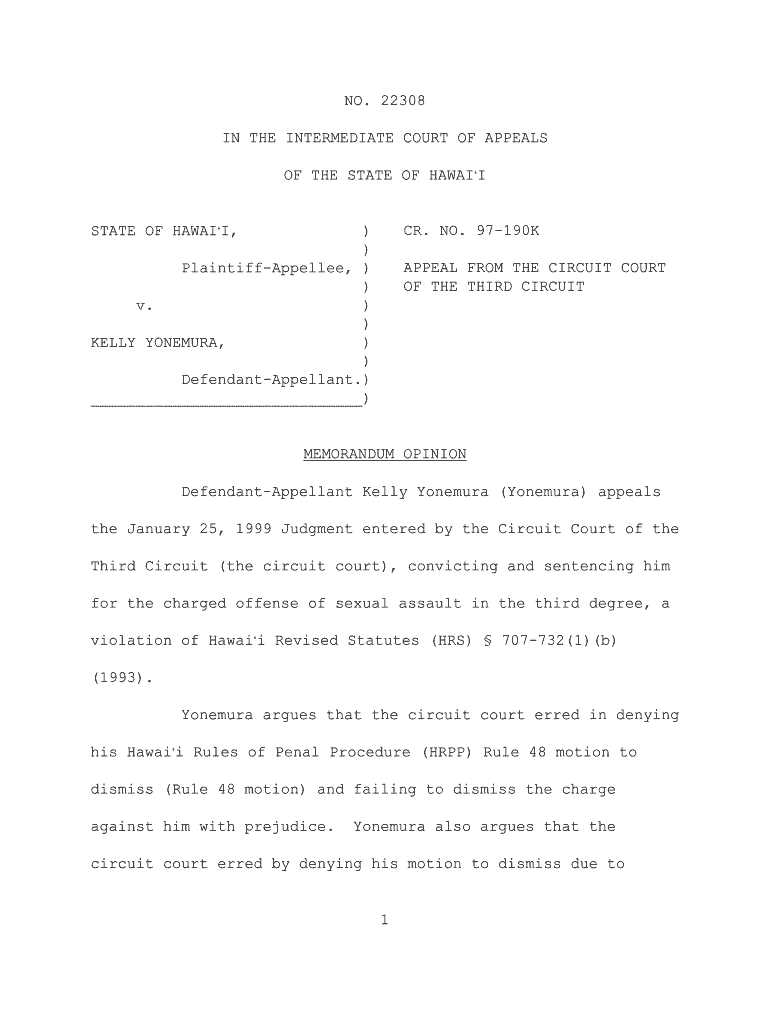







Definition & Meaning
Court forms related to the Hawaii State Judiciary are essential legal documents used for various judicial processes within the state. These forms serve as standardized templates required for legal proceedings, such as filing motions, petitions, or appeals. The primary goal of these forms is to ensure that individuals and entities adhere to state-specific legal guidelines when interacting with the judicial system. They help in maintaining consistency and accuracy across legal documents submitted in court.
The forms may vary based on the type of case—civil, criminal, family, etc.—and provide a structured way for users to present their information and requests to the court. The structured nature of these forms is crucial to the efficient processing of legal matters within the judiciary system of Hawaii.
How to Use the Court Forms - Hawaii State Judiciary - State HI
To use these court forms effectively, it's essential to understand the specific requirements of each form. Generally, individuals must:
- Identify the appropriate form for their legal matter. Each form serves a particular purpose, and selecting the correct one is vital for proper legal processing.
- Access the forms through the Hawaii State Judiciary's official website, ensuring they are using the most current versions.
- Carefully read all instructions accompanying the form to ensure correct completion.
- Provide all required information accurately, paying close attention to any fields labeled as mandatory.
- Submit the completed form following the prescribed method, whether online, by mail, or in person, as specified in the form instructions.
Misupplying information or improper submission can lead to delays or dismissal of the legal request, emphasizing the need for careful attention to detail.
Key Elements of the Court Forms - Hawaii State Judiciary - State HI
Each court form contains specific elements that users must complete. Important elements typically include:
- Parties Involved: Full legal names and contact information for all parties involved in the case.
- Case Details: A structured section to input detailed information about the case, such as case numbers, court locations, and dates.
- Legal Representations: Sections that may require information about legal representation, including attorney names and contact details.
- Statement of Facts: Space allocated for detailing facts relevant to the case, ensuring clarity and precision.
- Legal Basis or Claims: Information supporting the legal basis or claims pertinent to the case, where applicable.
These elements are designed to guide users in providing comprehensive and necessary information to facilitate a smooth judicial review process.
Steps to Complete the Court Forms - Hawaii State Judiciary - State HI
Completing these forms involves several steps, intended to ensure all information is provided accurately and thoroughly:
- Download the Form: Access the official Hawaii State Judiciary website to download the correct form.
- Read the Instructions: Carefully review all instructions that come with the form to understand the specifics of what is required.
- Fill in Personal Information: Input all required personal and case information, checking for accuracy.
- Input Case Details: Provide all relevant case details, ensuring you meet any outlined requirements for legal formatting.
- Verify Information: Double-check all entries for accuracy and completeness before proceeding.
- Sign and Date: Complete any necessary signature fields and date the document where required.
- Submit the Form: Use the appropriate submission method (online, mail, or in person) to send the form to the designated court department.
State-Specific Rules for the Court Forms - Hawaii State Judiciary - State HI
The Hawaii State Judiciary has specific rules that affect the use and submission of court forms:
- State Compliance: All forms must comply with Hawaii's legal standards, which may influence format, required information, and submission methods.
- Filing Fees: Some forms may require the payment of filing fees, which must be submitted alongside the form.
- Jurisdiction Requirements: Ensure that the form is being submitted to the correct jurisdiction; wrong submissions can prompt delays or rejections.
- E-Filing Option: Certain forms may be eligible for e-filing, streamlining the submission process for both the filer and the court.
Adhering to these rules is crucial for ensuring the legal acceptance and processing of submitted forms.
Legal Use of the Court Forms - Hawaii State Judiciary - State HI
These forms are legally binding documents when correctly completed and submitted. They can be used in various legal proceedings, including:
- Filing Petitions: For initiating cases in different areas of law, such as family or civil court.
- Responding to Motions: Allowing parties to officially respond to legal motions within a court proceeding.
- Appeals Process: Submitting requests for appeals following a lower court decision that a party wishes to challenge.
Each form serves a specific legal function that supports the orderly operation of the state judiciary system, providing an official channel for legal interactions.
How to Obtain the Court Forms - Hawaii State Judiciary - State HI
Obtaining these court forms is a straightforward process:
- Visit the Hawaii State Judiciary Website: All official forms are available for download on the state's judiciary website, ensuring access to the most current editions.
- Contact the Courthouse: For those unable to access forms online, contacting the local courthouse directly can be an alternative way to obtain physical copies of necessary forms.
- Local Libraries: Some libraries within the state partnership with the judiciary to provide public access to important legal documents, including court forms.
Acquiring the forms through these channels ensures authenticity and compliance, minimizing the risk of using outdated or incorrect versions.
Examples of Using the Court Forms - Hawaii State Judiciary - State HI
Real-world scenarios highlight the practical use of these court forms:
- Filing for Divorce: Individuals use specific forms to start divorce proceedings, detailing initial claims and requests for review by family court.
- Name Change Petitions: Residents seeking to legally change their names submit relevant forms to the court to initiate the legal review and approval process.
- Restraining Orders: Applications for protective orders are submitted using specific forms designed to detail the circumstances and urgency of the request.
These examples underscore the role of court forms in facilitating legal actions across a broad spectrum of cases within Hawaii's judiciary system.
Penalties for Non-Compliance
Failure to correctly use or submit court forms can result in penalties:
- Rejected Filings: Incorrect or incomplete forms may be rejected, delaying legal proceedings.
- Fines and Legal Repercussions: In certain cases, non-compliance with court form requirements could lead to fines or further legal challenges.
- Case Dismissal: In civil matters, failure to comply might result in dismissal of the case due to procedural deficiencies.
Understanding and adhering to the required legal protocols for filing ensures the effective handling of one's case without such adverse impacts.




