
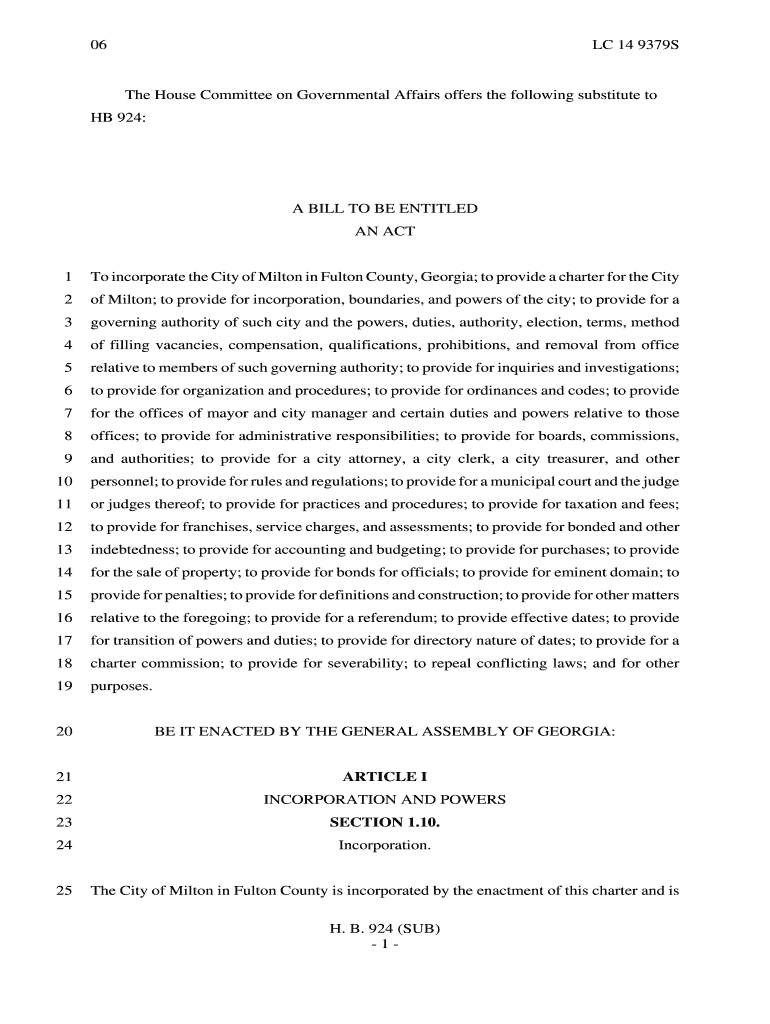







Definition & Meaning
The "LC 14 9379S - legis ga" is a legislative document pertaining to Georgia state law, possibly outlining specific regulations, governance structures, or legal frameworks. This could involve administrative rules, compliance requirements, or statutes applicable within Georgia. In legislative contexts, such forms are crucial for ensuring legal procedures are followed in accordance with state laws, contributing to the functioning and administration of state governance.
How to Use the LC 14 9379S - legis ga
To effectively utilize the "LC 14 9379S - legis ga," one should begin by thoroughly understanding the specific requirements and instructions detailed within the document. This often involves:
- Reading the entire document: Ensuring comprehension of all sections, including any footnotes or amendments.
- Identifying relevant sections: Focusing on parts that apply directly to your situation, whether they pertain to municipal governance, taxation, or compliance.
- Cross-referencing with other documents: Understanding how this document interacts with other legal statutes or requirements.
- Consulting legal advice: For complex cases or uncertainty, seeking guidance from legal professionals familiar with Georgia's legislative environment can be beneficial.
Steps to Complete the LC 14 9379S - legis ga
- Prepare Required Information: Gather any necessary data or documentation required to complete the form, such as tax records, identification, or business details.
- Follow the Instructions: Carefully adhere to the guidelines provided within the form, ensuring all required fields are filled accurately.
- Review for Accuracy: Double-check all entries for correctness and completeness to avoid rejections or legal issues later.
- Submit the Form: Choose the preferred submission method, whether online, via mail, or in person at a designated state office.
Who Typically Uses the LC 14 9379S - legis ga
The form is often utilized by:
- Government officials: For administrative and governance purposes.
- Legal professionals: Who need to reference specific Georgia statutes in their legal proceedings or for advisory purposes.
- Businesses and Corporations: Particularly those operating within Georgia, needing to comply with state regulations.
- Individuals: Who may be involved in legal or governmental transactions requiring state documentation.


Important Terms Related to LC 14 9379S - legis ga
Understanding the terminology within "LC 14 9379S - legis ga" is fundamental:
- Charter: A document granting rights or privileges, critical in the context of municipal incorporation.
- Governance Structure: Refers to how an organization or entity is managed, covering roles, responsibilities, and processes.
- Regulations: Mandatory requirements established by governing bodies to control behavior and maintain order.
Key Elements of the LC 14 9379S - legis ga
Some of the central components typically found within include:
- City Boundaries and Incorporation: Details about the geographical and administrative boundaries.
- Election Procedures: Guidelines on electing city officials, including eligibility and voting processes.
- Powers and Responsibilities: Specified roles for government officials and limitations on authority.
- Municipal Services: Provisions for public services such as safety, health, and welfare.
Legal Use of the LC 14 9379S - legis ga
The document is legally binding and must be used within the applicable legal context. It serves several purposes:
- Establishing Legal Authority: Outlining the legal framework within which city operations are conducted.
- Ensuring Compliance: Providing a reference for audits or legal checks.
- Resolving Disputes: Used in litigations where municipal law or governance is contested.
State-Specific Rules for the LC 14 9379S - legis ga
This form is governed by the laws of Georgia and may include:
- Specific Compliance Regulations: Unique rules that only apply within the state.
- Administrative Procedures: Unique state procedures on filing, managing disputes, or handling specific municipal matters.
- Contextual Differences: Variations in interpretation or implementation depending on regional legal precedents within Georgia.




