







Understanding the LC 33 2046S - legis ga
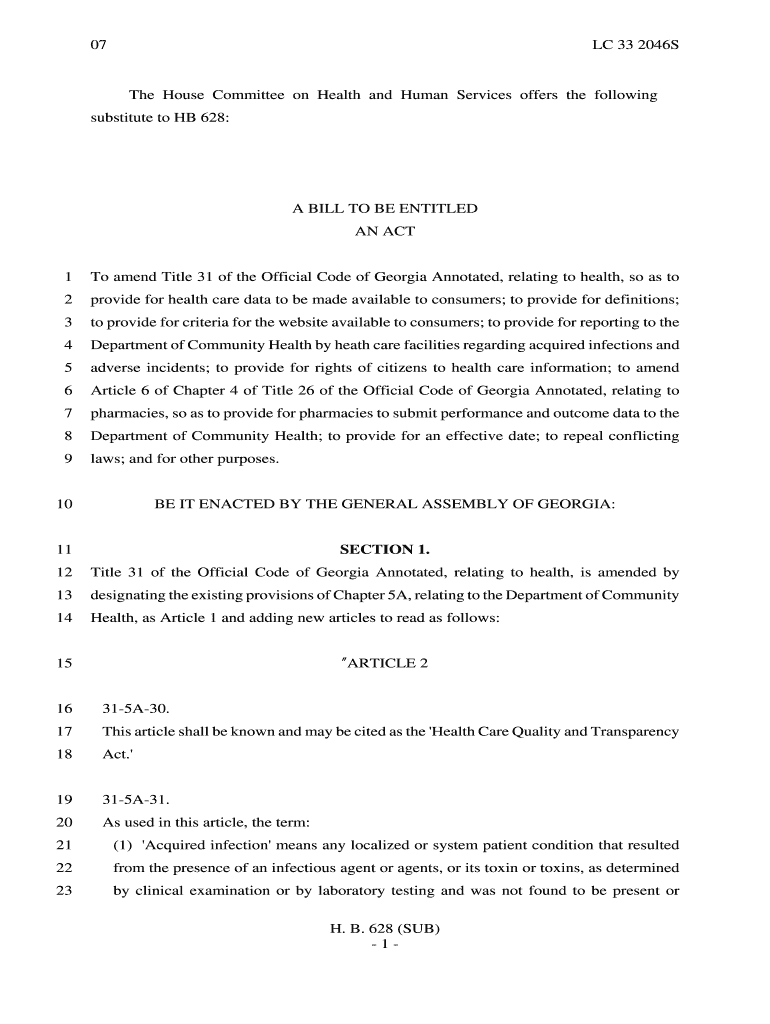
The "LC 33 2046S - legis ga" is a legislative document proposing an amendment to the Official Code of Georgia. It introduces the 'Health Care Quality and Transparency Act,' aimed at enhancing transparency in health care services. The document mandates health care facilities and pharmacies to provide access to data, including performance outcomes, pricing information, and reports on infections and adverse incidents. This ensures consumers can make informed decisions regarding their health care options.
Obtaining the LC 33 2046S - legis ga
To access the LC 33 2046S - legis ga, individuals may need to consult the legislative documents provided by the State of Georgia. Typically, these documents can be obtained through the official website of the Georgia General Assembly or by contacting a state legislative office. It’s also possible to find such documents in digital formats through governmental transparency portals.
Steps to Complete the LC 33 2046S - legis ga
Completing any actions or requirements related to the LC 33 2046S involves a few general steps:
- Review the Document: Thoroughly read through the proposal to understand the scope and requirements.
- Identify Required Information: Determine any necessary information that needs to be provided or actions you must take.
- Consult Professionals: Consider consulting with legal advisors or industry experts to ensure compliance with the new regulations.
- Implement Required Measures: Adjust practices as needed to align with the new transparency requirements.
- Verify Compliance: Continually verify adherence to the new standards through regular reviews and adjustments.
Key Elements of the LC 33 2046S - legis ga
The LC 33 2046S contains several critical components:
- Health Care Data Access: Mandates transparency in sharing health care data, including treatment outcomes and pricing.
- Performance Outcomes: Requires detailed reporting of health facilities' performance to provide a clear picture of service quality.
- Infection Reports: Includes reporting acquired infections to ensure an understanding of the facility's safety standards.
- Consumer Information: Focuses on equipping consumers with enough data to make informed health care choices.
Legal Use of the LC 33 2046S - legis ga
The amendment legally empowers consumers to access pertinent health care information. Facilities and pharmacies are required by law to comply with these regulations. Legal advisors are often consulted to guarantee that the implementation of this act abides by all state requirements and provides the necessary information reliably and transparently.
Important Terms Related to LC 33 2046S - legis ga
Understanding key terms in the LC 33 2046S is vital:
- Transparency: Open availability of health-related information for consumer perusal.
- Mandate: A statutory requirement for health facilities to provide certain types of data.
- Adverse Incidents: Refers to unexpected events and conditions that affect patient health negatively.
Who Typically Uses the LC 33 2046S - legis ga
The primary users of the LC 33 2046S include:
- Health Care Facilities: Hospitals and clinics required to provide transparent data.
- Pharmacies: Retail and institutional pharmacies responsible for aligning with transparency standards.
- Consumers: Patients looking for comprehensive information to make informed health care decisions.


State-Specific Rules for the LC 33 2046S - legis ga
Since the document pertains to the state of Georgia, its rules and regulations are tailored to Georgia’s legislative environment. Health care providers in Georgia must comply with these state-specific guidelines, which may differ from those in other states. Facilities must remain updated on any changes or additional regulations implemented by the Georgia legislature.
Practical Examples of Using the LC 33 2046S - legis ga
Several use cases exemplify how this legislative proposal benefits stakeholders:
- Patients Investigating Treatment Options: Access to performance outcomes helps patients choose facilities with better success rates.
- Pricing Transparency for Procedures: Prospective patients can compare costs across different facilities and make decisions based on value and affordability.
- Health Facility Selection: Real-time infection reports can guide consumers to select safer treatment environments.
Penalties for Non-Compliance
Non-compliance with the LC 33 2046S can lead to legal consequences for health care providers, including fines and other punitive measures. This underscores the necessity for affected entities to promptly adopt the document's requirements to avoid any legal ramifications and maintain their operational licenses.




