
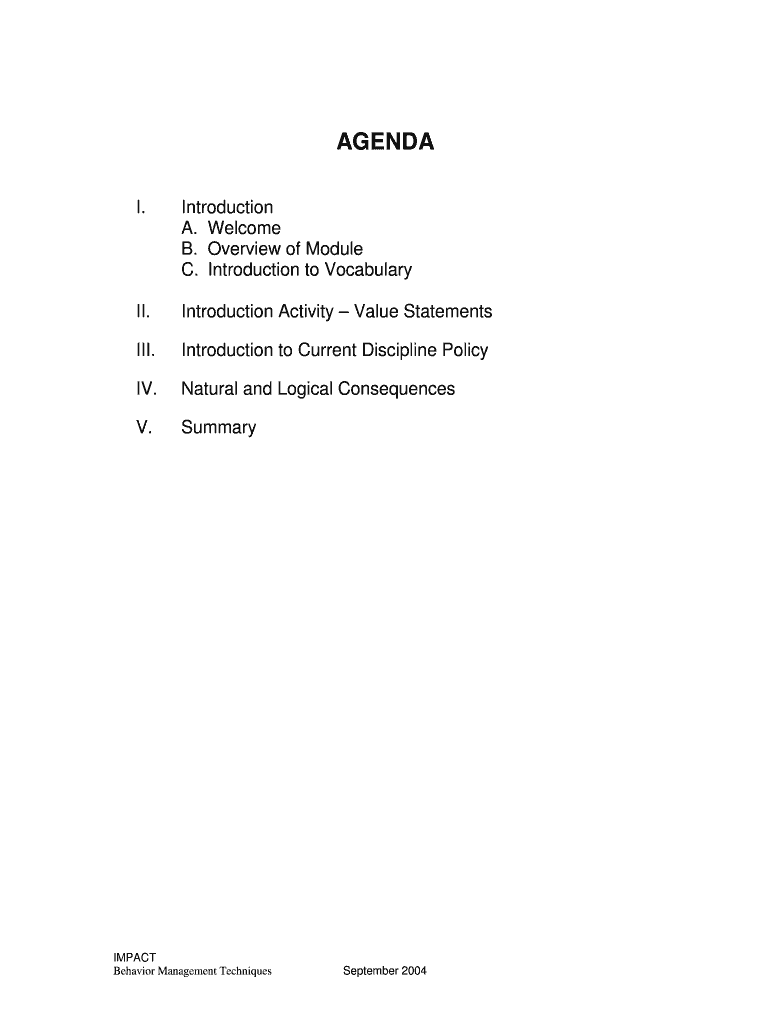







Definition and Purpose of Module 14 Behavior Management
Module 14 Behavior Management serves as a comprehensive guide for foster parents under the care of the Division of Family and Children Services (DFCS) within the Department of Human Services (DHS) in Georgia. This module emphasizes the importance of effective discipline strategies over punitive measures, providing foster parents with the tools necessary to manage children's behavior positively and constructively. The document introduces key techniques and principles aimed at promoting a nurturing and supportive environment for children in foster care.
Key Concepts Introduced in the Module
- Natural and Logical Consequences: Focus on allowing children to experience the results of their actions, where appropriate, to foster a sense of responsibility.
- Discipline Methods: Emphasizes acceptable strategies such as praise, selective ignoring, and negotiation.
- Prohibited Practices: Clearly outlines behaviors that are not permissible, such as corporal punishment and any harsh disciplinary tactics.
Role and Importance in Foster Care
The primary role of this module is to equip foster parents with the necessary skills to influence positive behavior changes in children, helping them thrive in a structured yet loving environment. It additionally serves as a reference for acceptable discipline practices, ensuring consistency and adherence to Georgia's regulatory standards.
Steps to Complete the Module 14 Behavior Management
- Reading and Understanding the Objectives: Begin by carefully going through the module's introduction to comprehend the overarching goals.
- Familiarize with Key Concepts: Study each discipline strategy and understand how it applies in real-life scenarios.
- Practice Scenario Analysis: Work through any provided case studies, considering how the outlined strategies could be implemented in each situation.
- Complete Any Quizzes or Tests: Successfully complete assessments that may accompany the module to evaluate your understanding of the content.
Obtaining the Module
To acquire the Module 14 Behavior Management guide, foster parents can contact their DFCS case worker or access the DFCS online portal if available. Obtaining this official document is crucial for ensuring compliance with the guidelines set forth by the DHS.
Legality and Compliance
Understanding the legal aspects associated with behavior management within foster care is critical. The module aligns with state laws concerning child welfare, ensuring that all disciplinary measures adhere to the legal standards set by the Georgian DHS. Familiarity with these laws is essential for maintaining legal compliance and providing the best care for foster children.
Typical Users
The typical users of Module 14 Behavior Management are foster parents licensed by the DFCS. It also serves as a resource for caseworkers and trainers facilitating workshops or training sessions on child behavioral management in foster care.
Critical Terms Explained
Several important terms are integral to fully grasping the module’s contents:
- Positive Reinforcement: Encouraging desirable behaviors through rewards or praise.
- Selective Ignoring: Choosing to disregard minor negative behaviors to focus on positive ones.
- Logical Consequences: Outcomes logically related to the behavior, used to teach practical lessons.
State-Specific Rules
In Georgia, Module 14 emphasizes a zero-tolerance policy for any form of corporal punishment in foster care settings. Foster parents are expected to follow state-specific guidelines that prioritize children’s rights and welfare.
Real-Life Application Examples
Through practical examples, the module illustrates various behavior management techniques, such as:
- Praise: A foster parent commends a child for completing their homework, boosting the child's confidence and reinforcing good study habits.
- Withdrawal of Privileges: Used as a response to frequent misuse of personal devices, helping children learn the value of responsibility and the consequences of not adhering to family rules.
Integration with Digital Platforms
Although Module 14 may be offered in traditional paper form, DFCS often utilizes online platforms to distribute training materials, allowing easy access and integration with digital devices for convenience and efficiency.




