
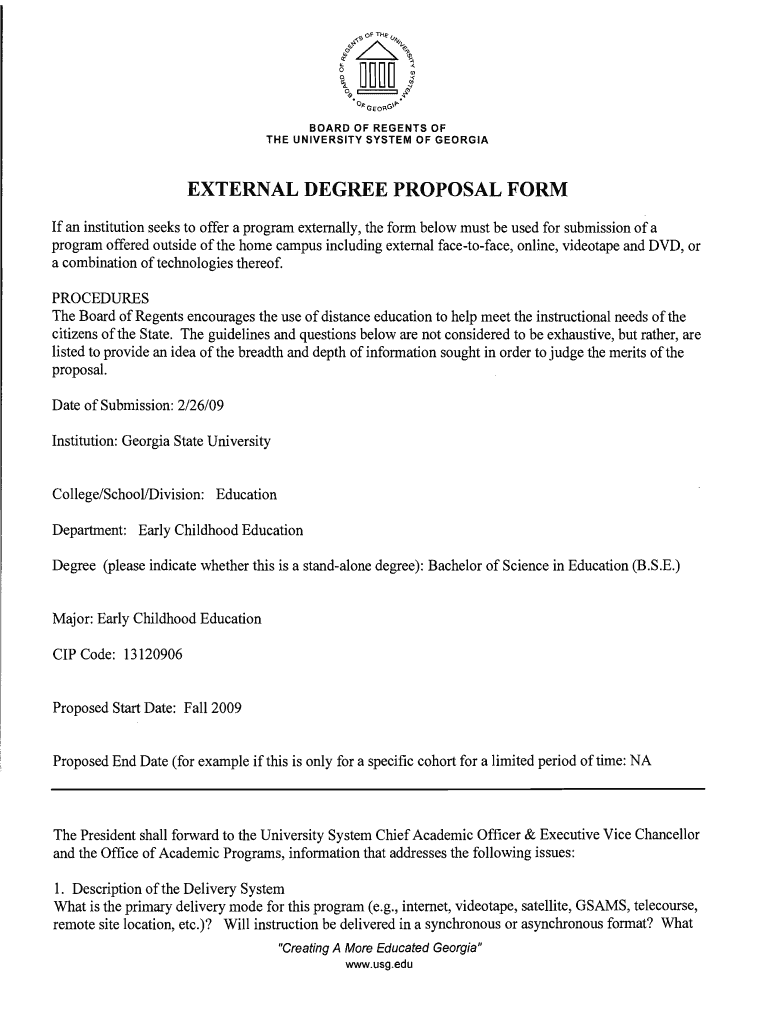







Definition & Purpose of the BOARD OF REGENTS OF - usg
The "BOARD OF REGENTS OF - usg" refers to the governing board responsible for overseeing the University System of Georgia (USG). This body plays a crucial role in managing the state’s public colleges and universities. It aims to provide strategic direction, policy formation, and resource management to ensure the efficient and effective operation of the higher education system. The Board of Regents is charged with the approval of new academic programs, allocation of state resources, and implementation of educational policies across Georgia’s public institutions.
How to Use the BOARD OF REGENTS OF - usg
To engage with the BOARD OF REGENTS OF - usg, individuals or institutions typically need to submit proposals or applications for review. This may involve presenting new degree programs, changes in institutional missions, or requests for budget allocations. The board evaluates such submissions based on a set of criteria focused on educational quality, resource utilization, and alignment with broader state educational goals. Stakeholders can access the board's resources and guidelines through official channels to ensure compliance with submission requirements.
Steps to Complete the BOARD OF REGENTS OF - usg Form
- Gather Information: Collect all necessary details about the educational program or request being proposed, including its justification, potential impact, and resource needs.
- Review Guidelines: Understand the specific instructions and criteria set forth by the board for form completion and submission.
- Draft the Proposal: Prepare a detailed proposal that aligns with the Board of Regents' strategic priorities and educational standards.
- Internal Review: Submit the proposal for internal review by relevant university committees or administrative offices to ensure accuracy and completeness.
- Submission: Use the designated submission method, which could be online or mail, to send the form to the Board of Regents.
- Follow Up: Track the submission status and be prepared to provide additional information if requested by the board.
Who Typically Uses the BOARD OF REGENTS OF - usg
The primary users of the "BOARD OF REGENTS OF - usg" form are educational institutions within the University System of Georgia. This includes public universities, colleges, and technical institutes seeking to introduce new programs or modify existing ones. Faculty and administrative leaders often engage with the board to advance institutional goals and expand educational offerings. Additionally, state education officials may use this form to coordinate policies and strategies across the higher education landscape.


Key Elements of the BOARD OF REGENTS OF - usg
- Program Justification: Clearly define the need for the proposal, including supporting evidence and anticipated benefits to the state’s educational system.
- Resource Allocation: Detail the financial, human, and technological resources required to implement the program, along with funding sources.
- Compliance and Standards: Ensure the proposal meets the regulatory and quality standards set by the Board of Regents and applicable state laws.
- Institutional Readiness: Provide information on the institution's capacity to deliver the proposed program, including faculty expertise and infrastructure.
State-Specific Rules for the BOARD OF REGENTS OF - usg
Georgia's educational policies and priorities guide the rules and processes of the BOARD OF REGENTS OF - usg. The state emphasizes providing accessible, high-quality education that aligns with workforce needs and economic development goals. Proposals must adhere to state-specific educational objectives and demonstrate a clear alignment with the USG’s mission to advance public higher education. This includes considerations of regional educational demands, demographic trends, and potential overlaps with existing programs.
Legal Use of the BOARD OF REGENTS OF - usg
The legal framework governing the BOARD OF REGENTS OF - usg mandates adherence to state education laws and regulations. Proposals must comply with the Georgia Open Records Act, ensuring transparency in decision-making processes. The board also follows federal guidelines for higher education, such as compliance with Title IX and accreditation standards. Legal scrutiny is applied to safeguard against conflicts of interest and ensure ethical governance in public education administration.
Examples of Using the BOARD OF REGENTS OF - usg
An example scenario includes a state university proposing a new Bachelor of Science in Education program aimed at addressing teacher shortages in underserved areas. The university would draft and submit a proposal to the Board of Regents, detailing curriculum design, projected enrollment numbers, and the program’s alignment with state educational objectives. Upon approval, the new program would be launched with oversight from the board to ensure its continued alignment with state policies and resource allocation efficiency.
Digital vs. Paper Version of the BOARD OF REGENTS OF - usg Form
The use of digital forms for Board submissions enhances accessibility and efficiency. Institutions can download and complete the forms from the Board’s website, ensuring compliance with the latest guidelines. The digital submission process allows for immediate tracking and feedback, reducing delays associated with traditional mail. However, institutions must ensure that digital submissions are secure and adhere to data protection policies to protect sensitive information.




