
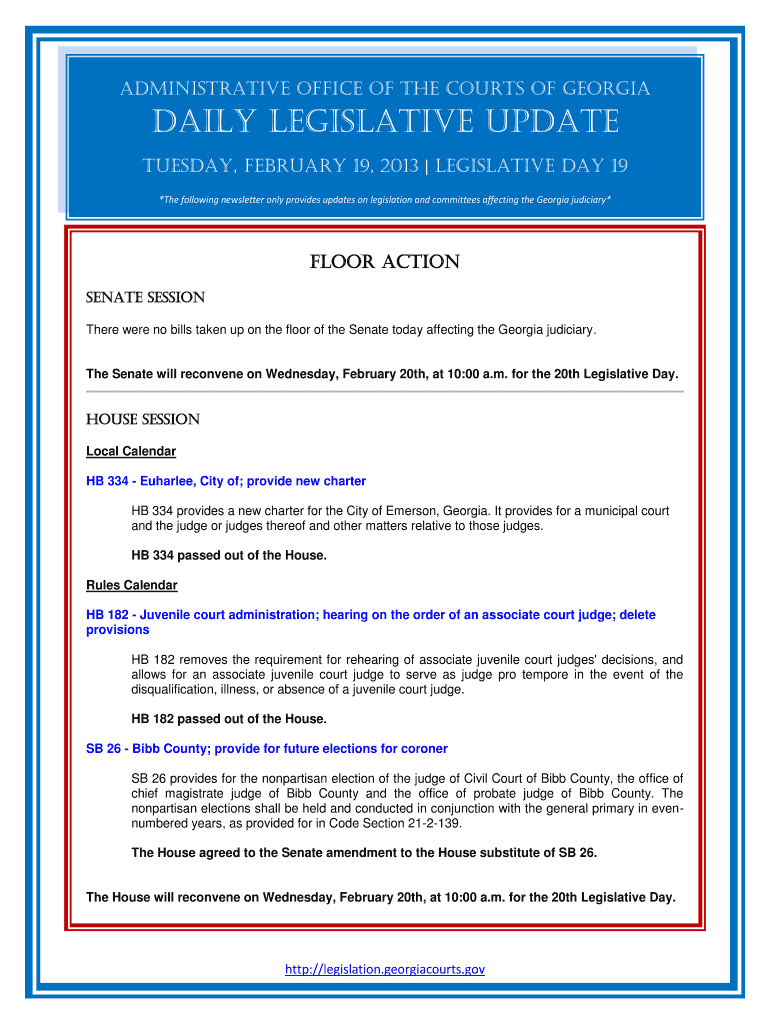







Definition and Purpose of the Newsletter
The newsletter titled "*The following newsletter only provides updates on legislation and committees affecting the Georgia" serves as a critical informational resource that outlines recent legislative actions and committee updates in the state of Georgia. The primary focus is on legislative changes that have a direct impact on the judiciary, including bills related to municipal charters, juvenile court reform, and elder protection. By providing regular updates, this newsletter aims to keep audiences informed about key developments that might influence legal practices and community governance within Georgia.
Detailed Legislative Coverage
- Municipal Charters: The newsletter may cover new bills or amendments to existing municipal charters, reflecting changes in local governance structures.
- Juvenile Court Administration Reforms: Updates may include significant overhauls or adjustments in the administration of juvenile courts, aiming to improve efficacy and fairness.
- Protection for Disabled Adults and Elders: Legislative actions aiming to bolster protections for vulnerable populations, such as laws enhancing the safety and rights of elder and disabled individuals.
How to Use the Newsletter Effectively
Subscribers can use this newsletter to stay informed about developments that could impact their professional work or community obligations. By remaining updated on legislation, legal professionals, government officials, and other stakeholders are better positioned to respond to changes proactively.
Steps for Optimal Use
- Regular Reading: Stay consistent with reading each issue to capture all pertinent legislative updates.
- Identify Relevant Sections: Skim through to identify sections most relevant to your interests or professional focus.
- Cross-Reference Legislation: Compare reported updates with existing legislative databases or law libraries for in-depth understanding.
- Engage with Committees: Utilize the committee meeting information to engage or participate in discussions affecting legislative outcomes.
Obtaining the Newsletter
Access to the newsletter is typically available through the Georgia Administrative Office of the Courts or similar governing bodies. Interested parties can subscribe online, ensuring they receive updates directly in their inbox.
Subscription Process
- Visit the official Georgia Administrative Office of the Courts website.
- Navigate to the subscription or newsletter section.
- Fill out the necessary subscription form with your contact information.
- Confirm subscription, usually through a validation email.
Importance of Staying Informed
Understanding legislative changes is vital for ensuring compliance and readiness for legal or administrative adjustments. For legal professionals, tracking such updates can mean the difference between proactive client advisement and reactive problem-solving.
Benefits of Regular Updates
- Legal Compliance: Legal practitioners can provide timely advice and services to clients, ensuring conformity with new laws.
- Policy Influence: Stakeholders can influence pending legislation through early engagement and feedback.
- Community Awareness: Increased awareness allows for informed community decisions and governance participation.
Key Elements and Features
The newsletter extensively covers new legislation pieces, reports on committee hearings, and analyzes the implications of these legislative changes. It serves as a comprehensive resource for those affected by changes in Georgia's legal landscape.
Main Features
- Comprehensive Legislative Updates
- Committee Meeting Announcements
- Expert Analysis and Implications
- Schedules for Legislative Sessions
State-Specific Rules and Legal Context
The newsletter specifically targets legislation impactful within the state of Georgia. It covers any unique legal rulings or legislative peculiarities that could affect how state-specific laws are interpreted or enforced.
Georgia-Specific Legislative Focus
- State-Exclusive Bills: Insight into bills that are exclusive to or primarily impact Georgia.
- Regional Legal Nuances: Discussion on how regional interpretations of laws may affect statewide jurisdiction.
Digital Accessibility and Format Variants
The newsletter is generally available in digital format, facilitating easy access and integration with other digital tools. This digital format allows for hyperlinked resources and easy navigation through different legislative topics.
Online Access and Distribution
- Typically distributed via email or downloadable from the provider's website.
- Digital formats allow for archival search and retrieval of past issues.
- Users can forward and share digital copies effortlessly.
Examples and Case Studies
To demonstrate real-world applications, the newsletter often includes examples or illustrative scenarios where recent legislative changes have directly impacted practices within the state.
Practical Scenarios
- Municipal Governance Changes: Case studies on how adjustments to municipal charters have improved local governance.
- Juvenile Justice Reforms: Examples of improved outcomes resultant from judicial administrative reforms.
- Elder Protection Legislation: Testimonials from stakeholders benefiting from enhanced elder protection laws.
By maintaining a comprehensive approach to content, this newsletter proves invaluable for legal professionals, government officials, and community leaders seeking to navigate Georgia's legislative environment effectively.




