
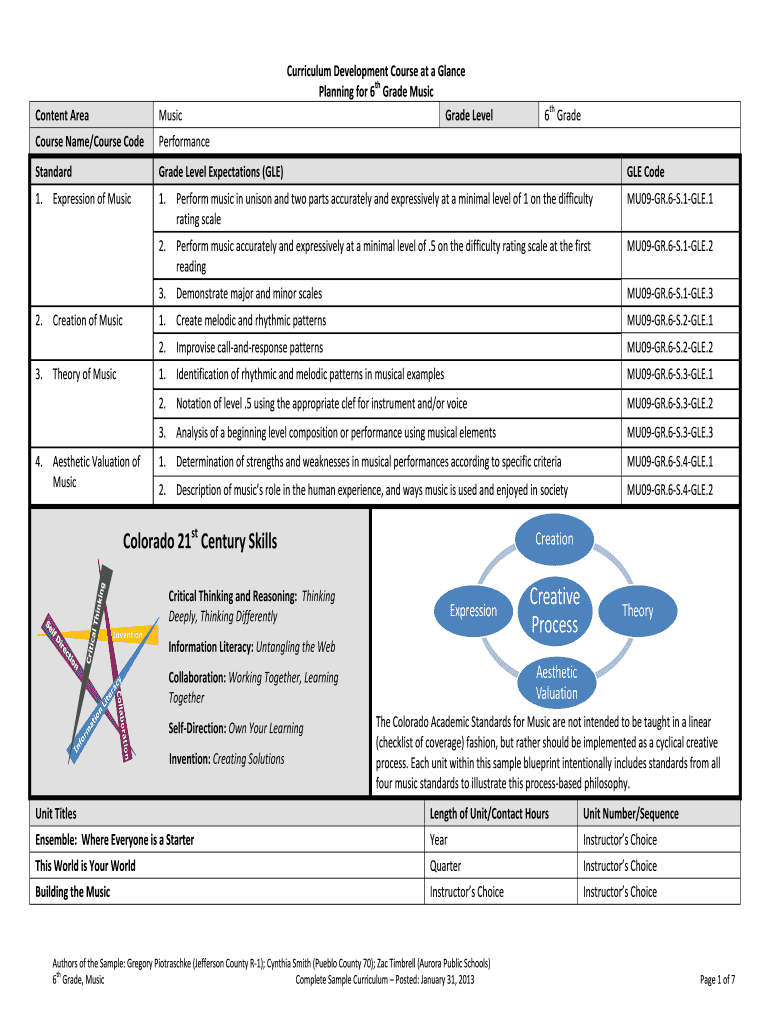







Understanding the Curriculum Development Course at a Glance for 6th Grade Music
The "Curriculum Development Course at a Glance for 6th Grade Music" is a comprehensive document designed to guide educators in implementing a robust music curriculum. It focuses on specific performance standards, grade-level expectations, and thematic units, essential for fostering musical skills among students.
Key Elements of the Curriculum
- Performance Standards: Defines the skills and competencies students are expected to achieve by the end of the grade.
- Grade-Level Expectations: Lays out the detailed learning objectives tailored specifically to sixth graders.
- Unit Planning: Breaks down the curriculum into thematic units such as 'Ensemble', 'Building the Music', and 'Folk Songs & Their Place in Music'.
The Creative Process in Music Education
The document emphasizes a cyclical creative process in music education, integrating phases which include:
- Expression and Performance: Encouraging students to express themselves through various musical forms.
- Creation and Composition: Guiding students in creating original musical compositions.
- Theory and Analysis: Teaching the foundational theories of music and how to analyze different pieces.
- Aesthetic Valuation: Instructing students on evaluating music from aesthetic and cultural perspectives.
How to Use the Curriculum Development Course
Educators can effectively use the curriculum by following these steps:
- Review Performance Standards: Familiarize with the end goals for student performance.
- Plan and Organize Units: Use thematic units for structuring monthly or quarterly programs.
- Engage Students: Incorporate interactive sessions to encourage student participation.
- Assess Progress: Regularly assess student progress against set standards to identify areas of improvement.
Practical Application Examples
- Integrating cultural music sessions to enhance understanding of 'Folk Songs & Their Place in Music'.
- Using an ensemble setup where each student plays an active role in music production.
Steps to Complete the Curriculum Development Process
- Gather Required Materials: Collect all necessary materials, including instruments and music sheets.
- Prepare Learning Objectives: Clearly outline what each lesson intends to achieve.
- Design Assessment Tools: Create quizzes, performance reviews, or peer assessments to evaluate student progress.
- Implement Lessons: Begin teaching using planned materials and continuously adjust based on student responses.
Who Typically Uses This Framework
The framework is primarily used by:
- Music Educators in public and private middle schools.
- Curriculum Planners looking to enhance or develop new music programs.
- Educational Administrators seeking to standardize music education across different schools.
Legal Considerations in Curriculum Planning
While the curriculum is not bound by strict legal regulations, educators should:
- Ensure Copyright Compliance: Use music and materials that are either copyrighted or properly licensed.
- Adaptation for Special Needs: Make accommodations for students with disabilities or learning differences.
Important Terms and Concepts
- Ensemble: A group of musicians participating together in a performance.
- Aesthetic Valuation: The process of appreciating and critiquing music based on its aesthetic qualities.
Examples of State-Specific Adaptations
While the curriculum offers a general framework, some states might require:
- Inclusion of State History in Music: For states with rich musical heritage, incorporating local music history may be critical.
- Compliance with State Education Standards: Each state may have unique educational standards and requirements.
Available Resources and Support
Educators wishing to implement this curriculum effectively can access:
- Online Music Education Forums: For discussing best practices and challenges.
- Workshops and Training Sessions: These provide hands-on experience and insights into recent music education trends.
In creating a cohesive and engaging music curriculum for sixth graders, this framework is invaluable. By breaking down the process into manageable steps and elements, educators can ensure that students not only learn the essentials of music but also develop a deep appreciation and love for the art form.




