







Definition and Meaning
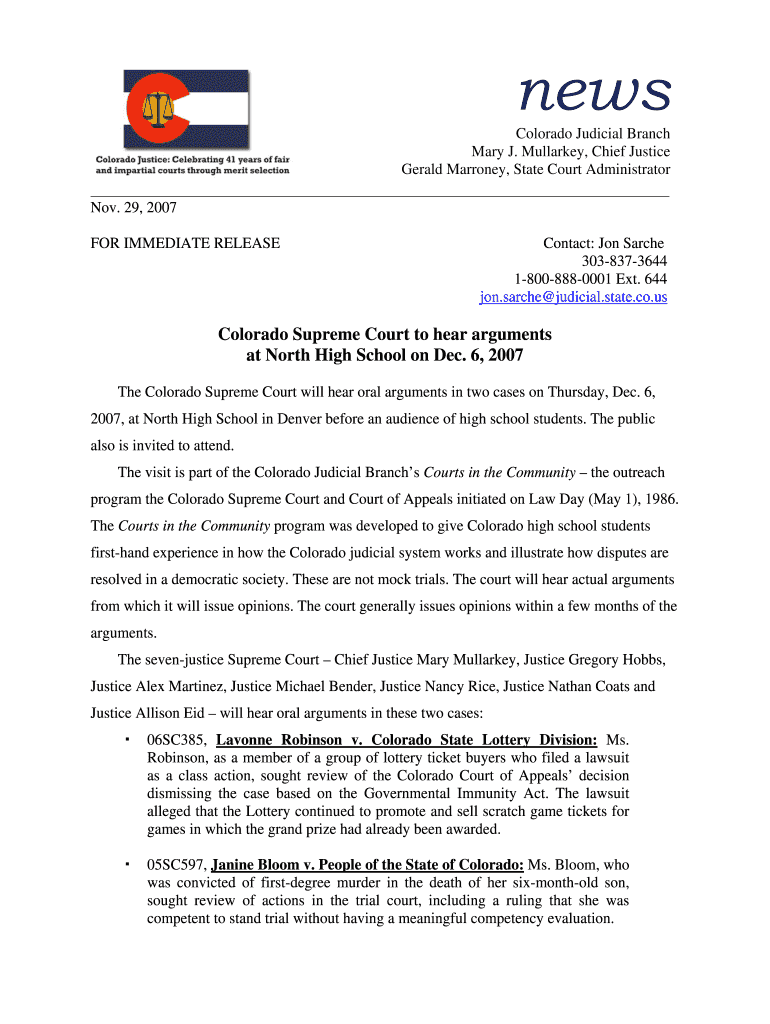
The "Colorado Supreme Court to hear arguments Dec 6 - Colorado State - courts state co" refers to the specific schedule and location where the Colorado Supreme Court will conduct oral arguments. This event occurs as part of initiatives like 'Courts in the Community,' which are designed to educate the public and engage them with the judicial process. The event details the specific date, December 6, when the hearings will commence at a designated venue such as North High School in Denver. This initiative helps demystify the judicial process by making it accessible to the community, allowing for real-time observation of court proceedings.
How to Use Information from the Colorado Supreme Court Hearing
- Educational Engagement: Students and educators can use these sessions to gain firsthand experience of legal proceedings, understanding the roles of attorneys and justices, and observing the nuances of legal arguments.
- Legal Research: Lawyers and law students may find value in attending or reviewing recordings of these proceedings for educational purposes or to observe court protocol and argument strategies.
Steps to Attend the Colorado Supreme Court Hearing
- Registration: Find information on registration prerequisites, if any, on the Colorado Supreme Court's official site or through the 'Courts in the Community' program announcements.
- Preparation: If attending for educational purposes, prepare your questions ahead of the question-and-answer sessions. Familiarize yourself with the cases discussed, such as Lavonne Robinson v. Colorado State Lottery Division.
- Engagement: Attend the event punctually on December 6, and participate actively in the Q&A session offered.
Key Elements of the Colorado Supreme Court Hearings
- Oral Arguments: Presentations by attorneys representing different sides of the cases brought before the court, each typically having a limited amount of time to make their case.
- Judicial Bench: Comprised of justices who listen to arguments, ask questions, and subsequently make rulings based on the merits of the cases.
- Public Accessibility: Sessions open to the public, providing a transparent view into the judicial process.
Legal Use and Implications
- Case Law Development: Decisions made during these hearings can contribute to Colorado case law, providing precedents for future legal reference and proceedings.
- Community Influence: These hearings can offer insights into public policy and community legal priorities by showcasing issues the Court deems significant enough for public argumentative review.
Who Typically Uses the Colorado Supreme Court Hearing Information
- Students and Educators: Use these hearings as educational tools to understand courtroom dynamics and judicial decision-making processes.
- Legal Professionals: Gain insight into current legal challenges and tactics employed by attorneys during high-stakes cases.
- The General Public: Engage with the judicial system, contributing to informed citizenship and awareness of civic issues.


Important Terms Related to the Colorado Supreme Court Hearings
- Oral Arguments: Verbal presentations made by attorneys representing parties in a case, offering explanations, evidence, and reasoning.
- Precedent: Legal principles or rules established in previous cases that are binding or influential for court decisions in subsequent cases.
State-Specific Rules and Procedures
- Courts in the Community Initiative: Unique to the state, this program aims to educate young people by holding hearings in schools and fostering dialogue between students and legal professionals.
- Jurisdiction: Understand that state-specific rules apply within Colorado’s jurisdiction, with local laws influencing the nature and outcome of the cases handled.
Examples of Using Information from the Colorado Supreme Court Hearing
- Case Analysis by Law Students: Law students might use court transcripts for assignments that require analysis of legal arguments and judicial reasoning.
- Public Policy Discussions: Community groups could use outcomes from these hearings to spark discussions on legal reforms or the effectiveness of the Colorado State judicial system.
Event Details and Related Dates
- Date and Venue: December 6 at North High School, Denver. Ensure alignment with any updates or changes to the schedule announced by official channels.
- Participation Requirements: Follow any stated registration or attendance rules to engage fully in this educational opportunity.
By understanding and utilizing the information from such hearings, interested parties can better comprehend the structure, needs, and nuances of the Colorado judicial system.




