






Definition & Meaning
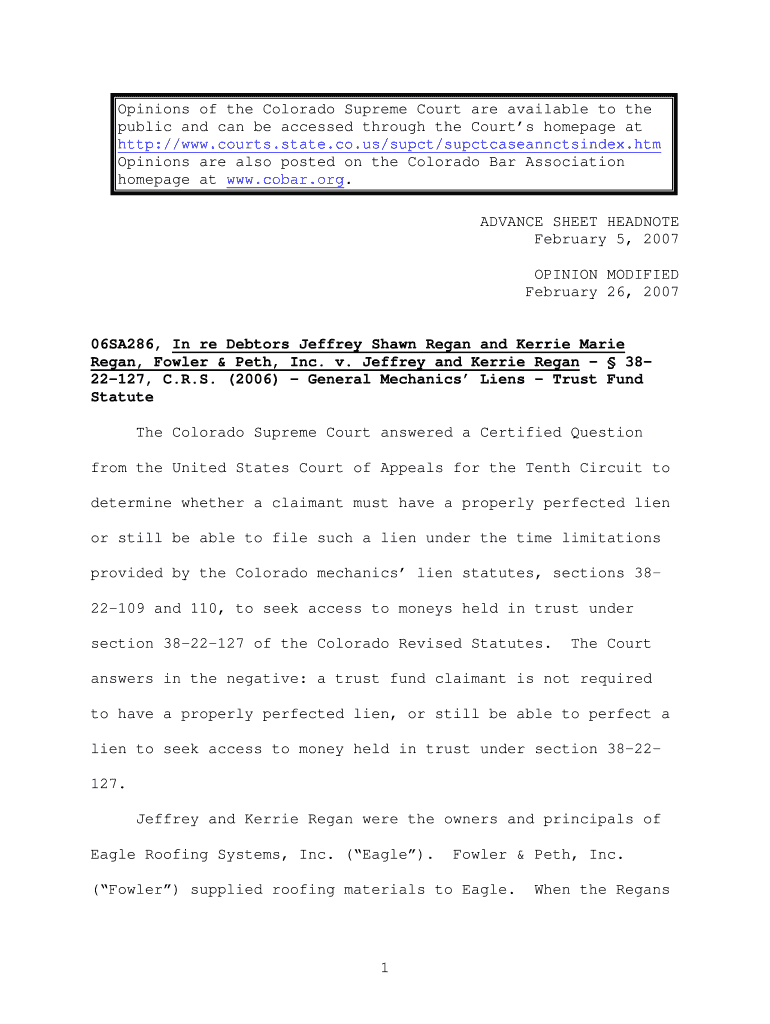
The "1 Opinions of the Colorado Supreme Court are available to the - courts state co" refers to the official rulings and interpretations of the law provided by the Colorado Supreme Court. These decisions serve as authoritative legal references, influencing how laws are understood and applied across Colorado. Decisions from the court clarify legal ambiguities, set legal precedents, and resolve conflicts in law, contributing to the development of state jurisprudence.
How to Use the Opinions
Legal professionals, including attorneys and judges, use the Colorado Supreme Court's opinions as precedential references in legal arguments and case law analysis. These opinions are instrumental in understanding legal interpretations, helping in the formulation of legal strategies, and preparing for court proceedings. Students and scholars of law also utilize these opinions for educational purposes, analyzing the reasoning and context behind judicial decisions to gain insights into legal theories and applications.
How to Obtain the Opinions
Opinions of the Colorado Supreme Court can be accessed through various mediums. The primary source is the official website of the Colorado Judicial Branch, which provides free access to recent opinions. Legal databases such as Westlaw and LexisNexis offer comprehensive archives of past opinions for legal practitioners with subscriptions. Public law libraries may also house printed volumes of these opinions, offering another resource for individuals researching legal precedents.
Important Terms Related to the Opinions
- Precedent: A legal decision that serves as an authoritative rule or example in future similar cases.
- Jurisprudence: The theory or philosophy of law, as well as the science and study of legal systems and ideas.
- Certiorari: An order by which a higher court reviews a decision of a lower court.
- En Banc: Referring to an appellate court session in which all the judges hear a case, rather than a panel of them.
Legal Use of the Opinions
Opinions of the Colorado Supreme Court hold significant legal weight and are binding on lower state courts. They serve as a primary source of law for the interpretation of statutes, the application of legal principles, and the resolution of specific issues brought before the court. These opinions are considered superior to previous lower court decisions, ensuring uniformity and consistency in the application of law throughout the state.
Key Elements of the Opinions
- Case Background: Provides context and factual background of the case.
- Legal Issues Presented: Outlines the questions of law that the court needs to address.
- Court’s Analysis and Reasoning: Details the judicial reasoning and principles applied in reaching the decision.
- Conclusion/Decision: The final ruling and its implications for the parties involved and potential future cases.
State-Specific Rules for Accessing Opinions
While accessing Colorado Supreme Court opinions is straightforward, there are specific state rules concerning their citation and use. Legal documents and arguments in Colorado courts must follow the state's citation guidelines, referencing official court opinion publications. In cases that involve multi-state jurisdictions, understanding the local specificities and legal interpretations as they apply to Colorado is crucial.
Who Typically Uses the Opinions
Colorado Supreme Court opinions are primarily utilized by legal professionals, including attorneys, judges, and legal scholars, who rely on these documents to inform their practice and legal writing. Law students also study these opinions as part of their coursework to better understand the law's application and development. Additionally, government officials, policy-makers, and non-profit organizations may consult these opinions to ensure compliance and to advocate for legislative changes.