
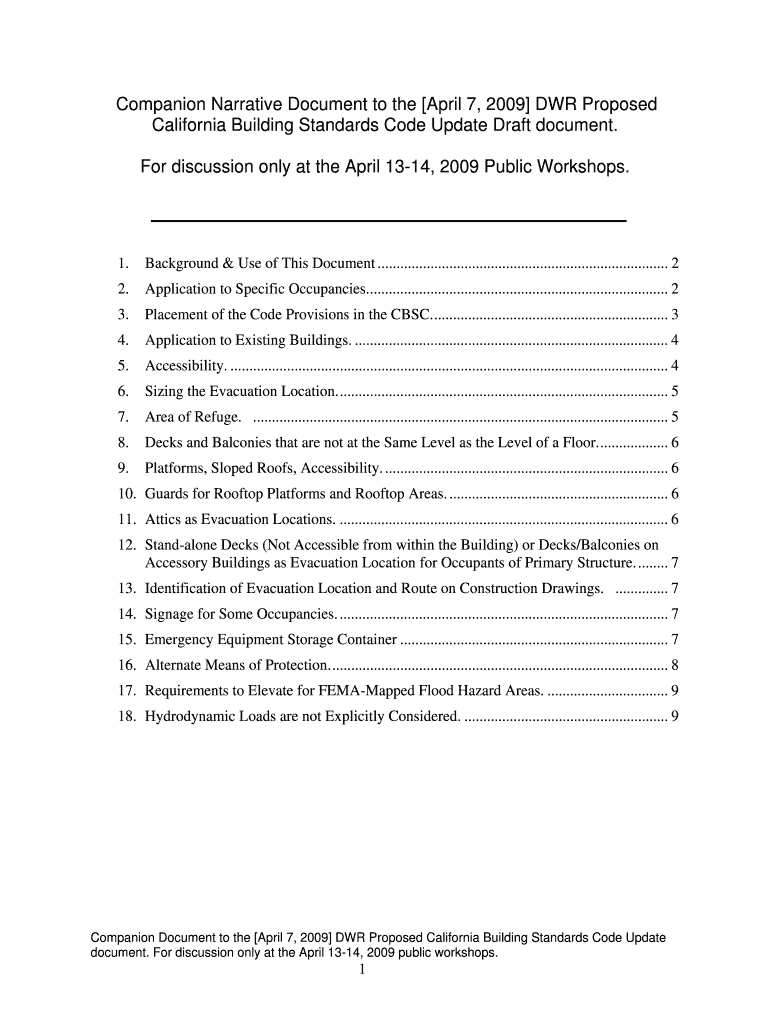







Definition and Purpose of the Companion Narrative Document
The Companion Narrative Document to the April 7, 2009 DWR Proposed serves as an essential resource in understanding the updates to the California Building Standards Code proposed by the Department of Water Resources (DWR). This document details the key provisions aimed at enhancing safety measures in flood-prone areas. It specifically addresses improvements in areas such as evacuation routes, structural safety, and accessibility, focusing on protecting vulnerable populations in high-risk settings like educational and residential care facilities.
Key Components
- Evacuation and Safety: Highlights the necessity for clearly marked evacuation routes and safe locations in construction plans to ensure preparedness in emergency situations.
- Structural Enhancements: Discusses the structural adjustments needed to mitigate risks of flooding, entrapment, or drowning.
- Access and Inclusivity: Outlines the essential accessibility features for vulnerable populations, ensuring that evacuation plans are inclusive and comprehensive.
Obtaining the Companion Narrative Document
To access the Companion Narrative Document, stakeholders can typically request it through the Department of Water Resources or obtain it from official government portals associated with building safety and regulations. This accessibility ensures that planners, builders, and community leaders can align with the latest safety protocols proposed by the DWR.
Accessibility Methods
- Official Websites: Downloadable versions might be available on governmental or DWR websites.
- Public Workshops: Copies distributed during public consultations and workshops.
- Local Government Offices: Physical copies may be accessible at regional offices dealing with building codes and urban planning.
Steps to Utilize the Companion Narrative Document
Understanding and applying the guidelines outlined in the document requires careful study. Here's a step-by-step approach:
- Review Key Sections: Identify the specific provisions that apply to your project or area of interest.
- Consult with Experts: Engage with architects or engineers familiar with DWR guidelines to interpret technical sections.
- Implement Recommendations: Apply recommended safety measures in project planning or community safety protocols.
- Check Compliance: Ensure all plans adhere to the updated standards and re-evaluate as necessary during the approval phase with local authorities.
Practical Example
When planning a new school or care facility in a flood-prone region, utilize the document to align your structural designs with safety standards, ensuring robust evacuation protocols are in place.
Important Terms in the Companion Narrative Document
The document is rich in industry-specific terminology that requires comprehension for effective implementation.
Glossary of Terms
- Evacuation Routes: Defined pathways for safe egress during emergencies.
- Structural Mitigation: Engineering adaptations that reduce flooding impact.
- Vulnerable Populations: Groups requiring special attention in safety planning, such as children and the elderly.
Legal Context and Compliance
The legal implications of following the Companion Narrative Document are significant. Compliance with the outlined standards ensures adherence to state regulations and reduces liability during emergencies.
Compliance Benefits
- Liability Reduction: Proper adherence can protect against legal claims during disasters.
- Regulatory Approval: Speeds up the approval process for construction projects by meeting predefined safety criteria.
- Community Trust: Establishes trust with local communities by prioritizing their safety.
Examples of Implementation
The practicality of the Companion Narrative Document is evidenced through multiple real-world scenarios where its application has improved safety standards.
Case Studies
- A Residential Facility: Successfully integrated the document's guidelines, enhancing flood defenses and evacuation procedures.
- An Educational Complex: Used the document to improve infrastructure resilience against potential flooding.
State-Specific Considerations
While the Companion Narrative Document provides overarching guidelines, variations may exist depending on state-specific regulations. In California, public awareness and understanding of local adaptations are crucial.
Important Variations
- Local Amendments: Some regions may have additional local requirements influencing how guidelines are applied.
- Regional Workshops: Active participation in discussions held in different areas can provide insights into specific regional needs and modifications.
Digital vs. Paper Versions
With the advancement of digital documentation, stakeholders can choose between digital and traditional paper formats of the Companion Narrative Document.
Comparative Analysis
- Digital Benefits: Easier updates and distribution, with streamlined electronic submission processes.
- Paper Advantages: Useful in areas with limited internet access or for archival purposes that require physical documentation.
In summary, by understanding the full scope and application process outlined in the Companion Narrative Document, stakeholders can ensure compliance with DWR's proposed updates to the California Building Standards Code, thereby enhancing public safety and infrastructure resilience in vulnerable areas.




