
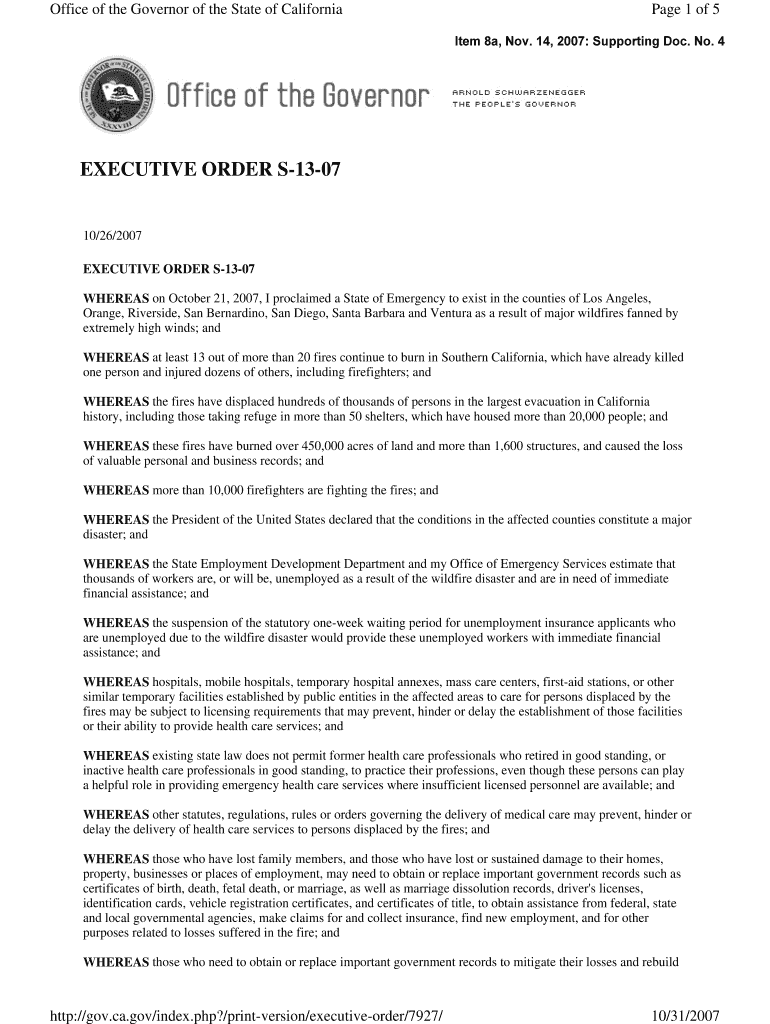







Definition and Meaning of Executive Order S-13-07
Executive Order S-13-07, issued by former Governor Arnold Schwarzenegger, played a crucial role in facilitating response and recovery efforts in Southern California following significant wildfires in October 2007. This order designated specific actions, including the mobilization of the California National Guard, to provide assistance to affected communities. It aimed to mitigate the impact of the disasters by waiving certain fees, such as those for vital records and vehicle registrations, and by offering support through Local Assistance Centers. The order highlighted the state government's commitment to addressing the immediate needs of disaster-stricken areas in a timely and organized manner.
How to Use the Executive Order S-13-07 Form
To effectively utilize the directives outlined in Executive Order S-13-07, stakeholders such as state agencies and affected citizens can engage with various governmental resources made available by the order. It empowers state agencies to streamline the disaster response by collaborating and coordinating activities that ensure resources are directed where needed most. Individuals seeking benefits, like fee waivers or assistance from Local Assistance Centers, must present relevant documentation to local government offices to receive appropriate support.
Key Elements of the Executive Order
This executive order encompasses several critical elements aimed at expediting recovery efforts:
- Mobilization of Resources: Deployment of the California National Guard for assistance in disaster-stricken areas.
- Waiver of Waiting Periods: Elimination of unemployment insurance waiting periods for affected workers.
- Fee Waivers: Suspension of fees for essential documents and vehicle registrations for those impacted by the wildfires.
- Local Assistance Centers: Establishment of centers to offer comprehensive support including housing, health care, and financial assistance.
These components illustrate a comprehensive approach to managing the emergency efficiently, ensuring those affected receive timely help.
Who Typically Uses the Executive Order S-13-07
The primary users of Executive Order S-13-07 are state agencies tasked with emergency management, such as the California National Guard, and citizens in the affected regions. Furthermore, local governments and relief organizations use the order to align their efforts with state directives, ensuring a unified response to the disaster. Residents requiring financial or material assistance also reference the order to access state-provided services.


Legal Use of the Executive Order
The legal foundation of Executive Order S-13-07 ensures compliance across various state-run initiatives during a state of emergency. It grants authority to suspend specific regulations and implement necessary measures to protect public welfare and safety. For example, unemployment insurance and education code waivers are legally supported under this order, making it essential for legal departments within these agencies to understand its provisions thoroughly.
Steps to Complete Requests Under the Executive Order
- Identify Eligibility: Verify if your situation qualifies under the executive order provisions.
- Document Preparation: Gather necessary documentation to demonstrate qualification for benefits such as fee waivers.
- Submission: Submit requests to the relevant local governmental offices or assistance centers.
- Collaboration with Agencies: Engage with the designated state agencies to facilitate access to required services.
These steps ensure that both individuals and entities can effectively leverage the order's benefits in an organized way.
Important Terms Related to the Executive Order
Understanding specific terminology within the context of Executive Order S-13-07 is crucial for precise application:
- State of Emergency: A government declaration that allows for the activation of specific assistance measures.
- Waiver: A temporary cessation of specific laws or regulations, granted under special circumstances.
- Local Assistance Centers: Facilities providing essential services and information to disaster victims.
Acquaintance with these terms facilitates more effective communication and implementation of the order’s provisions.
Examples of Using the Executive Order in Practice
Real-world application of Executive Order S-13-07 typically involves scenarios such as:
- Individuals affected by the wildfire visiting Local Assistance Centers seeking help with housing and documentation needs.
- Businesses utilizing state resources to expedite recovery processes, like reconstructing damaged facilities.
- Government agencies coordinating flood control and firefighting resources based on directives within the order.
These examples underscore the active role of the order in practical disaster management.
State-Specific Rules and Considerations
While Executive Order S-13-07 provides broad directives applicable state-wide, local governments may implement additional guidelines tailored to their unique circumstances. For instance, counties might introduce supplementary measures enhancing disaster relief effectiveness. Coordination with local officials ensures adherence to both state-wide and localized directives, optimizing resource allocation and response strategies.
Who Issues and Oversees the Execution
Executive orders such as S-13-07 are typically issued by the Governor of California. The Governor's Office, in conjunction with relevant state agencies including the State Water Resources Control Board, oversees the implementation of the order, ensuring that all stipulated actions are executed efficiently and effectively. This hierarchical structure facilitates a coordinated approach to managing and mitigating the impacts of state emergencies.
Penalties for Non-Compliance
While executive orders are designed to provide relief and support, certain obligations must be met. Non-compliance with the directives, particularly by state agencies or entities required to execute specific actions, can lead to administrative penalties or legal scrutiny. Therefore, adherence to the protocols and guidelines set out in the executive order is crucial for all involved parties to ensure successful outcomes in disaster recovery efforts.




