







Definition and Meaning
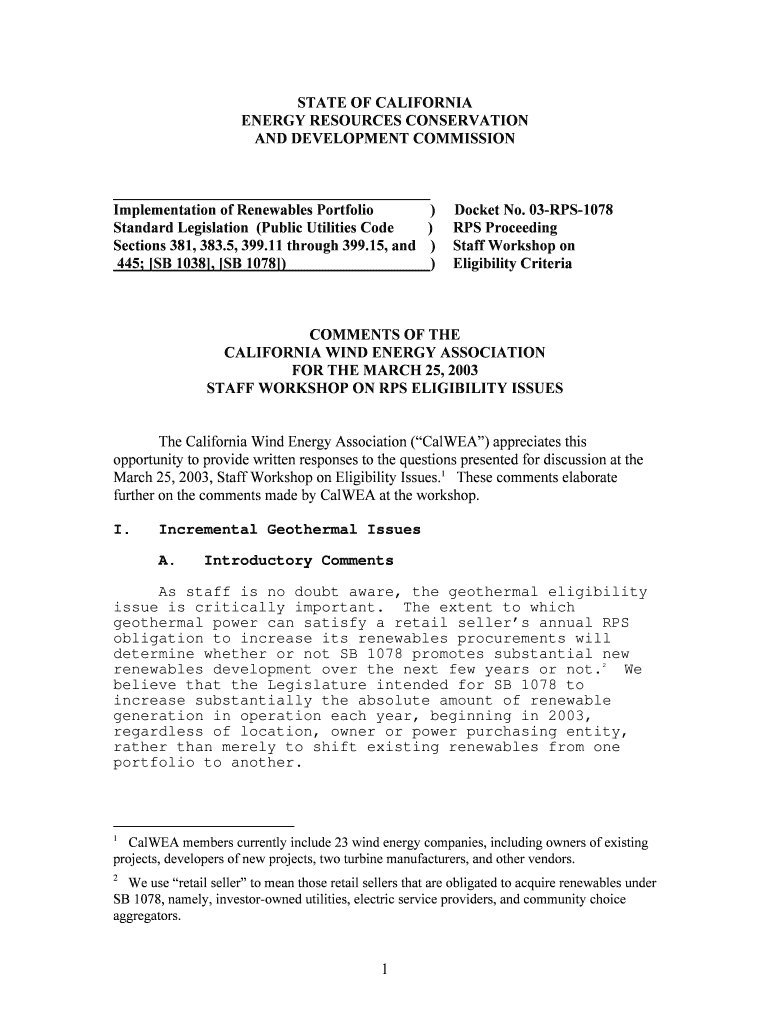
The "1 STATE OF CALIFORNIA ENERGY RESOURCES - energy ca" form is designed to facilitate the documentation and tracking of energy resources and usage in California. This form is typically used by individuals and organizations involved in the management and planning of energy resources. It is essential for ensuring compliance with state regulations regarding renewable energy usage and reporting. Providing a clear record of energy resources helps to support California's efforts in sustainable energy management and environmental conservation.
Key Elements of the Form
Several key components are essential when filling out the "1 STATE OF CALIFORNIA ENERGY RESOURCES - energy ca" form. These include:
- Identification Information: Basic details such as name, contact information, and organization, which establish the identity of the party responsible for energy management.
- Energy Source Details: Information about different energy sources being used, including their type, capacity, and geographic location.
- Usage Statistics: Quantitative data relating to energy consumption and production over a specified period.
- Compliance Verification: Sections that ensure all reported activities and resources meet the state's renewable energy standards and requirements.
Steps to Complete the Form
To accurately complete the "1 STATE OF CALIFORNIA ENERGY RESOURCES - energy ca" form, follow these steps:
- Gather Required Information: Collect all necessary data about your energy sources and usage statistics. It is helpful to compile this information beforehand to ensure accuracy.
- Complete Identification Sections: Fill in personal or organizational information to identify the entity responsible for submitting the form.
- Detail Energy Sources: Provide detailed information about all energy sources, including renewable and non-renewable forms, ensuring each entry meets the state's eligibility criteria.
- Input Usage Data: Enter the specific metrics related to energy consumption, including total usage, peak periods, and any notable variances.
- Review Compliance Sections: Ensure that all entries conform to California's energy resources regulations and make any necessary corrections.
How to Obtain the Form
The "1 STATE OF CALIFORNIA ENERGY RESOURCES - energy ca" form can be obtained through various methods, ensuring accessibility for users across the state:
- Online Download: This form is available for download from official state websites. Access the digital version for easy electronic completion and submission.
- Physical Collection: Visit authorized state offices to retrieve a paper copy of the form. This traditional method may appeal to those less comfortable with digital processes.
- Third-Party Service Providers: Companies such as DocHub offer streamlined options for downloading and managing such forms, facilitating an efficient workflow.
Who Typically Uses the Form
A diverse range of users engages with the "1 STATE OF CALIFORNIA ENERGY RESOURCES - energy ca" form:
- Energy Producers: Companies and organizations involved in the generation of electricity, especially those focusing on renewable sources, frequently complete this form for compliance and planning purposes.
- Regulatory Bodies: State and regional agencies responsible for energy oversight and policy-making use the data provided to monitor trends and enforce energy standards.
- Consultants and Advisors: Energy consultants use this form to advise clients on optimizing energy resources and maintaining compliance.


Legal Use of the Form
Using the form involves adhering to regulatory standards enforced by California's energy authorities. Legal use includes:
- Compliance Reporting: Properly completing the form ensures that energy activities align with the state's legal requirements.
- Documentation for Audits: Keeping accurate records via this form helps organizations prepare for potential audits or inspections by state authorities.
- Support in Legal Disputes: Maintaining detailed records of energy usage and sources can serve as supporting evidence in case of any legal disputes regarding energy compliance.
State-Specific Rules for Compliance
California's ambitious energy goals necessitate specific compliance rules which the form helps manage:
- Renewable Energy Mandates: The state aims to expand its use of renewable energy, and this form documents how organizations are contributing to that target.
- Emissions Standards: Completing the form requires accounting for emissions resulting from energy use, ensuring that organizations meet California's stringent environmental regulations.
- Annual Reporting: Typically, the form must be submitted on an annual basis, requiring consistent updates and verification to maintain compliance.
Examples and Case Studies
Using the form can be illustrated through real-world scenarios:
- Renewable Energy Company: A solar power firm in California uses this form to report its yearly energy production, ensuring all generated power meets the state's renewable criteria.
- Municipal Energy Department: A city-level government agency uses the form to track energy usage across local public services, verifying adherence to statewide energy objectives.
- Industrial Manufacturer: A business involved in large-scale production uses the form to document its transition from fossil fuels to renewable energy sources, assisting in regulatory compliance and planning.
Submission Methods: Online, Mail, In-Person
The form offers multiple submission methods to accommodate user preferences:
- Online Submission: The most convenient and efficient method, allowing for digital completion and instant transmission to the relevant authorities.
- Mail-In Options: Forms can be filled out physically and mailed to designated energy departments. This method is suitable for those who prefer traditional submission.
- In-Person Drop-Off: Submit forms directly at designated offices. This method provides immediate confirmation of receipt, which can be important for thorough record-keeping.




