







Definition and Meaning
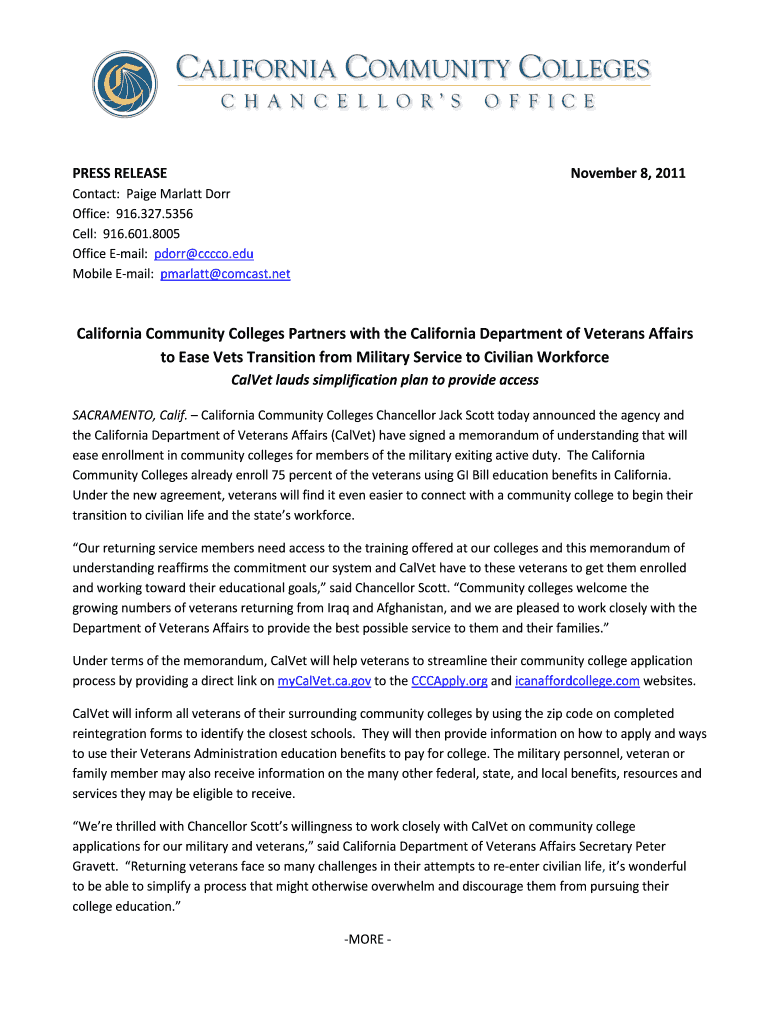
The memorandum of understanding between the California Community Colleges and the California Department of Veterans Affairs (CalVet) serves as a formal agreement intended to streamline the enrollment process for veterans transitioning from military service to civilian life. This strategic partnership focuses on enhancing access to higher education institutions through community colleges, leveraging the GI Bill benefits to provide veterans with the necessary resources to continue their education and successfully reintegrate into the workforce.
Steps to Complete the Enrollment Process
- Verification of Veteran Status: Begin by verifying veteran status through proper documentation, ensuring eligibility for benefits under the GI Bill.
- Apply to a Community College: Submit an application to one of the California Community Colleges via their online portal or in-person services, making sure to highlight veteran status.
- Submit Required Documentation: Provide documentation required by CalVet and the community college, including a Certificate of Eligibility for GI Bill benefits.
- Attend Orientation and Counseling: Participate in orientation sessions and appreciate counseling services designed to assist veterans in navigating their educational journey.
- Register for Classes: Work with academic advisors to choose classes aligning with educational and career goals, ensuring they meet GI Bill requirements.
- Activate GI Bill Benefits: Coordinate with the veteran's resource center at the college to activate GI Bill benefits towards tuition and fees.
Key Elements of the Partnership Agreement
- Dedicated Support Services: The partnership ensures dedicated support through veteran centers at each community college, facilitating access to educational materials, academic counseling, and peer support.
- Simplified Enrollment: A streamlined enrollment process reduces the administrative burden on veterans by simplifying the application and documentation required to access educational benefits.
- Resource Allocation: Allocation of resources is tailored to improve educational outcomes for veterans, such as tutoring, career services, and mental health support.
- Data Sharing: An important aspect involves data sharing between California Community Colleges and CalVet to track veteran success rates and adjust services as needed.
Eligibility Criteria
- Veteran Status: Must be a veteran of the United States Armed Forces with a discharge status that qualifies for GI Bill benefits.
- Residency: Eligible participants should be residents of California or intend to become residents during their study period.
- Educational Requirements: Applicants are typically required to have completed a high school diploma or equivalent, or meet other admission criteria set by the individual community colleges.


Required Documents
- DD Form 214: This document verifies discharge status and service period, which is essential for accessing GI Bill benefits.
- Certificate of Eligibility: Issued by the Department of Veterans Affairs, this certifies a veteran's qualification for education benefits.
- College Application: Completed application form for the chosen community college, including any supplemental materials requested by the institution.
Examples of Using the Partnership Program
- Case Study - John the Veteran: John, a former army engineer, used the partnership to enroll in an engineering program at a California community college. With access to the Veterans Resource Center on campus, he received career counseling and job placement services, reducing his transition stress.
- Scenario Analysis - Mary the Medic: Mary, a former military medic, utilized the simplified enrollment to join a nursing program. The coordination between CalVet and the college enabled quicker processing of her GI Bill benefits, ensuring she could focus on her studies without financial concerns.
- Real-World Application - Tom the Technician: Tom returned from service to pursue a degree in automotive technology. Through veteran-specific workshops and academic support, he successfully adjusted to civilian academic life.
Digital vs. Paper Version
- Digital Enrollment: The memorandum encourages digital enrollment processes, accessible via community college websites, allowing veterans to upload necessary documents and apply without needing physical forms. This approach caters to the modern veteran who uses smartphones and computers for daily tasks.
- Paper Options: Although digital processes are emphasized, paper-based applications are available for veterans who prefer or require them due to limited internet accessibility.
Legal Use of the Partnership
This partnership is designed to ensure that the transition from military to civilian education and employment complies with legal requirements under the GI Bill and the ESIGN Act for electronic records. By facilitating this transfer, veterans are granted the legal right to utilize their entitled educational benefits through California Community Colleges, ensuring that their rights are upheld throughout the process.
Who Typically Uses This Partnership
- New Veterans: Those recently discharged from service and seeking education to establish new career paths or enhance their existing skill set.
- Returning Students: Veterans returning to complete a previously started education or retrain in different fields to adapt to civilian job markets.
- Vocational Learners: Individuals aiming to gain vocational skills in high-demand sectors such as healthcare, engineering, technology, and business management.
Software Compatibility Considerations
Though not readily connected to specific tax software like TurboTax or QuickBooks, veterans utilizing technology for their educational journey can access online student portals and databases through their community college's website, often compatible with devices that meet minimal internet browsing requirements. Compatibility with major online platforms ensures ease and accessibility for vibrant veteran engagement.
By detailing these aspects, veterans and stakeholders can better understand the utilization and practical implications of the California Community Colleges and CalVet partnership, fostering an education-focused transition for military personnel.




