
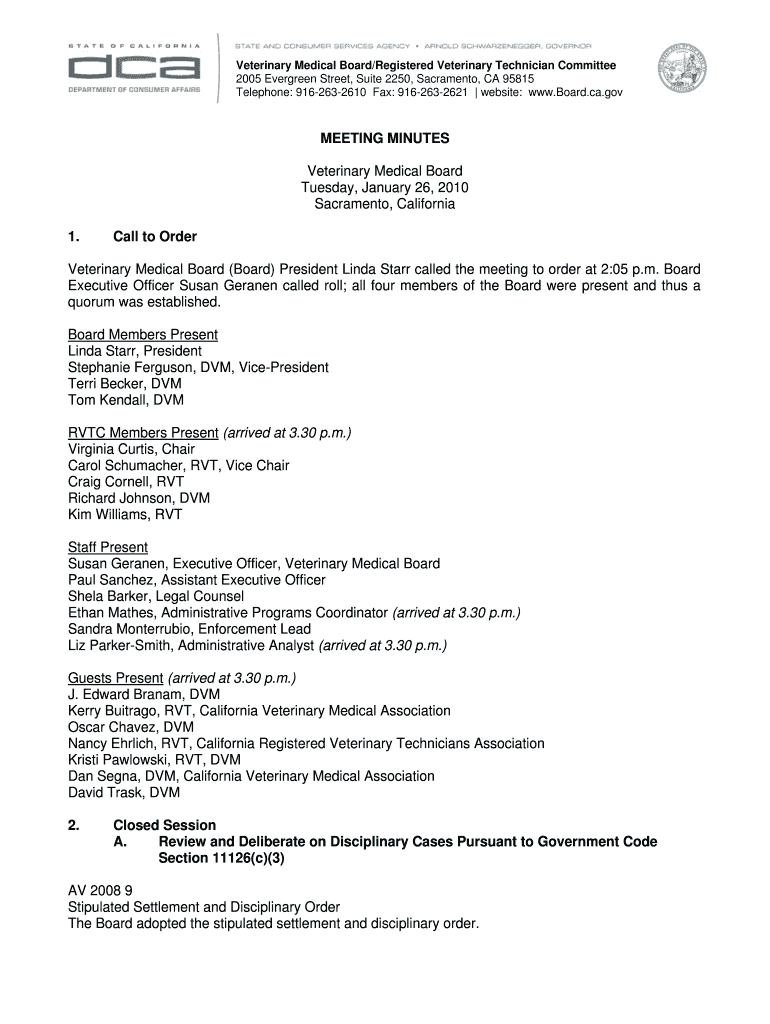







Definition and Role of the Veterinary Medical Board Registered Veterinary Technician Committee
The Veterinary Medical Board Registered Veterinary Technician Committee (RVT Committee) is a specialized subgroup within the Veterinary Medical Board. This committee focuses on matters concerning registered veterinary technicians, including the development and implementation of standards and practices for veterinary technicians. It plays a pivotal role in ensuring that professionals in the field adhere to ethical guidelines and meet the required qualifications. The RVT Committee also evaluates and advises on legislative changes that impact veterinary technicians and helps maintain the integrity of the veterinary profession.
How to Use the Committee for Licensing and Regulation
Working with the RVT Committee involves engaging in processes related to licensing and regulation for veterinary technicians. Those seeking to become or maintain their status as registered veterinary technicians can rely on the committee’s resources for guidance. Importantly, aspiring technicians must understand and comply with the committee’s regulations and expectations, which may include continuing education requirements and adherence to procedural standards. The RVT Committee's role is crucial in vetting applicants and ensuring only qualified individuals are licensed in the field.
Engaging with the RVT Committee
To engage effectively with the RVT Committee, individuals should:
- Review the committee's guidelines for licensure and professional conduct.
- Follow specific application procedures for examinations or license renewals.
- Participate in educational sessions or workshops offered by the committee to stay informed about best practices and regulatory changes.
Steps to Complete the Veterinary Medical Board Registered Veterinary Technician Committee Process
Navigating the RVT Committee's processes involves a series of methodical steps:
- Application Submission: Submit an application for examination or license renewal.
- Documentation Collection: Gather necessary documents, such as proof of education and professional references.
- Examination: Complete the required examination for licensure.
- Approval and Licensing: Await approval from the committee and receive your license.
- Continuing Education: Fulfill ongoing education requirements as mandated by the committee.
Each step must be completed precisely to ensure compliance with state and committee standards.
Importance of the Veterinary Medical Board Registered Veterinary Technician Committee
The RVT Committee is essential for maintaining high standards within the veterinary field. By overseeing the registration and regulation of veterinary technicians, the committee ensures that individuals meet the necessary qualifications and continue their professional development. This oversight safeguards the welfare of animals and upholds the professionalism of veterinary practices. For individuals in the field, the committee provides a framework for career growth and excellence.
Key Elements of the Committee's Framework
Several fundamental elements characterize the RVT Committee's framework:
- Licensing Standards: Ensures that technicians possess the necessary skills and education.
- Ethical Guidelines: Sets professional standards for conduct.
- Educational Requirements: Establishes conditions for ongoing professional training.
- Advisory Publications: Offers updates on legislative changes and new practices.
These elements collectively maintain the quality and integrity of veterinary services.
Legal Use and Compliance
The RVT Committee outlines specific legal guidelines to which veterinary technicians must adhere. Compliance ensures not only the legality of practices but also the protection of public health and animal welfare. Technicians are expected to follow all state laws and regulations as advised by the committee. Legal compliance is a cornerstone of professional responsibility, and the committee supports technicians with clear, detailed guidance on legal requirements.
State-Specific Rules and Guidelines
Every state may have unique regulations regarding the practice of veterinary technicians. The RVT Committee aids technicians by providing clarity on these state-specific rules. Understanding and adhering to local regulations is vital for compliance and successful practice. The committee offers resources that break down state-specific requirements, ensuring that technicians can practice legally and effectively across the United States.
Examples of Committee Use in Practice
Practical applications of the RVT Committee's work include:
- Licensure Exams: Aspiring veterinary technicians sit for licensing exams facilitated by guidelines from the committee.
- Regulatory Compliance: Veterinary practices utilize the committee's resources to ensure compliance with legal and ethical standards.
- Professional Development: Technicians attend committee-endorsed workshops or seminars to enhance their skills.
These examples reflect the committee's integral role in the day-to-day operations and long-term career trajectories of veterinary professionals.




