
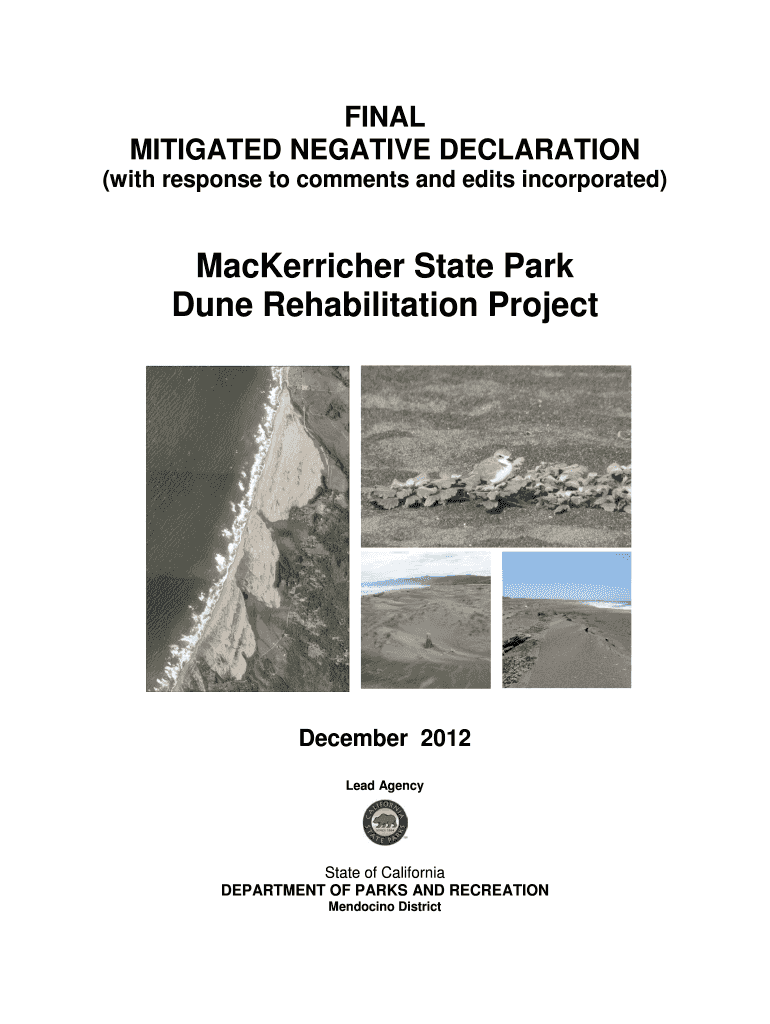







Definition and Meaning of the FINAL Addendum
The Final Addendum for California State Parks functions as an official document detailing supplementary information relevant to specific projects within the parks of California. It is a crucial component for communicating updates or changes to previously approved documentation related to environmental projects. This addendum typically includes modifications that address mitigation measures, reflecting changes in the project scope or addressing public feedback, ensuring ongoing compliance with environmental standards established by the State of California.
How to Use the FINAL Addendum
Utilizing the Final Addendum involves thoroughly reviewing its contents to understand the specific amendments or updates it introduces to existing environmental plans or strategies. Users should identify changes in project details such as timelines, resource allocation, or environmental impact mitigation strategies. Implementing the addendum effectively requires coordination with relevant stakeholders, ensuring all project activities align with the modifications detailed in the document.
Step-by-Step Usage Guide
- Review Document: Begin by carefully reading through the entire addendum to grasp the full context of modifications.
- Identify Key Amendments: Note any significant changes in procedures, timelines, or mitigation measures included in the addendum.
- Consult Stakeholders: Engage with project partners and relevant state agencies to discuss the implications of the addendum and ensure everyone is informed of new requirements.
- Integrate Changes: Adjust project plans and activities to incorporate the updates outlined in the addendum.
- Monitor Compliance: Continuously ensure that project implementation remains in compliance with both the original documentation and the new addendum provisions.
Importance of the FINAL Addendum
The Final Addendum serves multiple functions, primarily ensuring that all changes to an environmental project comply with legal and ecological standards. It provides clarity by documenting updates that could affect the project's environmental impact and addressing necessary modifications to original plans. This ensures that the project continues to protect natural resources and remain transparent and accountable to the public and regulatory bodies.
Key Elements of the FINAL Addendum
Key elements of the FINAL Addendum typically include:
- Environmental Mitigation Measures: Detailed strategies to minimize negative impacts on local ecosystems.
- Public Feedback Responses: Inclusion of responses to public comments received during the consultation phase.
- Modification of Project Scope: Descriptions of any changes in the scale or scope of the project.
- Regulatory Compliance Statements: Assurance that all modifications maintain adherence to state and federal environmental laws.
Legal Use of the FINAL Addendum
Legally, the Final Addendum is essential for ensuring that changes to environmental projects adhere to both state and national regulatory frameworks. It must clearly communicate any alterations to original assessments and provide evidence that all necessary steps have been taken to mitigate environmental impacts. Misuse or omission may result in legal consequences, including fines or project halts, highlighting the critical need for precise documentation.
Who Typically Uses the FINAL Addendum
The primary users of the Final Addendum include environmental planners, project managers within the Department of Parks and Recreation, and consultants involved in managing or assessing the environmental impact of state park projects. Additionally, regulatory bodies and environmental advocacy groups might review the addendum to ensure full compliance with established ecological and legal standards.


Obtaining the FINAL Addendum
The Final Addendum can be obtained through several channels:
- State Parks and Recreation Department: Direct request to the relevant state department overseeing the project.
- Public Records: Accessing through official public records or environmental review databases.
- Project Consulting Firms: Engaging consulting firms involved in project planning for access to necessary documents.
State-Specific Rules for the FINAL Addendum
California, known for its rigorous environmental policies, requires that any changes to state park projects comply with the California Environmental Quality Act (CEQA). This act mandates thorough environmental assessments and public disclosures, making the Final Addendum a critical tool for ensuring compliance. Understanding the regional legislative context and its impact on decision-making is crucial for effective environmental management within the state.
Examples of Using the FINAL Addendum
Practical applications of the Final Addendum include adjustments to the MacKerricher State Park Dune Rehabilitation Project, as it outlines updates necessary to address public and regulatory concerns. This might involve altering project methodologies to better protect local wildlife or adjusting construction timelines to accommodate sensitive breeding seasons, thereby illustrating its role in adaptive environmental management.




