
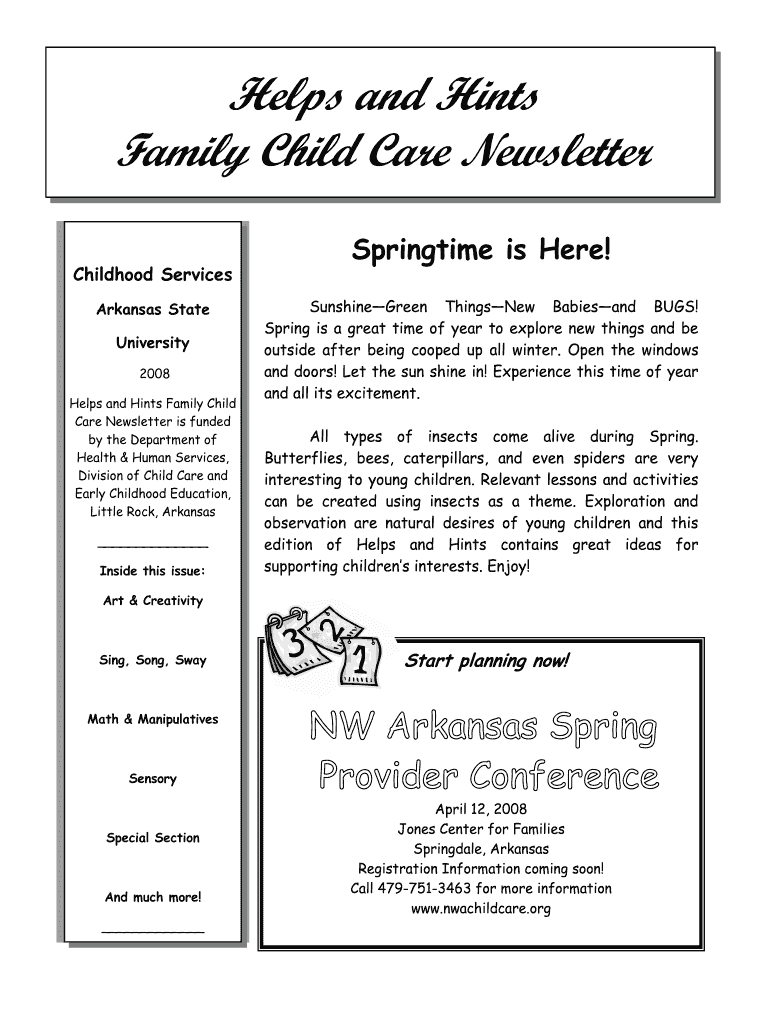







Definition & Meaning of Helps and Hints - Arkansas
The "Helps and Hints - Arkansas" refers to a resource provided by Arkansas State University that serves as a comprehensive guide for family child care providers. It focuses on delivering valuable insights, strategies, and activities specifically tailored for those managing child care settings. The aim is to enhance educational experiences by offering structured and creative ways to engage young children in learning. Through seasonal themes, such as springtime explorations of insects like butterflies and bees, this resource promotes an appreciation of nature, encouraging children to interact with their environment in meaningful ways.
Key Elements of Helps and Hints - Arkansas Newsletter
The Arkansas newsletter includes various components crafted to support family child care providers. Key elements encompass:
- Themed Activities: Activities focused on seasonal themes promote active learning and curiosity in children.
- Outdoor Exploration Tips: Guidance on incorporating nature into everyday learning to stimulate curiosity.
- Art and Sensory Projects: Creative projects designed to engage different senses and enhance cognitive development.
- Parent Involvement Suggestions: Strategies to foster collaboration between caregivers and parents, enriching the child's learning experience.
These elements collectively aim to provide holistic development opportunities for children in a family child care setting.
Steps to Complete Activities from Helps and Hints - Arkansas
-
Select a Theme: Begin with selecting a seasonal theme from the newsletter that aligns with the interests of the children and educational goals.
-
Gather Materials: Collect necessary materials for activities. This may include art supplies, natural items like leaves, or sensory materials such as sand or water.
-
Plan and Schedule: Outline the activities and schedule them into the daily routine, ensuring adequate time is allocated for exploration and reflection.
-
Facilitate Activities: Guide the children through the activities, encouraging them to ask questions and express creativity.
-
Reflect and Adapt: After completing the activities, discuss with the children what they learned and enjoyed. Use this feedback to adapt future activities.
Who Typically Uses the Helps and Hints - Arkansas
Family child care providers across Arkansas are the primary users of this resource. These individuals include:
- Home-based Child Care Providers: Those operating child care services from their homes, seeking structured activities and engagement strategies.
- Early Childhood Educators: Teachers in preschool settings who integrate the newsletter's resources into their curricula.
- Parents and Guardians: Parents actively involved in their children's early education may use the newsletter to supplement learning at home.
The newsletter is designed to be user-friendly, providing actionable insights for all caregivers involved in early childhood education.


Examples of Using Helps and Hints - Arkansas
-
Butterfly Life Cycle Exploration: An activity where children learn about the stages of a butterfly's life cycle through observational exercises and creative art projects, encouraging curiosity and understanding of biological processes.
-
Bee Pollination Role Play: A sensory-based activity where children simulate bee pollination using props and guided movement, facilitating learning about the role of bees in ecosystems.
These examples illustrate the diverse ways in which the newsletter's content can be applied to enrich children's learning experiences.
Important Terms Related to Helps and Hints - Arkansas
- Family Child Care: A child care service operated in a caregiver’s residence, providing a familiar and comfortable setting for young children’s learning and development.
- Hands-on Learning: An educational approach emphasizing active participation and practical experiences, critical to the development of problem-solving and critical-thinking skills.
- Seasonal Themes: Frameworks for learning activities that reflect changes in seasons, promoting environmental awareness and connection with nature.
Understanding these terms is crucial for users to maximize the benefits of the newsletter.
State-Specific Rules for Helps and Hints - Arkansas
In Arkansas, child care providers must adhere to certain regulations, including:
- Licensing Requirements: Providers must be licensed according to state guidelines to ensure safety and quality standards.
- Curriculum Standards: Activities should align with state guidelines for early childhood education, promoting age-appropriate learning objectives.
- Parent-Provider Agreements: Clear communication and agreements are essential to meet state standards for family involvement in learning processes.
These rules ensure that the delivery of child care services remains consistent with local laws and educational expectations.
State-by-State Differences in Family Child Care
While the newsletter is specifically tailored for Arkansas, it's important to recognize the variations in family child care approaches across different states. For instance:
- Curriculum Requirements: States may have different educational mandates for early childhood programs.
- Regulatory Standards: The level of oversight and inspection frequency can vary, affecting how providers structure their services.
- Funding and Support: Access to state-sponsored programs and financial aid can influence the resources available to child care providers.
Acknowledging these differences is essential for those who might seek to adapt the newsletter's strategies to other regions.
Advantages of Helps and Hints - Arkansas for Business Types
Family child care services, small early education centers, and community-based programs greatly benefit from the tailored content provided in the "Helps and Hints - Arkansas" newsletter. These beneficiaries gain from:
- Enhanced Engagement Strategies: Effective methods to keep children interested and invested in their learning environments.
- Professional Development: Continuous learning opportunities for providers to refine their craft and adapt to educational trends.
- Increased Parent Satisfaction: Strengthened parent-provider relationships through shared educational goals and transparent communication strategies.




