




01. Edit your form online
Type text, add images, blackout confidential details, add comments, highlights and more.

Type text, add images, blackout confidential details, add comments, highlights and more.

Draw your signature, type it, upload its image, or use your mobile device as a signature pad.

Send it via email, link, or fax. You can also download it, export it or print it out.
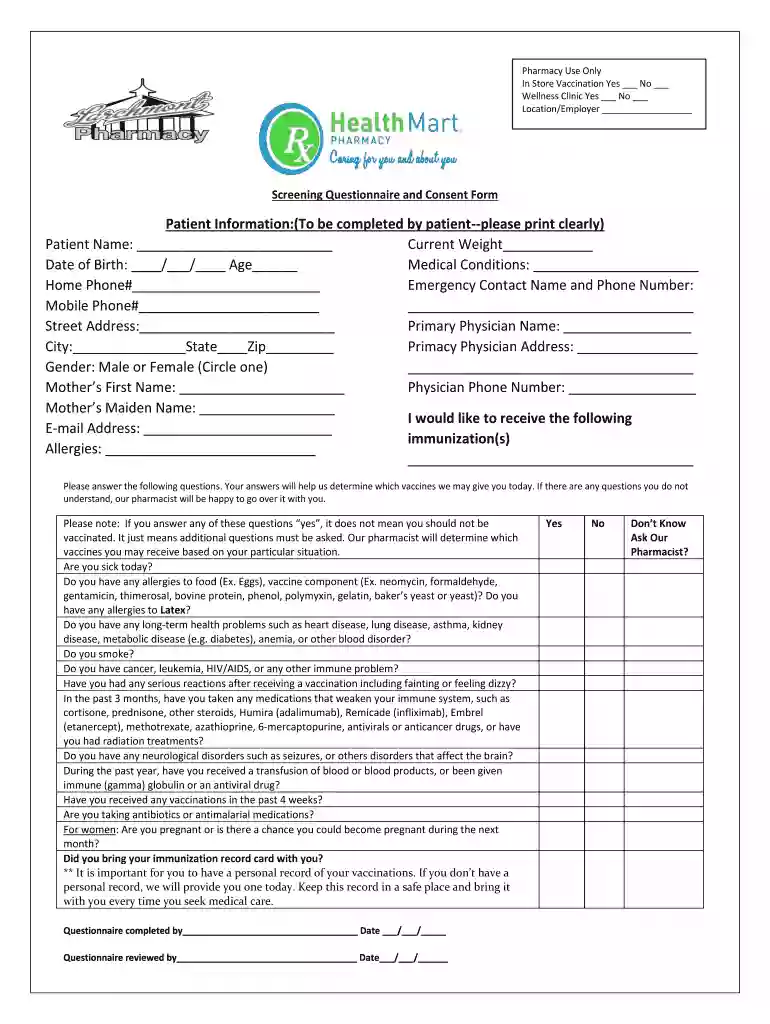
The vaccine administration consent form serves as a crucial document in the vaccination process at H-E-B locations. It primarily functions to obtain the necessary authorization from patients or their guardians for administering vaccines. This form additionally collects vital information about the patient's medical history, allergies, and previous vaccinations. The document ensures that the patient is informed about the vaccine's benefits and potential side effects, thereby facilitating an informed decision-making process.
To effectively utilize the vaccine administration consent form, follow these straightforward steps:
Completing the form accurately ensures a smooth vaccination process and minimizes the risk of adverse reactions.
The vaccine administration consent form is easily accessible to the public. Here are the methods to obtain the form:
Having multiple ways to obtain the form ensures that individuals can access it conveniently based on their preferences.
Completing the vaccine administration consent form involves several critical steps outlined for clarity and accuracy:
Revisiting each step ensures that all information is accurate, minimizing any potential misunderstandings or procedural delays.
The vaccine administration consent form includes several key sections critical for ensuring comprehensive documentation:
Each element plays a vital role in enabling safe and effective vaccine administration.
Familiarity with key terms is essential for understanding the consent form:
Knowing these terms aids in comprehending the form and making informed health decisions.
While vaccine administration is a national concern, specific rules and regulations may vary by state, affecting how forms are used and processed:
Understanding these variations ensures compliance with state laws during the vaccination process.
The form must be completed correctly to comply with legal standards surrounding medical consent, particularly for vaccinations:
Adhering to these legal aspects ensures the ethical administration of vaccines and the protection of patient rights.
At DocHub, your data security is our priority. We follow HIPAA, SOC2, GDPR, and other standards, so you can work on your documents with confidence.


All participants are permanently disabled, however all participants have also experienced some form of DocHub but temporary injury or illness.Read more
VACCINE ADMINISTRATION CONSENT FORM. SECTION 1 INFORMATION ABOUT THE PERSON RECEIVING THE VACCINE. Name: Date of Birth
Vaccine Information Statements (VISs) are information sheets produced by CDC that explain both the benefits and risks of a vaccine. View the VIS for HepB


