01. Edit your form online
Type text, add images, blackout confidential details, add comments, highlights and more.

Type text, add images, blackout confidential details, add comments, highlights and more.

Draw your signature, type it, upload its image, or use your mobile device as a signature pad.

Send it via email, link, or fax. You can also download it, export it or print it out.
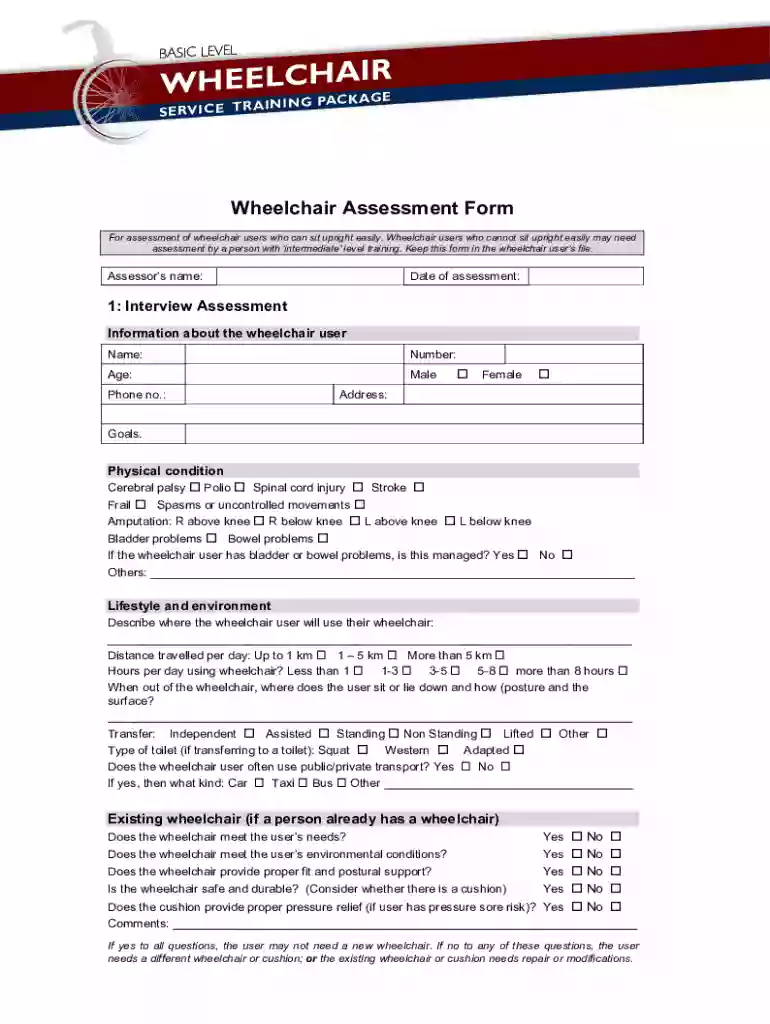
The Wheelchair Assessment - Physical Assessment form primarily evaluates an individual's capability to use a wheelchair effectively. This comprehensive form includes several key sections:
Personal Information: Collects basic details such as name, age, and contact information. It's crucial for ensuring that the assessment can be accurately tied to the correct individual.
Physical Condition: This section assesses the user's overall physical health, including specific metrics like strength, balance, and coordination, which influence wheelchair suitability.
Lifestyle Evaluation: Considers the user's daily activities, routines, and environments where the wheelchair will be used. This helps in identifying any special features required for the wheelchair, such as portability or specific terrain compatibility.
Existing Wheelchair Evaluation: If applicable, this block evaluates any wheelchairs currently in use, including their condition and any limitations they may have. It helps to decide whether an upgrade or modification is necessary.
Physical Assessment: Provides a detailed analysis of the user's needs, identifying any custom features or modifications that should be made to the wheelchair for optimal usability.
Completing the Wheelchair Assessment - Physical Assessment involves several systematic steps:
Gather Required Documents: This includes any existing medical records, previous wheelchair assessments, and current prescriptions for mobility aids.
Initial Consultation: Conduct an initial meeting with a healthcare provider or occupational therapist to go through the assessment requirements and clarify any doubts.
Fill Personal Information Section: Begin by accurately entering the personal details, ensuring that all fields are completed to prevent any identification issues.
Conduct Physical Condition Evaluation: This step may require a healthcare professional's assistance to accurately measure and record physical capabilities and limitations.
Discuss Lifestyle Needs: Engage in a conversation with the user to understand their routines to better tailor the assessment to their specific lifestyle requirements.
Assess Existing Equipment: If the user already has a wheelchair, this step involves examining the equipment for any functional issues or required enhancements.
Compile Physical Assessment Results: Finally, consolidate all findings in the physical assessment section, ensuring a thorough review for any bespoke needs.
The Wheelchair Assessment - Physical Assessment is a structured form used by professionals to determine the most appropriate wheelchair design and features for an individual. It carefully analyzes physical and environmental factors to ensure the equipment enhances the user's mobility and comfort.
Using the Wheelchair Assessment - Physical Assessment ensures a more personalized approach to selecting and customizing a wheelchair. Key benefits include:
Enhanced Safety: By accurately assessing physical condition, the risk of injury from inappropriate equipment use is minimized.
Improved Comfort: Tailored assessments help create a setup that reduces strain and increases comfort during use.
Optimized Mobility: With consideration of lifestyle needs, the selected wheelchair can provide greater freedom and ease in daily activities.
Cost-Effective Solutions: Assessing current wheelchairs can identify viable modifications, potentially avoiding unnecessary replacements.
The Wheelchair Assessment - Physical Assessment is commonly utilized by:
Occupational Therapists: Who oversee the assessment to ensure all aspects of mobility and functionality are considered.
Healthcare Providers: Such as physiatrists, specializing in physical medicine and rehabilitation, to recommend suitable wheelchair features.
Individuals and Families: Who want to ensure that personal mobility requirements are met with precision and due care.


Utilizing this form involves following a systematic process to collect and analyze the relevant data:
Collaborate with Professionals: Work closely with healthcare providers who have expertise in mobility and rehabilitation.
Regular Reviews: Monitor any changes in physical condition or lifestyle that may necessitate updates or changes to the wheelchair.
Feedback Mechanism: Encourage users to provide feedback on their wheelchair usage to ensure ongoing suitability and comfort.
The legal use of the Wheelchair Assessment - Physical Assessment pertains to ensuring compliance with health and safety regulations. It includes:
Adhering to ADA Guidelines: Ensuring wheelchairs meet the standards set by the Americans with Disabilities Act for accessibility.
Maintaining Confidentiality: All personal and medical information collected during the assessment must be handled in accordance with HIPAA regulations to protect user privacy.
Compliance with Medical Recommendations: Ensures that any prescribed modifications are correctly implemented to maximize health benefits.
Completing the Wheelchair Assessment - Physical Assessment necessitates specific documentation:
Medical Records: Providing insight into the user's medical history and any conditions affecting mobility.
Previous Assessment Reports: Useful for understanding historical equipment needs and clinical recommendations.
Insurance Information: Required to verify coverage for necessary equipment and modifications.
These documents ensure a comprehensive assessment process, facilitating the formulation of a strategic plan to meet the user’s needs effectively.
The form can be compatible with various digital platforms, enhancing its accessibility and completion efficiency:
Direct Editing on DocHub: Allows for straightforward annotation and completion with real-time collaboration features.
Cloud Storage Integration: Users can easily save, share, and access the form using cloud services like Google Drive or OneDrive.
Digital Signature Capability: Facilitates swift completion and authorization of the form, speeding up the approval and customization process.
These features streamline the workflow, offering a convenient, secure, and collaborative approach to managing wheelchair assessments.
At DocHub, your data security is our priority. We follow HIPAA, SOC2, GDPR, and other standards, so you can work on your documents with confidence.