






Definition and Meaning
Endothermic and exothermic reactions are fundamental concepts in chemistry, differentiating how energy is transferred during reactions. An endothermic reaction absorbs energy, usually in the form of heat, from its surroundings, resulting in a cooling effect. Common examples include melting ice and cooking an egg. In contrast, an exothermic reaction releases energy, typically as heat, causing the surrounding area to warm up. Examples include burning a match and combustion processes. Understanding these concepts is essential for students and professionals, offering insights into energy changes and conservation principles across various scientific disciplines.
Key Elements of the Worksheet
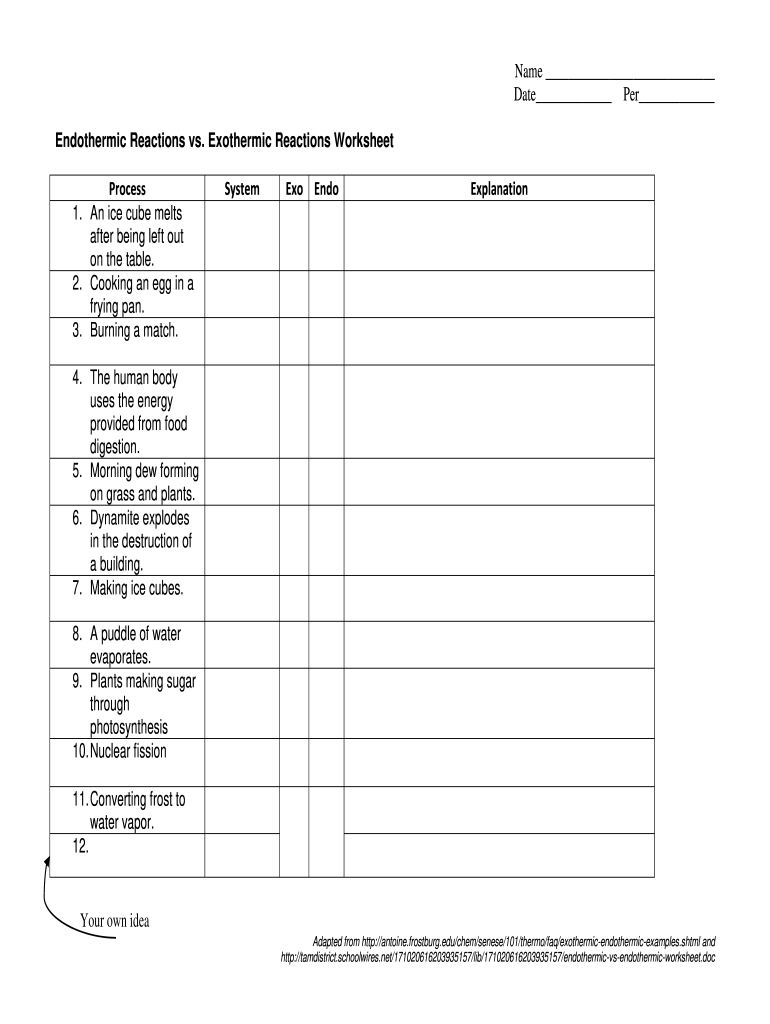
The "endothermic reactions vs exothermic reactions worksheet" aids students in distinguishing these reaction types through practical examples and exercises. Key elements include:
- Classification Tasks: Students are prompted to categorize various processes, such as melting ice and burning fuels, as endothermic or exothermic.
- Energy Flow Analysis: Worksheets often include diagrams or graphs representing energy changes, enhancing learners' ability to interpret data visually.
- Explanation Sections: Students must explain their classifications, strengthening their understanding of energy absorption and release in different chemical processes.
- Real-world Scenarios: By contextualizing reactions in daily life, such as cooking or burning, the worksheet enhances learning relevance and engagement.
Steps to Complete the Worksheet
- Review Definitions: Begin by understanding the fundamental concepts of endothermic and exothermic reactions, focusing on energy changes.
- Classify Examples: Examine each given example and determine if the reaction absorbs or releases energy.
- Graph Analysis: Interpret any provided graphs that illustrate energy changes, noting peaks and troughs indicating endothermic or exothermic processes.
- Provide Explanations: Offer detailed explanations for each classification, referencing specific energy flows or real-world contexts.
- Check Comprehension: Revisit key concepts and verify the correctness of classifications and explanations, ensuring a deep understanding of the subject matter.
Examples of Using the Worksheet
Utilizing the worksheet effectively involves practical applications and relatable scenarios:
- Chemical Demonstrations: Use the worksheet during laboratory activities to reinforce theoretical concepts with hands-on experiments.
- Homework Assignments: Assign as part of home study to facilitate continuous engagement and independent learning.
- Group Discussions: Encourage group work to foster collaborative learning, allowing students to share insights and tackle challenging examples collectively.
- Assessment Preparation: Application of knowledge from the worksheets enhances exam readiness, offering a solid foundation for answering related questions effectively.
How to Obtain the Worksheet
To access the "endothermic reactions vs exothermic reactions worksheet," consider the following methods:
- Educational Platforms: Available on academic websites or educational platforms that specialize in chemistry resources.
- Textbook Supplements: Often included as part of standard chemistry textbooks, typically in online downloadable formats.
- Teacher's Resources: Instructors may distribute copies during classroom activities or as part of digital learning management systems.
- Library Sources: Physical or digital copies may be available through school or public library resources for student use.
Important Terms and Concepts
Understanding specific terms enhances comprehension of the worksheet content:
- Activation Energy: The minimum energy required for a reaction to occur, applicable in both reaction types.
- Heat of Reaction: The overall energy absorbed or released during a chemical process.
- Entropy: A measure of disorder or randomness, influencing reaction spontaneity.
- Enthalpy Change: A representation of total energy change, classified as endothermic or exothermic.
Versions or Alternatives to the Worksheet
Different formats or related tools can supplement the learning experience:
- Digital Interactive Worksheets: Incorporate dynamic content, such as videos or interactive graphs, for an engaging learning experience.
- Study Guides: Offer condensed information and practice questions for topic revision.
- Apps and Online Tools: Interactive apps provide simulations and immediate feedback, enhancing concept understanding.
- Workbooks: Include extensive practice questions, case studies, and detailed explanations, complementing classroom learning.
Why Use the Worksheet
The worksheet serves multiple educational purposes:
- Improves Comprehension: Breaks down complex concepts into manageable tasks that are easier to understand.
- Engages Students: Provides varied formats and examples, capturing student interest.
- Enhances Critical Thinking: Encourages analytical thinking skills by challenging students to categorize and explain reactions.
- Supports Curriculum Goals: Aligns with educational standards, reinforcing key learning objectives in chemistry courses.
By understanding and utilizing the "endothermic reactions vs exothermic reactions worksheet," students can effectively grasp the critical concepts of energy changes in chemical reactions, supporting their broader scientific education and critical thinking development.