






Definition and Purpose of the Recommendation to State Board of Education
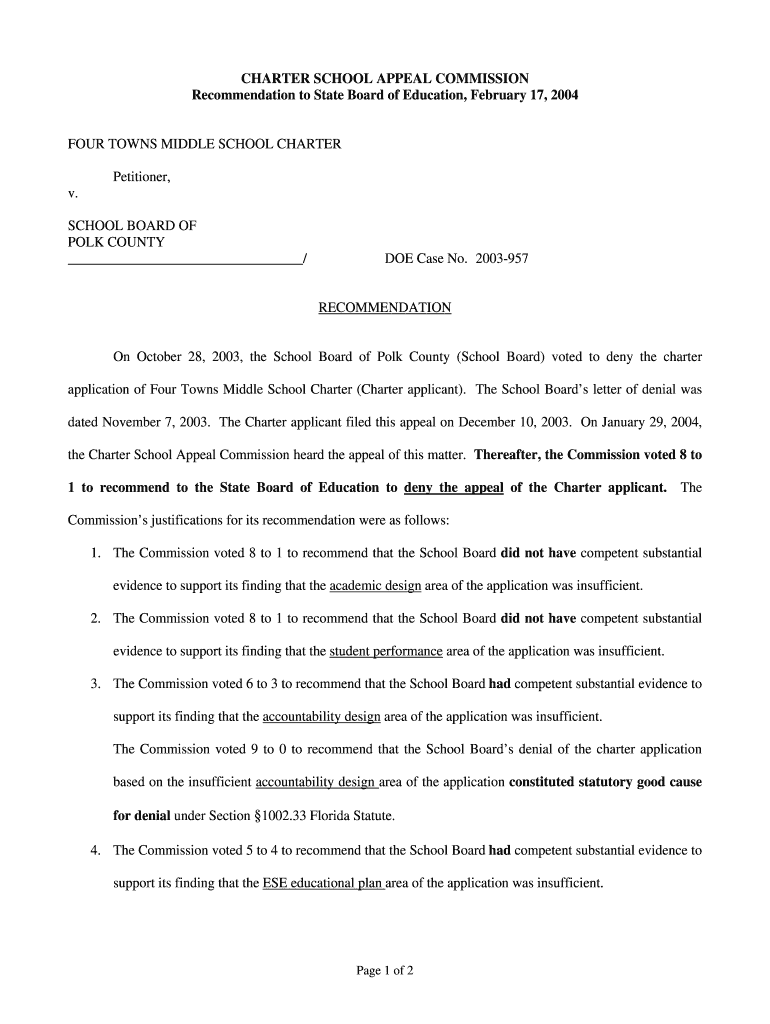
The "Recommendation to State Board of Education, February 17, 2004," relates to an official suggestion or decision directed towards the State Board of Education. This recommendation is often involved in cases concerning the evaluation and adjudication of educational matters, such as charter school applications, appeals, or other significant educational policies. Its purpose is to provide a formal opinion or conclusion, often backed by a detailed assessment or investigation, to guide decision-making at a state level.
Examples of Usage
- Charter School Appeals: These recommendations can be seen in situations where a charter school applications' approval is contested and reviewed by an authority, such as the Charter School Appeal Commission. In particular, this empowerment helps guide the State Board of Education on whether to approve or deny appeals based on detailed case reviews, such as those concerning educational plan adequacy or accountability measures.
- Educational Policy Issues: Recommendations may also address broader educational policy questions, offering guidance on curriculum standards, funding allocations, or integration of educational technology.
How to Use the Recommendation to State Board of Education
To effectively utilize the "Recommendation to State Board of Education," stakeholders must understand its components and implications. Whether you are part of an educational institution, a legal representative, or a policymaker, interpreting and responding to these recommendations can significantly impact decisions regarding educational strategies and compliance.
Steps for Implementation
- Review the Content: Begin by thoroughly examining the entire recommendation document to comprehend the rationale and specifics of the guidance or decision.
- Assess the Implications: Analyze how the recommendation affects current operations or decisions. Consider both short-term and long-term impacts.
- Formulate a Response: Based on the evaluation, develop a strategic response addressing any identified issues, adjustments, or compliance requirements highlighted in the document.
- Engage with Relevant Authorities: Communicate with educational boards, legal advisors, and stakeholders to ensure collective understanding and alignment with the recommendation's guidance.
- Document Actions: Keep detailed records of all actions taken in response to the recommendation for future reference and potential audits.
Legal Use and Compliance
Understanding the legal framework surrounding the "Recommendation to State Board of Education" is critical for educational institutions and stakeholders.
Compliance with Educational Standards
- Adherence to Educational Policy: Institutions must ensure that their practices align with state and federal educational policies outlined in the recommendation.
- Documentation and Evidence: Maintain comprehensive records of how the recommendations are being implemented to support compliance and demonstrate accountability.
Consequences of Non-Compliance
- Penalties and Sanctions: Failure to comply with board recommendations can result in financial penalties, revocation of licenses, or loss of funding.
- Legal Challenges: Non-compliance may lead to legal disputes that require resolution through administrative or judicial proceedings.
Key Elements of the Recommendation
The recommendation document typically comprises several critical components that stakeholders should be familiar with.
Core Components
- Findings: Detailed explanation of the investigation results that informed the recommendation, highlighting evidence considered during the decision-making process.
- Rationale: Justification of the recommendation, outlining why certain actions or outcomes are proposed.
- Recommendations: Explicit suggestions or directives provided to the State Board of Education for implementation consideration.
Practical Application and Scenarios
- Case Evaluation: Analyze past cases where similar recommendations were utilized to understand potential outcomes and refine strategic approaches.
- Stakeholder Involvement: Identify key individuals who should be informed or involved in the response and decision-making process related to the recommendation.
Importance and Benefits of the Recommendation
The "Recommendation to State Board of Education" serves as a critical tool in maintaining standardized educational quality and fostering institutional accountability.
Benefits for Educational Institutions
- Structured Guidance: Provides clear pathways for addressing educational challenges and improving institutional performance.
- Accountability Assurance: Reinforces institutional accountability by requiring alignment with state and federal educational guidelines.
Impact on Educational Outcomes
- Enhancing Educational Standards: Facilitates the establishment of higher educational standards by ensuring rigorous evaluation and informed decision-making.
- Promoting Equitable Access: Supports efforts to promote equitable access to quality education through consistent application of educational policies and standards.
State-Specific Rules and Variations
While the fundamental purpose of the "Recommendation to State Board of Education" remains consistent, state-specific regulations and educational contexts can result in differences in application.
Variations by State
- Procedural Differences: States may have distinct procedures for reviewing and acting on recommendations, influenced by local educational policies and governance structures.
- Guideline Adaptations: Local educational priorities and challenges may necessitate adaptations of broader recommendations to meet specific state needs effectively.
Implications for Stakeholders
- Customized Responses: Institutions should tailor their responses to align with local regulations and reflect state-specific educational priorities.
- Continuous Monitoring: Regularly review state-specific educational guidance to stay informed of any changes or updates affecting recommendations and compliance requirements.
Steps to Obtain the Recommendation
For those seeking a "Recommendation to State Board of Education," specific procedures must be followed to formally request and acquire the document.
Acquisition Process
- Identify Relevant Authority: Determine the appropriate body or commission responsible for issuing the specific recommendation.
- Formal Request Submission: Prepare a formal request detailing the need for the recommendation and submit it through designated channels such as email or formal application platforms.
- Provide Necessary Documentation: Ensure all required supporting documents are included with the request to facilitate thorough review and evaluation.
- Follow-Up Communication: Engage with the issuing authority to track the progress of the request and address any additional information requirements.
Considerations for Success
- Timeliness: Ensure all submissions are made within the specified deadlines to prevent delays in obtaining the recommendation.
- Clarity and Completeness: Present a well-documented, complete profile of the request to streamline review and approval processes.
Form Submission Methods
Different methods are available for submitting or responding to a "Recommendation to State Board of Education."
Digital and Paper Options
- Online Submission: Involves using digital platforms to submit recommendations or related responses, offering efficiency and immediate confirmation of receipt.
- Mail Submission: Traditional paper-based method requiring physical copies to be sent via postal services, useful where digital options are limited or not preferred.
Best Practices
- Leveraging Technology: Utilize digital submission methods when possible to reduce processing times and enhance communication efficiency.
- Double-Check Information: Carefully review all entries for accuracy and completeness before submission, regardless of the method employed.