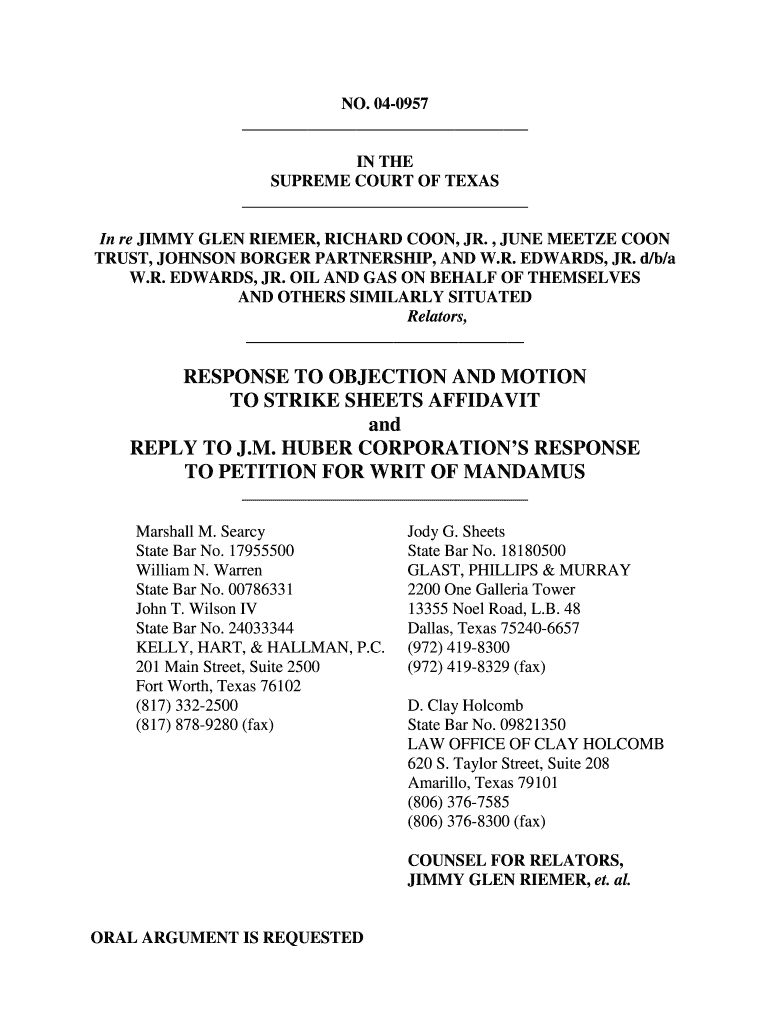







Understanding the "Response to Objection and Motion to Strike Sheets - Supreme Court"
A "Response to Objection and Motion to Strike Sheets - Supreme Court" is a legal document used in the judicial process, particularly at the state Supreme Court level, to systematically address objections raised against a petition or affidavit. This response is a crucial part of the legal dialogue that ensures both parties' arguments are considered before a decision is rendered.
Purpose and Utility of the Document
- It serves as an official rebuttal to objections laid out by the opposing party.
- Allows the responding party to clarify any contested points and offer counter-arguments.
- Its primary goal is to persuade the court to dismiss the objections and potentially strike contested sections from the records, facilitating a favorable outcome for the petitioner.
How to Use the "Response to Objection and Motion to Strike Sheets - Supreme Court"
Step-by-Step Completion Guide
-
Identify the Objections:
- Carefully review the objections raised by the opposing party. Understand the specifics to address them accurately in the response.
-
Drafting Your Response:
- Begin with a clear statement of your intentions to respond to specific objections.
- Address each objection individually with concise and logical arguments.
-
Cite Relevant Laws and Precedents:
- Support your arguments with applicable laws, statutes, and previous cases that have had similar circumstances.
-
Proofread and Edit:
- Ensure the response is free of errors and clearly articulates the arguments.
-
Submit to the Court:
- Follow the court's procedures for submission, ensuring all documents are filed within the required timeframe.
Required Documents for Submission
To efficiently process your "Response to Objection and Motion to Strike Sheets - Supreme Court," you will typically need:
- The original objection document from the opposing party.
- Any additional evidence or affidavits supporting your response.
- Legal references or precedents cited within the response.
- Personal identification and case-specific details as required by the court.
Key Elements in the Response Document
Essential Components
-
Caption Block:
- Includes the case name, docket number, and court details.
-
Statement of Facts:
- A brief recount of the factual background pertinent to the objections.
-
Argument Section:
- Logical, well-structured counterpoints to each objection.
-
Conclusion:
- A summary asserting why the court should favor your position and strike down the objections.
Legal Use and Implications
The legal foundation of this response speaks to its function within the judiciary:
- Ensures due process by allowing both parties to fully articulate their stance.
- Offers an opportunity to preempt factual inaccuracies and legal misinterpretations.
- Influences case outcomes by compelling the court to reconsider or reassess objections based on merit and legality.
Implications of Non-Compliance
Failing to respond adequately or within the prescribed timeframe can lead to:
- Automatic acceptance of the objections, which could be detrimental to your case.
- Potential dismissal of associated affidavits or evidence you rely upon.
State-Specific Rules and Variations
While the core purpose of the "Response to Objection and Motion to Strike Sheets - Supreme Court" is consistent, specific procedural rules and requirements can vary by state. Some states may have additional filing requirements or unique deadlines—so, always consult legal expertise or local court regulations to ensure compliance.
Practical Examples and Scenarios
Real-World Contexts
-
Case of Disputed Affidavit:
- When an affidavit in support of a writ of mandamus is objected to for perceived factual inaccuracies, a response can decisively refute these claims, relying on verified evidence and legal precedents.
-
Flawed Survey Results Interpretation:
- If an objection claims reliance on an outdated or incorrect survey, the response can provide corrected data and methodologies to negate this objection.
Who Typically Uses This Form?
Common Users
-
Attorneys and Legal Representatives:
- Utilize their expertise to articulate and structure responses in alignment with legal standards.
-
Pro Se Litigants:
- Individuals representing themselves also engage with this document, though professional legal advice is often recommended due to its complexity.
By understanding the nuances and structured process outlined in this guide, users can effectively navigate the intricacies associated with the "Response to Objection and Motion to Strike Sheets - Supreme Court."