







Definition & Meaning of TAA Ph 1 10 - panynj
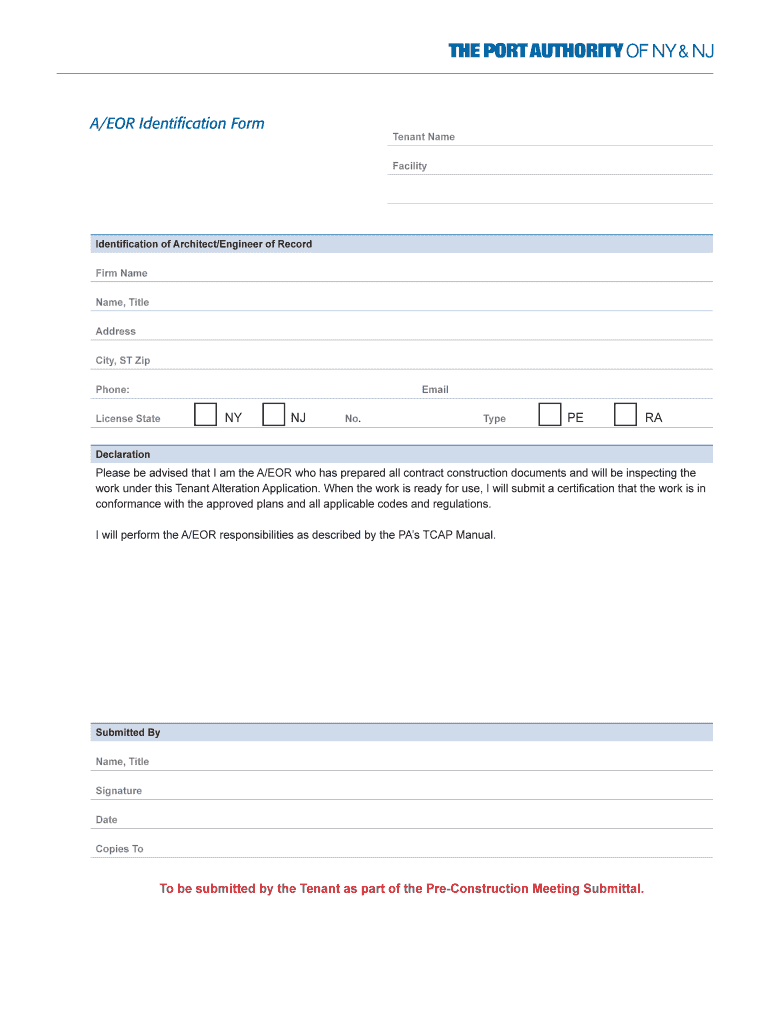
The TAA Ph 1 10 - panynj form is an important document used in the context of tenant alterations. This form is associated with the Port Authority of New York and New Jersey (PANYNJ) and is specifically designed for managing and documenting tenant-led modification projects within properties overseen by the authority. It provides a standardized method for tenants to initiate and receive approval for alteration projects, ensuring compliance with local regulations and standards. The form signifies the tenant's intention to modify a property, requiring detailed information about the project scope, specifications, and the professionals involved.
How to Use the TAA Ph 1 10 - panynj
Using the TAA Ph 1 10 - panynj requires a few methodical steps. Initially, tenants need to gather all necessary details regarding the intended alteration, including architectural plans and engineering assessments. Then, the tenant completes the form by inputting these details accurately to ensure clarity in their submission. The form can be used to outline various aspects of a project such as the scope of work, compliance with building codes, and declarations of responsibility by architects and engineers involved. Being thorough in this process is crucial, as it lays the groundwork for approval by overseeing authorities.
Steps to Complete the TAA Ph 1 10 - panynj
-
Gather Required Documentation: Before beginning the form, collect all necessary documents that outline the project’s specifications, including architectural and engineering plans.
-
Identify Project Details: Clearly state the nature of the alteration, the location within the property, and any potential impact on existing structures or services.
-
Provide Professional Credentials: Enter detailed information about the architect or engineer of record, including their firm name, contact details, and licensing information.
-
Outline Compliance Measures: Describe how the project adheres to local building codes and regulations, ensuring all declared information is verified by experienced professionals.
-
Submit for Approval: Once completed, submit the form along with the necessary attachments to the PANYNJ for review and approval.
Important Terms Related to TAA Ph 1 10 - panynj
-
PANYNJ: Port Authority of New York and New Jersey, the overseeing body responsible for managing infrastructure-related requirements and compliance in relevant alterations.
-
A/EOR: Architect/Engineer of Record, the professional charged with ensuring compliance with plans and regulatory standards.
-
Pre-Construction Meeting: A preliminary gathering required as part of the submission process to discuss the proposed alterations and clarify any potential concerns.
Key Elements of the TAA Ph 1 10 - panynj
-
Project Description: A comprehensive account of the planned modifications, including objectives and expected outcomes.
-
Architect/Engineer Declaration: A formal agreement where professionals confirm responsibilities regarding compliance with approved plans.
-
Contact Information: Detailed contact details for all primary parties involved, facilitating communication throughout the review process.
Legal Use of the TAA Ph 1 10 - panynj
Legal compliance is a significant aspect of the TAA Ph 1 10 - panynj form. It mandates that alterations meet all safety and regulatory standards as set by local codes and practices. Tenant alterations are legally bound to follow the outlined procedures to legally protect both the tenant and property owner under contractual law. Any deviation from the submission requirements could result in compliance violations and potential legal consequences. Thus, ensuring every section is accurately completed and verified by licensed professionals is a legal necessity.
Who Typically Uses the TAA Ph 1 10 - panynj
This form is primarily utilized by commercial tenants who seek to make alterations to properties managed by the PANYNJ. Key users include:
-
Property Managers: Overseeing tenant compliance and ensuring procedural adherence.
-
Architects and Engineers: Developing and submitting project plans in accordance with legal standards.
-
Commercial Tenants: Initiating approval processes for property changes.


Examples of Using the TAA Ph 1 10 - panynj
Consider a retail tenant in a PANYNJ-managed shopping complex who plans to renovate the storefront. The tenant must provide architectural plans for the proposed redesign, detailing compliance with building codes through the TAA Ph 1 10 - panynj. Another example includes an office tenant wanting to update their HVAC system, requiring engineering evaluations and corresponding submissions through the same form. In both cases, the form aligns project plans with mandatory legal and procedural standards.
Required Documents for TAA Ph 1 10 - panynj Submission
-
Architectural and Engineering Plans: Detailed blueprints and project outlines that define the scope and technical specifics of the intended alterations.
-
Licenses of Professionals: Proof of accreditation and licensing for all architects and engineers involved in the project.
-
Permit Applications: Documents required to obtain necessary permits for legal commencement of construction or alteration tasks.
These documents are integral to ensure a smooth review and approval process, underscoring the importance of compliance and thorough preparation before form submission.




