
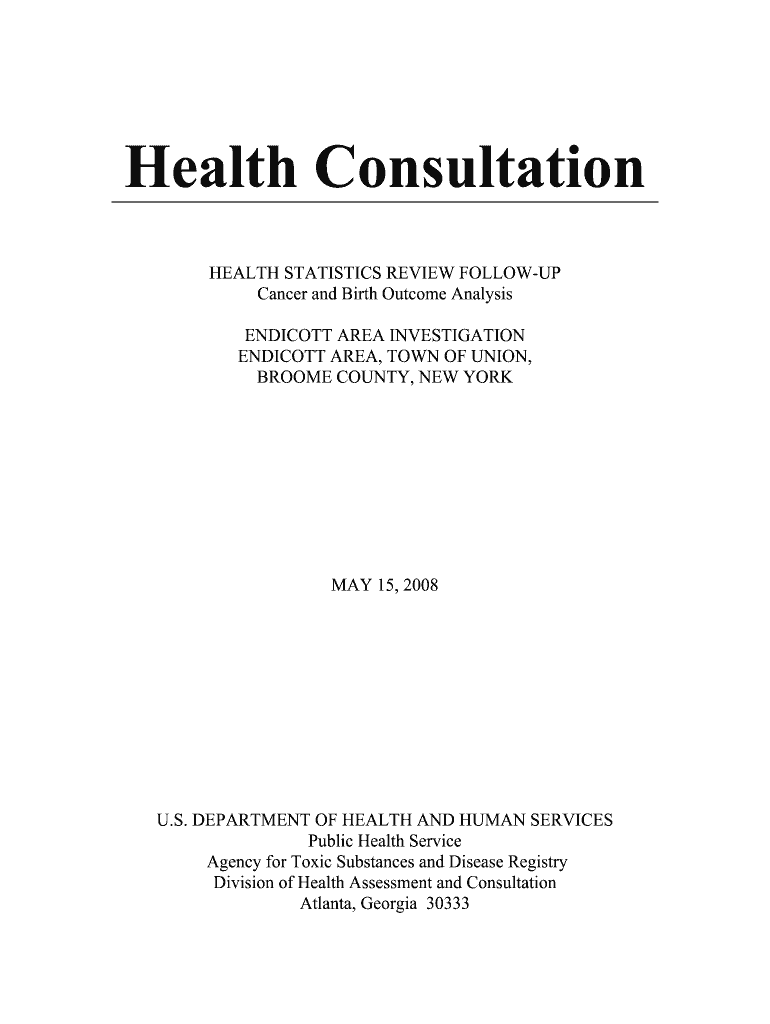







Definition and Meaning
The "Health Consultation - New York State Department of Health - health ny" is a specialized report provided by the New York State Department of Health. This document typically involves evaluating health-related issues, such as epidemiological studies, environmental health risks, or public health assessments in a specific geographic area. The primary purpose of this consultation is to inform stakeholders, including public health officials, community members, and policymakers, about health findings and any potential health risks associated with environmental factors.
These consultations often involve data analysis, interpretation of health statistics, and recommendations based on scientific evidence. They focus on understanding health trends and determining if there are areas of concern impacting community health, such as higher cancer rates or negative birth outcomes.
How to Use the Health Consultation
To effectively utilize the "Health Consultation - New York State Department of Health - health ny," start by thoroughly reading the document to understand its scope and findings. Identify the key health issues it addresses and review any statistical data or conclusions provided. This will offer insight into health trends and potential public health interventions needed in the area.
- Community Members: You can use the information to raise community awareness and advocate for health initiatives.
- Public Health Officials: The document can be a tool for designing targeted health programs or policy changes aimed at mitigating identified risks.
- Researchers: This report provides a basis for further study or validation of findings through expanded research projects.
Who Typically Uses the Health Consultation
The primary users of the "Health Consultation - New York State Department of Health - health ny" include:
- Public Health Officials: They need this document for planning and implementing health interventions.
- Researchers and Academics: They assess the data for studies on public health and epidemiology.
- Community Organizations: These groups use the report to support advocacy work or secure funding for health programs.
- Policy Makers: Elected officials refer to the consultation to shape health policies and regulations.


Key Elements of the Consultation
Understanding the critical components of a health consultation report is essential for proper interpretation. The document often consists of:
- Problem Statement: Outlines the primary health concern or risk being addressed.
- Data Analysis: Detailed statistics and findings, such as cancer incidence rates or birth outcome trends.
- Recommendations: Suggested actions based on findings, such as increased monitoring or community health initiatives.
- Conclusions: Discussion of the report’s implications for public health and next steps.
Steps to Complete the Consultation Process
- Review Background Information: Confirm details about the health issue or population under study.
- Collect Data: Gather epidemiological data related to health outcomes and risk factors.
- Analyze Results: Assess data for patterns, trends, and outliers.
- Draw Conclusions: Interpret data to understand the public health impact.
- Make Recommendations: Advise on potential interventions or policy changes.
- Distribute Findings: Share the report with relevant stakeholders and the public.
Important Terms Related to the Consultation
- Volatile Organic Compounds (VOCs): Chemicals that may contribute to adverse health outcomes.
- Epidemiological Studies: Research investigations aimed at understanding the incidence and distribution of health events.
- Cancer Incidence: The number of new cancer cases occurring in a specified population during a given time period.
- Conotruncal Heart Defects: A set of congenital heart defects, often assessed in connection with environmental exposures.
Legal Use of the Health Consultation
The findings and recommendations from the "Health Consultation - New York State Department of Health - health ny" can be utilized to inform public policy, guide legal regulations, and support community health initiatives. Ensuring compliance with public health laws and proposing new regulations based on consultation findings are typical legal uses.
- Policymakers: Use the report to advocate for legislative changes.
- Attorneys: Reference data in cases related to environmental health liabilities.
State-Specific Rules for Health Consultations
The New York State Department of Health follows specific guidelines when conducting health consultations:
- Compliance with State Health Regulations: All health consultations must adhere to state and federal health assessment requirements.
- Public Participation: Community engagement is encouraged during consultations to gather comprehensive data and insights.
- Transparency: Findings are publicly reported to ensure transparency and accountability in addressing health risks.
Examples of Using the Health Consultation
One effective use case is when community organizations leverage the findings to secure funding for health interventions. For example, if a consultation identifies elevated cancer rates linked to industrial pollutants, local groups might receive grants to implement pollution reduction programs.
Another example is policymakers using consultation data to draft legislation that limits exposure to identified health risks, thereby safeguarding public health based on empirical evidence.
In sum, the "Health Consultation - New York State Department of Health - health ny" serves as a foundational element in understanding and addressing public health issues in New York.




