







Definition & Meaning
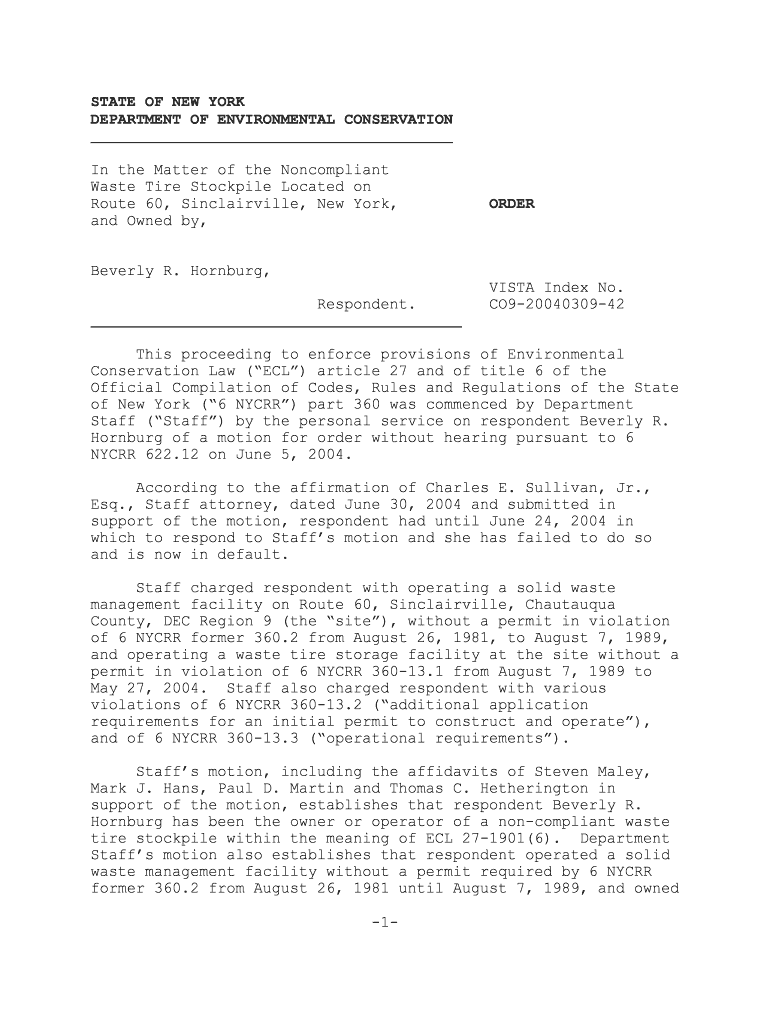
The "Beverly R Hornburg Commissioner's Order - dec ny" is a legal document issued by the New York State Department of Environmental Conservation. This order pertains to Beverly R. Hornburg's noncompliant operation concerning a waste tire stockpile located in Sinclairville, New York. It addresses various violations of environmental laws and outlines requirements for corrective actions. These include ceasing the acceptance of waste tires, removing existing stockpiles, and adhering to fire safety and maintenance regulations.
How to Use the Beverly R Hornburg Commissioner's Order - dec ny
To effectively utilize the Commissioner's Order, parties involved must first thoroughly understand its directives. This involves:
- Reviewing Violations: Identify all specified violations of environmental laws and regulations.
- Understanding Requirements: Note the specific actions required, such as halting waste tire acceptance and compliance with relevant safety regulations.
- Implementing Corrections: Take the prescribed actions to rectify noncompliance issues.
- Documenting Compliance: Keep detailed records of steps taken to comply with the order.
The order may also require coordination with environmental law experts to ensure full compliance.
Steps to Complete the Beverly R Hornburg Commissioner's Order - dec ny
Completion of the order involves a systematic approach to ensure all requirements are met:
- Initial Assessment: Conduct an assessment to confirm all cited violations.
- Action Plan Development: Develop a comprehensive plan to address each violation.
- Execute Corrections:
- Stop receiving additional waste tires immediately.
- Begin removal of current tire stockpiles as per the guidelines.
- Implement fire safety measures and maintenance protocols.
- Verification: Have the compliance efforts verified by a qualified professional.
- Submit Documentation: Provide documentation to the relevant authorities confirming corrective actions.
Legal Use of the Beverly R Hornburg Commissioner's Order - dec ny
The order serves a legal purpose to enforce compliance with environmental regulations. It is binding and can result in penalties if not adhered to. Users of the document must:
- Ensure full understanding of the legal implications.
- Seek legal counsel if necessary to navigate complexities.
- Comply with all specified measures to avoid legal consequences such as fines or additional sanctions.
Key Elements of the Beverly R Hornburg Commissioner's Order - dec ny
The order contains several key elements that dictate its purpose and enforcement:
- Identification of Violations: Specific breaches of environmental laws.
- Mandated Actions: Corrective steps required for compliance.
- Potential Penalties: Consequences for failure to comply.
- Deadline for Compliance: Timeline within which actions must be completed.
These elements are critical for the respondent to understand fully in order to bring operations in line with environmental regulations.
State-Specific Rules for the Beverly R Hornburg Commissioner's Order - dec ny
This order is specific to New York State, reflecting its unique environmental regulations:
- Permit Requirements: Operating a waste tire facility requires state-issued permits, underscoring the importance of legal operation frameworks in New York.
- Fire Safety Regulations: The state has stringent fire safety requirements for waste management facilities to prevent hazards.
Understanding these rules within the New York context is essential for compliance.
Penalties for Non-Compliance
Failing to comply with the Commissioner's Order can lead to severe penalties:
- Fines: Financial penalties can be imposed for ongoing violations.
- Operational Shutdown: Failure to comply might result in the forced shutdown of operations.
- Legal Action: Continued noncompliance could lead to legal proceedings initiated by the state.
These potential penalties make compliance paramount for the parties involved.
Examples of Using the Beverly R Hornburg Commissioner's Order - dec ny
Practical examples include:
- A Waste Management Facility: Needs to modify operations to comply with the fire safety protocols mandated in the order.
- Environmental Consultants: Assisting in revising compliance strategies to meet the order's requirements.
- Legal Teams: Helping navigate the legal implications and ensure all documentation and reports are duly submitted.
These scenarios illustrate how different entities might interact with the order for compliance.




