







Definition & Meaning
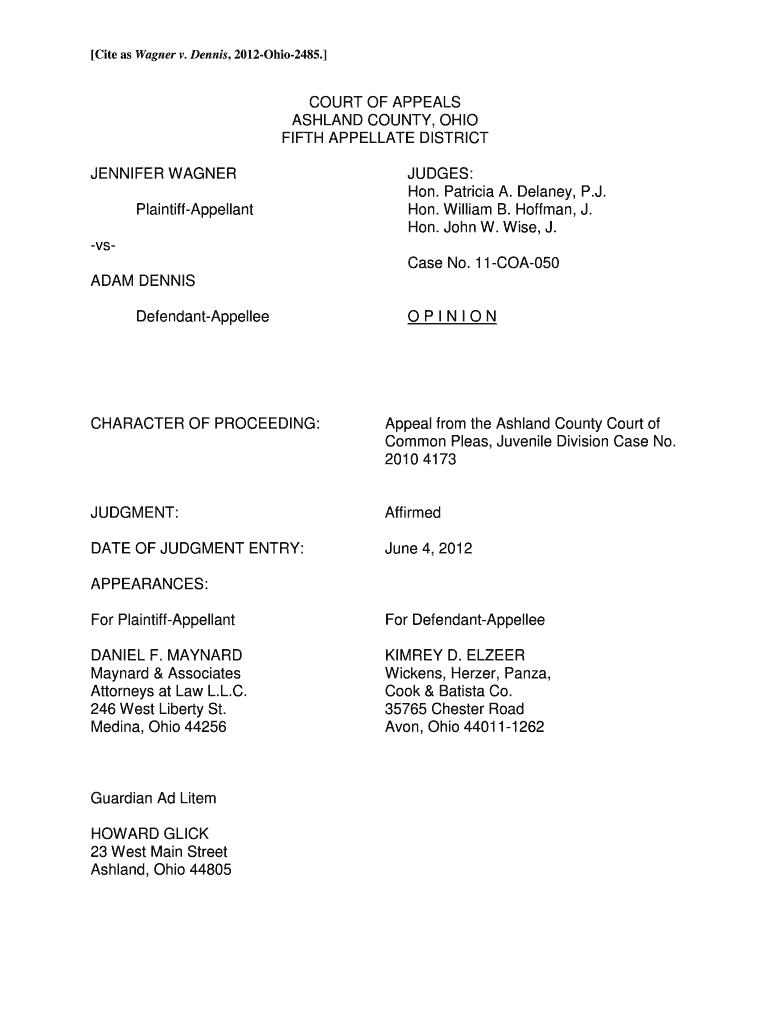
The "Wagner v. Dennis - Supreme Court" pertains to a legal case that advanced to high judicial review, possibly involving complex legal principles or interpretation issues. This case primarily involves Plaintiff-Appellant Jennifer Wagner, who appealed a court decision regarding her responsibility to answer deposition questions in a paternity dispute with Defendant-Appellee Adam Dennis. The Supreme Court's involvement typically signifies significant legal questions about procedural fairness, jurisdictional matters, or the interpretation of statutes and rights. Typically, cases like "Wagner v. Dennis" help elucidate nuanced points of law that can influence future case interpretations.
Key Elements of the Wagner v Dennis - Supreme Court
Understanding the core components of the "Wagner v. Dennis" case is crucial for grasping its implications. Primary elements include:
- Legal Dispute: Centers around deposition questions in a paternity case.
- Appellate Dynamics: Jennifer Wagner’s appeal against the trial court's ruling.
- Court's Findings: Affirmation of the trial court's decision.
- Relevance and Privilege: Examination of whether the questions breached attorney-client privilege.
Each element illustrates the court's task in balancing individual rights and legal procedures.
How to Obtain Information About Wagner v Dennis - Supreme Court
To access detailed information about this case, interested individuals can:
- Consult legal databases like Westlaw or LexisNexis for case details.
- Visit the Supreme Court's official site for public records.
- Examine legal journals or publications for commentaries or case summaries.
- Contact legal professionals specializing in appellate or family law for expert insights.
These methods offer comprehensive access to court opinions, aiding legal professionals or academics in their analysis.
Important Terms Related to Wagner v Dennis - Supreme Court
Certain terms are vital to understanding this case:
- Paternity Dispute: Legal proceedings to determine the parentage of a child.
- Deposition: A witness's sworn out-of-court testimony recorded for later use in court.
- Appellant: The party who appeals a court decision.
- Appellee: The party against whom the appeal is filed.
- Attorney-Client Privilege: A legal privilege that keeps communications between an attorney and their client confidential.
Familiarity with these terms is essential for grasping the nuances of "Wagner v. Dennis."
Legal Use of the Wagner v Dennis - Supreme Court
The legal community might utilize the "Wagner v. Dennis" decision for various purposes:
- Case Law Reference: Serves as a precedent or informative case study for future paternity disputes.
- Legal Education: An example of procedural fairness within appellate court debates.
- Professional Guidance: Offering insight into questioning protocols during depositions.
- Client Advising: Informing strategies for dealing with similar cases.
Each utility underscores the case’s potential impact on legal strategies and understandings.
State-Specific Rules for the Wagner v Dennis - Supreme Court
Legal proceedings like "Wagner v. Dennis" can be subject to specific state laws:
- Ohio Jurisdiction: The case originated in Ohio, affecting state-specific procedures and interpretations.
- Deposition Practices: Variations in common practices across different states.
- Appellate Process: Differences in how appeals are handled at the state versus federal level.
Notably, state-specific rules can significantly influence the proceedings and outcomes of similar legal cases.
Examples of Using the Wagner v Dennis - Supreme Court
Real-world application of this case includes:
- Precedent for Similar Cases: Used by lawyers to support arguments in similar paternity or deposition disputes.
- Educational Tool: Law schools may use it as a case study for teaching appellate procedures.
- Policy Development: Legal reform advocates might reference it when addressing procedural fairness in family law cases.
These examples highlight the multifaceted impact of judicial decisions like "Wagner v. Dennis."
Software Compatibility
Digital tools can streamline the analysis of case information:
- Legal Research Software: Platforms like Westlaw, LexisNexis, or Casetext for digital case law access.
- Document Management: Software for organizing and annotating court documents, such as Adobe Acrobat or DocHub.
- Collaboration Tools: For sharing and discussing cases within legal teams.
Software compatibility ensures efficient case management and legal analysis.
State-by-State Differences
The application of case outcomes like "Wagner v. Dennis" can vary across states:
- Legal Precedent: Differences due to unique state laws and judicial interpretations.
- Court Procedures: Variability in deposition and discovery protocols.
- Family Law Variations: State-specific statutes regarding paternity and custody.
Understanding these differences is crucial for legal practitioners operating across multiple jurisdictions.




