







Definition & Meaning
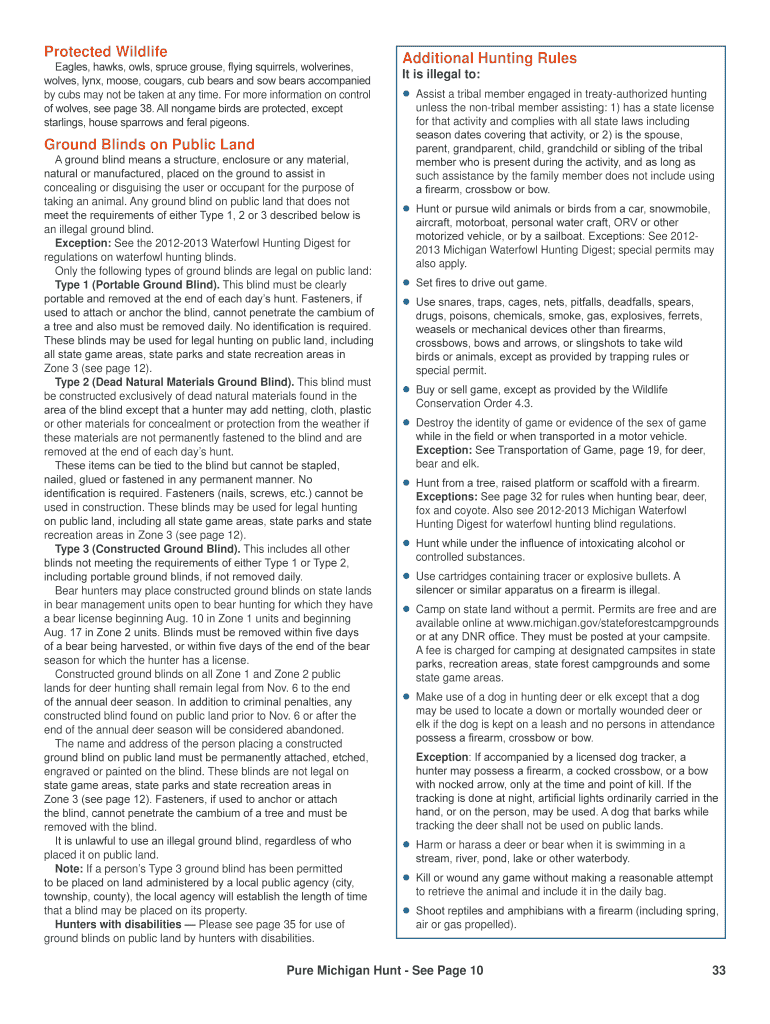
Pages 33 to 48 - State of Michigan - michigan refer to a specific section within a document or publication that focuses on particular aspects of Michigan regulations, possibly related to wildlife management or another area governed by state law. Understanding these pages requires recognizing their context within the greater document, often highlighting rules, procedures, or policies pertinent to activities within the state.
How to Use Pages 33 to 48 - State of Michigan - Michigan
To effectively utilize this section, identify the primary subject it addresses, whether it's legal guidelines, policy instructions, or another area. Users typically should:
- Read Thoroughly: Begin with a comprehensive read-through to grasp the subject matter.
- Take Notes: Jot down key points and any rules or steps critical to compliance or understanding.
- Apply Practically: Utilize the information according to the instructions or guidelines specified, such as adhering to hunting regulations or filing procedures.
By following these steps, users can ensure the information is applied correctly within their specific context.
Steps to Complete the Pages 33 to 48 - State of Michigan - Michigan
Though the exact completion steps depend on the document's purpose, typically, users should:
- Gather Necessary Information: Before starting, collect all relevant data or documents needed.
- Follow Instructions: Carefully adhere to any specified instructions or guidelines, which might include filling forms, observing rules, or completing actions as directed.
- Cross-Verify Compliance: Check that all steps comply with Michigan-specific regulations or standards.
These steps help in ensuring the process associated with the document pages is correctly followed, whether completing forms or understanding guidelines.
Who Typically Uses the Pages 33 to 48 - State of Michigan - Michigan
The usage of these pages predominantly involves:
- Residents of Michigan: Those participating in regulated activities such as hunting or land use.
- Wildlife Officers: Individuals enforcing or applying wildlife and resource laws.
- Legal Professionals: Attorneys or legal advisors offering advice on state-specific laws or cases.
- State Employees: Officials managing or facilitating compliance with state regulations.
This audience typically requires detailed, state-focused legal or procedural guidance.


Key Elements of the Pages 33 to 48 - State of Michigan - Michigan
Key elements often encompass:
- Specific Regulations: Direct legal or procedural guidelines applying exclusively to Michigan.
- Definitions: Explanations of legal terms or activities covered under the pages.
- Requirements: Essential criteria or actions individuals must meet or undertake.
- Consequences: Possible outcomes or penalties for non-compliance.
These elements build the framework of understanding necessary to appropriately use the document section.
State-Specific Rules for the Pages 33 to 48 - State of Michigan - Michigan
Michigan-specific rules may involve:
- Wildlife Conservation: Protected species guidelines, designated hunting zones, or permit requirements.
- Land Use Practices: Legalities concerning land access, fencing, or blind construction.
- Environmental Protections: Strategies and laws safeguarding Michigan’s natural resources.
These rules ensure activities occurred within the framework of Michigan state laws.
Examples of Using the Pages 33 to 48 - State of Michigan - Michigan
Practical examples include:
- Hunters: Referencing the pages for hunting seasons, zone maps, and tagging requirements.
- Land Surveyors: Consulting sections for legal ground measurements or building restrictions.
- Conservation Efforts: Using guidelines to plan restoration or population management initiatives.
These scenarios showcase how the pages function in real-world applications across different activities.
Legal Use of the Pages 33 to 48 - State of Michigan - Michigan
Legal use entails:
- Compliance Verification: Checking that all actions align with Michigan state laws.
- Case Precedents: Using document excerpts for legal cases or evidence in court.
- Policy Formation: Assisting in the development of new state legislation or amendments.
Legal professionals may use these pages to ensure their clients’ activities remain within legal boundaries.
Penalties for Non-Compliance
Failure to adhere to the guidelines outlined in these pages can lead to:
- Fines: Monetary penalties for infractions such as unauthorized hunting or land use violations.
- License Revocation: Loss of hunting or professional licenses if compliance is breached.
- Legal Action: Potential for lawsuits or court hearings if violations result in greater harm.
Understanding these penalties underscores the importance of compliance with the outlined rules and regulations.




